How to run a Sub 3 marathon

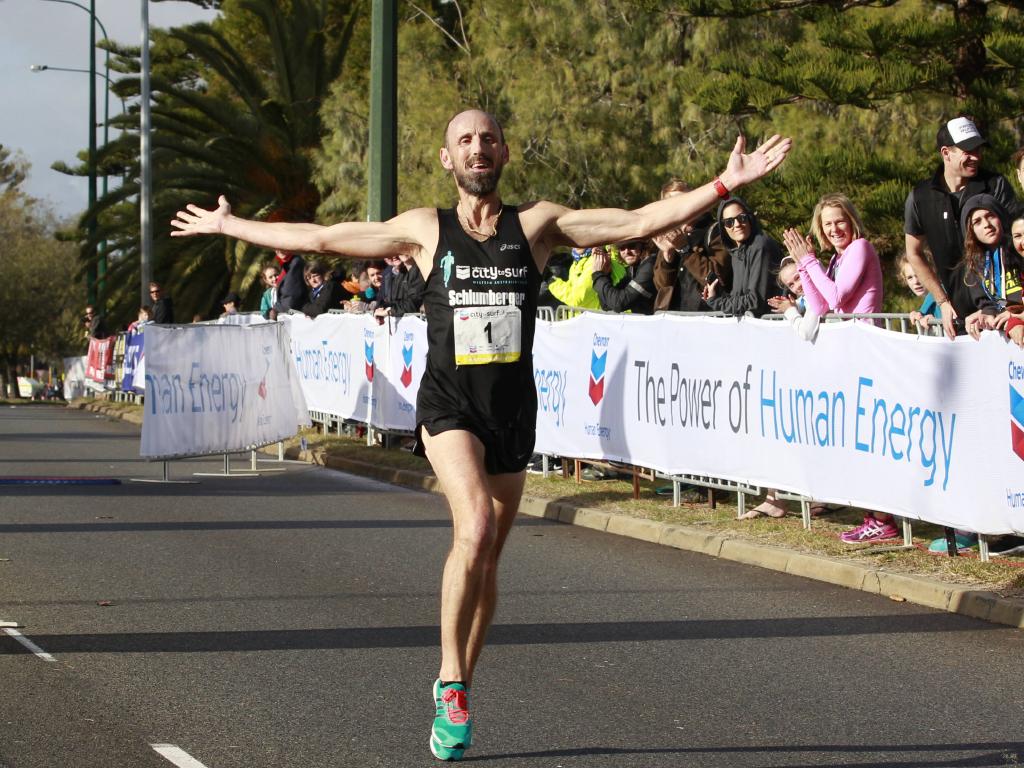
I ran my first sub 3 marathon at the Perth City to Surf in 2009, and my last at the same event ten years later. In that time I ran sub three hours thirty-three times and was on a 32-in-a-row streak before blowing out in the Melbourne marathon of 2022, three years after my last marathon.  Once every few years I like to repost some  posts from that time when I was running twice a day and over 160 kilometres a week and knocking out sub3 marathons like they were training runs, and truth be told they were.  I ran sub two hour fifty minutes seventeen times and between 2011 and 2017 this was my target, always sub four-minute kilometre average.  Funnily enough I was running with my good friend Georges Hombert today, him of Georges cafe in City Beach, and my last kilometre , the fastest, was around four minutes and ten seconds and I was deep in the pain box with the head gasket just about to blow. How did I ever run forty-two of these, and faster?

The reason I do this post once every few years is to remind myself, and you the reader, that there is some substance to my ramblings. I have achieved what I set out to achieve or at least come close enough that I am happy with my marathon career. Could I have ran sub two forty maybe, with carbon plates, probably, truth be told easily. I didn’t though and my three two forty one’s are as close as I got but man I was fast, and I adored the adulation of the crowd as I raced ahead of the pack towards the finish line. A show pony marathon runner was me all day long, I was built for it.  Add in the shorter distances and I loved the feeling of racing my fellow competitors with a bib on my chest.  I still love competing but back in the day it was everything and I breathed it all in.

So what changed ? I was on top of my game in 2016 with wins in the Perth 32k (10k) , Peninsula 10k and the Founders 10 Miler. Also ran a half PB of seventy-five minutes at the Fremantle half, good enough for third place, a second place at the Rottnest marathon and a second place, age group, at the World Masters marathon held in Perth. Throw in a 5th at the Perth half marathon, 5th at the Chevron City to Surf marathon, 2nd at the Point Walter ten miler, third at the Christ Church 12k, 3rd at the John Gilmour track 10k, 6th at the Perth Marathon, 2nd at the City Beach 4k and a second at the Lake Monger 10k and I was a medal chasing machine.  I started 2017 in similar form taking home a second at my first hundred kilometre race and then a 3rd at Point Walter.  Unfortunately a few weeks later I tore my calf and did a pretty good job, a 5cm tear.  I was out for six months but then did manage a few second and third places towards the end of the year before a win at the City Beach 4k.  2018 started well enough with a win at the Australia day ultra and an Australian age group record followed  up by another win at the Peninsula 10k.

The nail in my marathon career came later that year after the Australian Masters event in Perth. I picked up eight age group medals but in the process tore my plantar fascia and that was it for my top speed, it evaporated. I was still able to compete but my days of chasing pb’s for anything shorter than marathon distances were over.  I did manage two more sub 3 marathons in 2019 but both were in the two hour fifty-five plus range.

My last 2:41 in 2016.

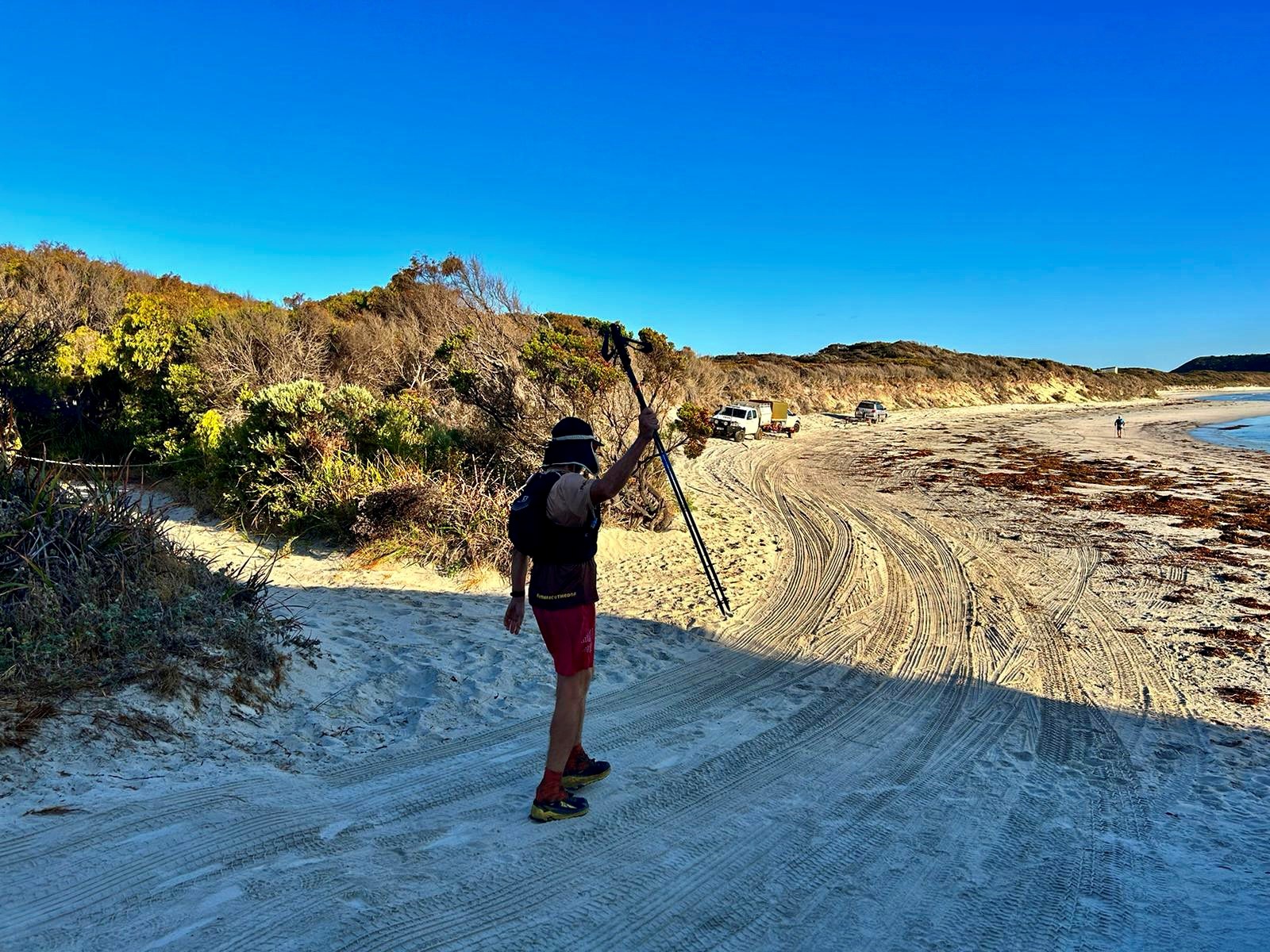
Post 2019 I turned into an ultra-runner and found I could still compete over the longer distances and this is where I am today.  Do I miss the shorter distances? Hell yeah, nothing beats running at the front of the field with the crowd going banana’s, maybe that was more in my mind?  So many great memories running and racing good friends over the years and managing to snag a few wins makes it even more special.  It was the right decision to move in ultra marathons when I did and I’m as excited about the run tomorrow as I was about my first run decades ago, and that’s the point I suppose, keep the fire burning.  This is one of the reasons I have never got into coaching, I run because I love running but sometimes I don’t love running , we all have times when we question our love of our sport.  As it’s just me, I can do that without having to pretend or motivate somebody else, I just couldn’t do it.

So let’s get into it, I have copied a few posts I have written over the years focused on the marathon distance, I hope you find something in there that may help you achieve your marathon goal. One final word before I leave you to it. Maybe one more golden rule would be buy the best pair of carbon plated shoes you can afford.  They don’t even have to be top brands; you can get them on AliExpress these days and they are certainly fit for purpose. Search on YouTube for runners who have compared the AliExpress carbon plate trainers to the named brands, there doesn’t seem to be enough difference to justify the extra few hundred dollars.  Albeit it’s probably better to buy a pair with good reviews and also maybe try them on first.

Mostly ultra running post 2019.

I have said many times on my blog running is an honest sport, put in the time in training and you will see results. The longer you can spend running the bigger the results and if you start to run tailored sessions, i.e. tempos, thresholds, fartleks etc, the quicker the results , as long as you also keep the distance high.  Ralf Baugh, the owner of the Running Centre   ( https://therunningcentre.com.au/ ) and former professional duathlete, has been keeping data on his 90+ sub 3 marathon runners training habits. It makes for interesting but predictable reading.

Ashley Phelps, a finely tuned sub 3 machine. !

Marathon Training & Performance: Sub 3h Dataset

Since commencing personalised training programs in 2009, the Front Runner coaching team has been primarily focused on assisting both recreational and competitive runners competing in events ranging from 800m to the Marathon, as well as Full and Half Ironman Triathlon.

Over time, the tracking of data (through GPS and online training software) and personalised exercise prescription based on the runner’s individual goals and training history, has allowed for empirical data to be compiled from our ever-growing database of motivated and goal-driven runners. As our database grows, we continue to observe certain trends in the data that help guide our coaching team towards more accurate and effective exercise prescription.

As well as a strong scientific element to data tracking, working with a team of nine engaged coaches all with individual experiences and qualifications has enabled an excellent structure to develop hypotheses on further improving exercise prescription. With the popularity of the Marathon continuing to increase in recent years, we have updated our dataset from 2018, focusing on those runners who have broken the magical 3h barrier.


3 of our Sub 3h Marathoners: Toni (2.43), Miki (2.55) & Yi-Jin (2.59) during the 2017 Perth C2S HM

As of March 2020, 91 Front Runner athletes on an individual exercise prescription have bettered the 3hr marathon. The aggregation of this many athletes at a high recreational marathon standard, in combination with monitored training prescription, has allowed us to identify some strong data trends. We hope that awareness and knowledge of this data will continue to help our Front Runner community progress towards their individual goals, as well as educated fellow runners and coaches interested in enhancing performance in recreational Marathon populations.

Through Training Peaks software, we analysed the data based on what we believe are two key principles for successful distance running and how they related to Marathon performance (goal time):

  1. Anaerobic Threshold: Measured as their best 10k race time within 12 months of their goal Marathon
  2. Volume: Peak 4 week mean volume within the final 3 months of their goal Marathon

A 10km race is a practical estimate of the anaerobic threshold (the upper limit of how well the body can sustainably use oxygen for energy – read more HERE). The lower the 10km time, the higher the anaerobic threshold and the more effectively the runner can utilise oxygen for aerobic metabolism.

The peak mean volume the runners were able to sustain for four consecutive weeks in the lead up to their Marathon is a practical indication of their muscular endurance. As running is a weight-bearing activity, covering 42.2km’s requires significant muscular endurance. Four consecutive weeks were chosen to ensure the volume was a sustainable peak and not a once-off.

Of the 91 Front Runner athletes to have officially broken 3h for the Marathon, objective data was available and collated from 65* of these athlete’s performances. *multiple sub 3h Marathon’s from the same athlete have been included.

Figure 1: Each runners 10km pace & Marathon pace was plotted against their weekly volume (n = 65)


Figure 2: As training volume increased, the difference between 10km and Marathon race pace decreased.


Full Data Set 

n = 65
Volume (km/week) 10km time Marathon time
Min = 66 Slowest = 40.30 Slowest = 2.59
Max = 170 Fastest = 29.26 Fastest = 2.14
Mean = 120 Mean = 35.01 Mean = 2.43


Males Only

n = 58
Volume (km/week) 10km time Marathon time
Min = 66 Slowest = 40.30 Slowest = 2.59
Max = 170 Fastest = 29.26 Fastest = 2.14
Mean = 120 Mean = 34.51 Mean = 2.43


Females Only

n = 7
Volume (km/week) 10km time Marathon time
Min = 77 Slowest = 38.30 Slowest = 2.57
Max = 145 Fastest = 34.40 Fastest = 2.34
Mean = 119 Mean = 36.29 Mean = 2.47


Sub 2h 20min

n = 2
Volume (km/week) 10km time Marathon time
Min = 150 Slowest = 30.32 Slowest = 2.19
Max = 170 Fastest = 29.36 Fastest = 2.14
Mean = 160 Mean = 30.04 Mean = 2.16

2h 20min = 2h 29min 

n = 6
Volume (km/week) 10km time Marathon time
Min = 140 Slowest = 32.30 Slowest = 2.29
Max = 170 Fastest = 29.26 Fastest = 2.22
Mean = 159 Mean = 31.23 Mean = 2.26


2h 30min – 2h 39min

n = 13
Volume (km/week) 10km time Marathon time
Min = 90 Slowest = 35.54 Slowest = 2.39
Max = 160 Fastest = 31.12 Fastest = 2.32
Mean = 136 Mean = 33.52 Mean = 2.35


2h 40min – 2h 49min

n = 22
Volume (km/week) 10km time Marathon time
Min = 90 Slowest = 37.15 Slowest = 2.48
Max = 165 Fastest = 33.20 Fastest = 2.40
Mean = 121 Mean = 35.11 Mean = 2.44


2h 50min – 2h 59min

n = 22
Volume (km/week) 10km time Marathon time
Min = 66 Slowest = 40.30 Slowest = 2.59
Max = 140 Fastest = 34.50 Fastest = 2.50
Mean = 94 Mean = 36.59 Mean = 2.55

Breaking the Sub 3h Marathon (2h 55min – 2h 59min)

n = 15
Volume (km/week) 10km time Marathon time
Min = 72 Slowest = 40.30 Slowest = 2.59
Max = 140 Fastest = 35.36 Fastest = 2.55
Mean = 97 Mean = 37.14 Mean = 2.57


Primary Observation

The clearest trend from the graphs on figure’s 1 & 2 is the reduced vertical gap between the trend lines for 10km and Marathon pace as you move to the right – i.e. the MORE volume you run, the LESS difference between your 10km and Marathon pace. We therefore conclude the following: for recreational runners chasing a sub 3h Marathon, your anaerobic threshold will determine the ceiling of your Marathon (i.e. the faster you can get over 10km, the faster your potential Marathon time) and your peak volume will determine how close you can get to that ceiling.

This presents a trade-off as such where runners who spend a lot of time increasing their 10km time at the expense of their weekly volume may find their Marathon may not improve. Alternatively, runners who chase the highest volume possible at the expense of specific training that will improve their 10km time, may also limit their Marathon performance.

Each runner will be different, bringing their own strength & weaknesses to the table. Therefore, to achieve your Marathon goals, we recommend consulting a qualified and educated coach who can provide you with an individualised program that contains an optimal distribution of training load across the week, that is periodised towards your end goal.


Additional Thoughts

  • Specificity: Sustainable volume appears to correlate more closely with predicting Marathon performance than 10k time. This reflects the conditioning and the fatigue resistance of the musculoskeletal system, in addition to the fuelling changes in the cell that may relate to low intensity running specifically.
  • The Complete Runner: The 10km & Marathon have similar attributes but different limiting factors, meaning relative success in one event doesn’t directly translate to the other event. To best enhance your Marathon performance, it is our belief that focussing on both volume and threshold increases is crucial to successful Marathon performance.
  • VO2 Max: Training repetitions at VO2 max (i.e. above threshold – see HERE) appear to increase the relative risk of injury in recreational Marathon runners due to their fatigued training status. The perceived exception to this is if the athlete had track running experience from their youth.
  • Strength Training: Resistance training that is targeted to the individual is the best asset for Marathon runners to remain consistent with their training. This is achieved by reducing injury risk under the high training loads associated with the Marathon as well as increasing their running economy (reducing energy cost @ Marathon pace). Adherence to strength training programs is most common post injury, however should be maintained where possible when in Marathon training (2x per week to improve strength, 1 x per week to maintain current strength).
  • Biomechanics: Functional running drills and strides (see our YouTube channel HERE) that are performed 2-3x per week (as a W/U pre workout OR post easy runs) appear to be effective strategies for improving running economy in Marathon runners.
  • The Group Effect: Group runs for easy aerobic volume sessions correlated with significantly greater adherence to their training program than prescribed but self-directed easy volume sessions. This advocates the role of “jogging groups” as an integral part of a balanced training program for recreational and advanced Marathon runners and not just group training for interval sessions.


We trust you enjoyed our insight into Marathon training and performance. If you wish to know more about this topic, or anything to do with your running training, please get in touch with our expert coaching team who are ready to assist you towards your next running goal! Please email us HERE or see our website HERE

Looking at my training over the years I peaked naturally around 2013 , without a coach,  setting many PB’s , virtually every race, for a period of 12-18 months before a bad Bunbury Marathon result in 2014 propelled me into a  slump for over 6 months before I teamed up with Raf in early 2015. Over the next 12 weeks I started to run a lot more and added double days,  as well as more tailored sessions concentrating on hitting a quicker pace.  A possible stress fracture meant I didn’t achieve the result I was after,  albeit still ran a top 10 finish at the Perth Marathon , but the lessons Raf taught me allowed to me run a stellar 2016 achieving many PB’s , times I thought beyond me after 2015. I continued this form in 2017 until I picked up a nasty case of plantar fasciitis, this unfortunately was the death knell for my days of PB’s at the shorter distances, upto marathon pace.
The main take away from training with Raf was distance is king but also a tailored approach to training  building each week and with every run a building block towards the final goal. The best part of being coached is you don’t have to think about your next run, it is there in black and white infront of you (or these days in Training Peaks), there is also nowhere to hide, so you are accountable. Initially this can be confronting because, in my case, I always felt my training didn’t reflect my racing times, i.e. my times were quicker than my training would suggest I was capable of, this meant Raf would give me targets I would fail to reach.  Over time though I improved, weekly really, and my pace started to quicken, I even began to enjoy the quicker sessions, my improvement was measurable and there for all to see.  A favourite of Raf is the 3 * 5k with a 3 minute rest between laps. Initially I was running over 18 minutes for each repetition but after 6 months all my times were sub 18 minutes, a massive improvement, as I said earlier,  accountable and measurable.
Father time has put an end to my Marathon and quicker PB’s , probably, and I am ok with this, I have achieved so much more than I ever thought possible. These days I enjoy the challenge of the Ultra marathon , trail running and backyard ultra’s , races where mentally you can still be competitive with the field. This does not mean I have given away the shorter distances and I have plans to run sub 3 marathons for many more years but my wiggle room is certainly getting less and less each time I put on the bib and toe the start line, wouldn’t have it any other way….

I wrote this post four years ago in 2016 so thought it would be a good opportunity to recycle as I’m on another training block heading towards another sub 3 at the Running Works Marathon at Bibra Lake, Perth August 30th. My Golden Rules are unchanged over this period and still ring true, follow them and I guarantee success.

The extract from Strava (you are on Strava right ? http://www.strava.com shows the last 5 weeks training I have put myself through as I prepare for the Running Works marathon in 6 weeks time. I will have given myself a good 12 week training block by the time I start my taper a week before race. This should be enough to sneak under three hours. (Rule 8 : Consistency)  (The grey circles indicate when I commute on my Bionic (stand up bike) to work as well as run. )


It’s been a busy few weeks.


Funnily enough my ramp up started as soon as I started working from home , middle of March. The extra time allowed me to start to look at my training regime and slowly add distance , consistently. (Rule 1 : Run Further) I started at 40k a week and moved up through the gears to 162k last week which also included a trial half marathon on Saturday and a trial full marathon Sunday. When you can look at these graphics it gives you the confidence to lock in your marathon pace.  (Rule 9: It’s all in the mind)


Build week on week …


As I mentioned earlier I commute to work on a stand up bike. My stand up bike of choice is the Bionic B-Runner but unfortunately  the company went broke due to substandard Chinese manufacturing (funny that?),  so if you need a stand up bike go to the Elliptical website and get yourself the next best thing. I have had an Elliptigo and they are ace, they are truly running without the impact, and they are also so much fun.  ( http://www.elliptigo.com )  I sold mine to my good friend Mark Conway and regret it daily, just got to find a way to buy another one and sneak it into the garage without No1 Wife finding out ? These stand up bikes are perfect for extra training without the risk of injury (Rule 3 : Don’t get injured) I have used one when I had a calf tear a few years ago and was able to come straight back to racing with times duplicated before the injury, this would have been impossible without the training I was able to undergo on the Elliptigo.

Meb (Boston Winner and Olympic Marathon runner) on the ‘Go’.


Anyhow here is the post from 2016, worth a read.. 

This weekend I made a bold decision and stopped running at 29.5k when I got back to the City Beach car park after our long run into the Bold Park hills. It was a conscious effort to take control of my running from the evil that is Strava ( http://www.strava.com ) that has taken hold of many a good runner and turned them into a run recording web junkies. Truth be told I already had 121k banked for the week and knew I was over the 150k weekly total with another 10k planned in the evening to take me over the 161k (100 mile) threshold. So really who was I kidding stopping at 29.5k? It did impress the rest of my running group who ran in ever decreasing circles around the car park to get the extra 500m needed for 30k.

How did this happen ? Social media has a large part to play and these days every run is accompanied by a Strava upload as a minimum and a social media post if the run justifies it. Compare this to when I started running before the Internet and GPS watches (Yep such a time did exist and to tell you the truth it wasn’t that bad. ) when a runner who have to record all their information using a thing called a pen and paper. (To the young followers of my post these things are now defunct and serve no purpose bar to be used a weapons in disposing of zombies and other evil creatures in the mindless video games you spend hours playing. Note. That is the pen, the paper would be used as fuel to set fire to said zombies if the pen failed to do it’s job.)  I’ll put my hand up with most of the running population as an avid Strava addict who has 4 Garmin watches and an iphone to make sure that every kilometre I run is documented and shared. I did try and run without a watch once, on the advice of a ‘friend’ (?) to try and recapture the feeling of that bygone age. I hated it and all the time kept thinking how I was going to record this and document my findings to the world. It is like if a tree falls in a forest does it make a sound, if you run without recording it on Strava did it happen ? Not sure about the tree and forest scenario but for the Stava question the answer is ‘no’, if it ain’t on Strava it didn’t happen.!

This brings me to the point of this post this morning. We do live in a digital world (this may or may not be a good thing?) but you still need , as backup, a non Strava recording of all your totals. I have attached mine below for the last 8 years and with the table as backup will use these totals to complement my golden rules of running.

7 years of recoding running fun...
8 years of recording running fun…
  1. Run Further. Add distance, not speed.  As you can see from the table my weekly average has steadily increased year on year with this year being the first I will break the 100k a week average for the year. In 2012 I was injured with a nasty calf knot, that I didn’t treat, which explains the delta compared to the previous year.  2014 my training had plateaued which is why I turned to Raf ( http://www.therunningcentre.com.au ) to train me in 2105 where my distance increased by 10%. I have taken this training forward and will probably increase another 10% this year.  Distance first, everything else comes once the ‘foundation of distance’ has been achieved.
  2. Run Faster. This is about adding pace after you have got your foundation after rule 1. 2011 was a break out year for me after 3-4 years of building a good running base. I had ran 3 Comrades campaigns in 2008-2010 ( http://www.comrades.com ) so my distance foundation was well and truly complete. In 2011 every time I put on a bib I was confident of a pb.  It was a wonderful year. Unfortunately in 2012 I had a nasty injury which set me back but towards the end of the year I was able to train consistently again and in 2013 I was again rewarded with a magical year of running.  
  3. Don’t get injuredThis is the hardest rule to obey as you always want to do more of rule 1 and 2 which can result in an injury. (I even hate typing the word!) In 2012 I succumbed to a calf knot which took me out for over a month. I struggled to recover from this and as you can see from the table I only ran 3 pb’s for the year compared to 13 the previous year and 10 the following year when I recovered. If this doesn’t back up this rule nothing does.! Don’t get injured, so easy to type but in reality one of the hardest thing for a runner to do, period.
  4. Nutrition, nutrition and nutrition… Did I mention nutrition. It’s all about the proper fuel. So underestimated by so many runners. The number of times I hear the old ‘I run xxx kilometres a week so I can eat what I want’ . Not true, imagine putting low grade fuel in a Porsche, eventually the head gasket blows and you are faced with a serious bill, not to mention a misfiring engine. The human body is a finely tuned machine and should be treated as such, we all know what is good food and what is bad (normally the nice tasting stuff!), avoid the bad and put in the good, easy really. (bar the odd Yelo muffin of course, we are after all only human.)  I’ll be exploring nutrition more next year when I have one more go at a sub 2hr 40minutes marathon.
  5. Weight. So important, use to believe because I ran 100k+ a week I could eat what I wanted. Not true. This is another golden rule so often ignored. Runners can run so much faster is they hit their racing weight rather than a running weight. My go to man , Matt Fitzgerald, when it comes to everything running even has a website dedicated to this. ( http://www.racingweight.com/ ) If Matt has a website dedicated to this subject it must be important.
  6. Baseline, document and evaluate everything. If it isn’t on www.strava.com it didn’t happen. Once you set a goal you have to be able to know how far you have come to achieving this, small steps but constant feedback. So buy a Garmin and start recording , everything !!! Contentious subject here. I’m a Strava addict and I know it but the purest will be horrified. You need a baseline to see improvement, set new goals and realize your goals. Buy a Garmin and to quote a small clothing company ‘just do it’.
  7. Sleep. So underestimated but the bodies way of refuelling and preparing for the next day of running. Common sense but so often ignored. Sometimes the most obvious, common sense tips are the ones ignored. Sleep is when your body repairs itself, the more sleep the more repairs can be completed. It really is that easy, go to bed and dream about running.
  8. Consistency. No point running 100k one week and then nothing. Marathon fitness is built up over time and this works hand in hand with rule number 1. I feel the figures from my running log back this up. I’ve steadily increased the duration consistently year in, year out (bar injury) and have reaped the rewards with 2016 being my fastest year yet as I move towards my fifth sixth decade. (Thanks Dave Kennedy) Running is all about getting out there on a regular basis again and again and again. Time on feet initially and then add pace before targeting certain distance with different run types, most important thinkg to note though is always consistently putting on the trainers and just running. ‘If you build it they will come’ type approach, keep running, build the foundation and the personal records will come. (This also works for baseball pitches apparently.)
  9. It’s all in the mind. After 32k a marathon is down to mental strength and the ability to persuade your body you can still perform at your desired pace without falling to fatigue, which is the minds way of protecting itself. Never underestimate the power of the mind in long distance racing. Finally another massive part of running, the Noakes ‘central governor’. I’ve talked about this at length in various posts on this site. With experience I believe I can mentally finish a marathon stronger now then when I first started. I know what to expect and to this end can persuade my old friend fatigue to stay away for longer allowing me to achieve better finishing times. The mind is such an important part of running and needs to be trained as much as the body. When you race a marathon you will spend time in the ‘pain box’, the runner who can spend the most time in this little box of joy, before opening the door and embracing the old enemy fatigue, will run the fastest. I spoke to Steve Moneghetti after the Perth Marathon this year after he ran the 3hr30min bus and asked him how the professional athletes are so much faster than us recreational runners. His answer surprised me as he replied that a professional runner can stand more pain and this gives them the advantage need to push through and achieve the faster times. Again turning off the ‘central governor’  and spending more time in the ‘pain box’ avoiding fatigue and thus not slowing down. Common sense really, thanks Steve.


Steve Moneghetti enjoying time out of the 'pain box'.
Steve Moneghetti enjoying time out of the ‘pain box’.

Consistency is the key to unlocking pace and improvement

As runners we are creatures of habit and nothing confirmed this more than the Strava heat map attached below.  ( http://www.strava.com ) What Strava does (if you pay for premium membership) is take all your recorded runs (in my case well over 1,000 and rising 2 a day !) and map them onto a map with the different colours indicating the runs you run the most. The bright red lines show where I spend all my time.

I am a creature of habit.

As you can see I spend all my time running around Kings Park and the Bridges on my lunch time runs and then up and down the coast on the weekends.  You can also see my go-to run of choice, a 10k loop from my house to Star Swamp and back through Carine Park that I run 4-5 times a week minimum. This run is normally my recovery run and I can just about give you a breakdown of kilometer times to the second of each one of the 10k’s. For example the first kilometer is always between 4:40 – 4:50 min/k and I run k2 at 4:37min/k (this one is normally within 1-2 seconds) etc. etc….  These runs are built for time on feet and as I discussed yesterday recovery runs. A run you can run in your sleep but one where sometimes an autopilot is just what you need to rack up the kilometers without the need for mental engagement.

Golden rule number 8 is about consistency and this heat map shows me that I am Mr. Consistent. As well as establishing your go-to runs consistency is also about maintaining a good foundation, even on the off-season. (not really sure what an off-season is in my case?)  The biggest threat to this is of course rule no.3, injury. Once injured consistency is no longer an option and it’s back to rule no1 , distance, to rebuild.

No one said this running was easy..

Sub 3 no1 2009.

End of the ‘distance’ phase, not onto pace.

So after the City to Surf marathon I gave myself one day off before launching into a 100k recovery week , followed by three 100 Mile weeks (160k+) including the biggest ever week of my running career this week , 190k and 14 runs. Today I managed a 30k long run this morning, wolfed down a few pancakes, took the dog for a walk and then snuck out for a 12.3k run to give me the 190k and 42.3k for the day. So here I am typing this happy to know that it’s time to turn the distance foundation into pace pre-racing.
Biggest week of my running career.

The Running Centre did a survey of a number of athletes recently who had trained with them and broke the 3hr marathon mark. They examined their 10k times, half times and marathon times in-conjunction with the number of kilometres trained over a set period. While looking at different training methods, different zones i.e. did they train mostly at tempo pace or more recovery runs, or thresholds etc. After all this analysis the end result was basically distance was the most over riding dominant factor. He who runs the longest will normally run fastest. Running is an honest sport and basically the more you do the better you get. It’s ain’t rocket science. (I wonder what people who study Rocket Science say when they’re talking about complicated matters… like Rocket Science, they have to say ‘well you know, it is Rocket Science’  or maybe ‘it’s ain’t Quantum Physics’.. ?)

Over the next 6 weeks I have 5 races planned starting next Sunday with a 10k, then the following weekend the Fremantle half, ( https://www.wamc.org.au/major-events/fremantle-half-marathon/ )a week off and then the Rottnest half.  ( https://www.wamc.org.au/major-events/rottnest-marathon-fun-run/ ) Then it’s straight into the World Masters Games ( www.perth2016.com ) for a 5k starter on the 29th October before the reason behind all this high distance training, the World Masters Marathon on November 6th. I’m hoping for a podium in my age category (45-50). As I have home advantage (the course is the same one as the Perth Marathon which I have run the last 3 years ) and will be acclimatised, maybe it’ll be enough.

This will be a good test of the distance Golden Rule no.1 morphing into pace, Golden Rule no. 2. Maybe 5 races in 6 weeks is a tad testing but i wouldn’t have it any other way.

Baseline everything, how do you know you’re improving with proof?

Golden rule number 6 is baseline everything. This involves a Garmin  ( http://www.garmin.com.au ) or any other device that records distance, pace, heart rate, steps, temperature etc. I have mentioned before that over the last few years I have become a Strava tragic ( http://www.strava.com ) . I cannot run without the resulting data being uploaded as soon as possible afterwards. Strava, although predominately still cycling software, has been embraced by the running community and has turned itself into the Facebook of running. Over time it has added the ability to add photos, comments and now you can even tag fellow runners and add groups. I envisage soon the interface will start to morph more and more into a social media type look. In Australia it has been taken the place of CoolRunning which use to be the go-to site of choice for runners, which is a pity as I use to love that site. ( http://www.coolrunning.com.au ) i did manage to get to a 1000 posts before it really stopped being the place to go. I’m hoping it can reinvent itself but Stava has become so widely accepted it will be hard to dislodge.

So baseline, what does that mean and what is the benefit ? In the ‘good old days’ before GPS watches and the Internet (Yes, once there was no internet !) a runner would keep a diary of distance (normally estimated) but pace and heart rate or cadence was unmeasurable. Once GPS watches and the internet came along all this changed. Now the data you produce from the GPS watch can be uploaded to a variety of software tools in the internet and all sorts of reports produced. Training peaks ( https://www.trainingpeaks.com ) is a good example of whats available.

So what is the benefit ? If you don’t baseline how do you know when you improve ? All this data is useful to show how week on week, month on month, you are improving. That may be running the same pace at a lower heart rate, or average pace increasing for known runs or just keeping tracks of your PB’s and race times. Software takes out all the guess work and the watches themselves give you so much information, real time, there is no hiding from a bad run or instant gratification from a good one.

I remember back in the day running marathons with a stop watch and the mental arithmetic needed to work out splits and target times as you reached a K marker, which was normally in the wrong position anyway. Not knowing what pace you had just run or were running at the time and always leaving it late due to either bad maths or optimistic finishing pace. Happy days. Always made the last 10k of a marathon a surprise. These days you can set your watch for a certain pace and even ‘virtual partners’ to race against. No surprises, instant feedback. Sometimes I miss the challenge of that last 10k when you can finally work out what you need to run and still have no real idea if you are going to make it until you round the last corner and see the finish line…. maybe one day I’ll dust down the stop watch and go ‘old school’….. who am I kidding ?


Feel free to follow me on Strava.


Follow me on

or follow me on Instagram https://www.instagram.com/runbkrun/

or facebook  RUNBKRUNOZ


Big shout out to fisiocrem , this product is just incredible for tired and aching legs. I use it daily and have noticed a vast improvement in recovery.

Bix hydration is just ace, a product brought to life by Vlad Ixel a professional ultra runner who knows a thing or two about hydration. ( https://www.bixvitamins.com/ )  The best thing about Bix is it tastes good with many different flavours and you never get sick of drinking it, this is a big plus as Maurten and Tailwind (both great products)  can be difficult to digest later in the event.  From the website :-

As an Australian elite multiple trail running champion, with wins in over 40 ultra-marathon races across Asia, recovery from training and races has always been my top priority. 

In searching for a solid recovery and hydration supplement, I recognized that critical vitamins and minerals – both in diversity and quantity – were missing from almost all supplements on the market. I had the feeling that in an effort to maximize their bottom-lines, companies in the hydration space, failed to deliver a product that could meaningfully assist athlete performance. 

In order to address this, I began the development of a hydration product. After two and a half years of development alongside a leading German sports scientist, BIX Recovery, an advanced, high-quality recovery drink was born. 

BIX boosts 12 active ingredients scientifically balanced to replace lost electrolytes and assist in immune function. It’s designed with quality vitamins and minerals, in quantities that work! 

BIX is a recovery solution for everyone, that will get you to the top of your game!

Great hydration.

What can I say about HumanTecar,  ( https://athleticus.com.au/ ) it looks great, smells great and is awesome for recovery or even pre-run/workout. Read about the science behind it first and then try the products. The compression bandages are just magical after a long event. Put these on and the next day you are recovered, I have used them on a number of occasions and they never fail to astound me albeit the family poke fun at me as I look like a ‘mummy and smell funny’ !

Fractelhttps://fractel.com.au/ ) have your performance headgear covered. I love the colours and the functionality of these hats, I guarantee there is one model you’ll fall in love with.

Fractel headgear, just ace.

Shokz headphones, let you keep in touch with the world around while losing yourself in quality tunes or podcasts. ( https://shokz.com.au/ )

Best running headphones EVER !

T8 running apparel is the best you can get, second to none. Designed for the ultra humid Hong Kong conditions the owners live in.  It is light and does away with any chaffing worries. T8 is the name given to the highest typhoon warning in Honk Kong,  storms and typhoons with gusts exceeding 180kph, which explains the branding. ( https://t8.run/)

Altra supply the best trail shoes on the planet, in my opinion, and none better than the Olympus five. Do yourself a favour and buy a pair. ( https://www.altrarunning.com.au/ )
https://www.osprey.com/au/en/category/hydration/trail-running/ Osprey Australia have come onboard and are supplying me with two running backpacks and travelling luggage for the Run Britannia adventure. I particularly like their running backpacks and am excited to test them over the event. I’ll be using the Duro 6 and the Duro 1.5 backpacks.
Excited to have Coros onboard who have supplied me with the new Apex 2 Pro GPS watch. I already owned the Apex 2 and was stoked when Coros reached out and offered me an upgrade. Even more battery life, can you believe 75 hours using GPS, wow! The watch itself is awesome, so light and well made. The watch is paired with a incredible application to keep track of all your stats, and runners love stats ! .  ( https://coros.net.au/ )
Feel free to follow me on Strava.


Follow me on

or follow me on Instagram https://www.instagram.com/runbkrun/

or facebook  RUNBKRUNOZ


About The Author

bigkevmatthews@gmail.com

A running tragic.

Leave A Comment

Your email address will not be published. Required fields are marked *