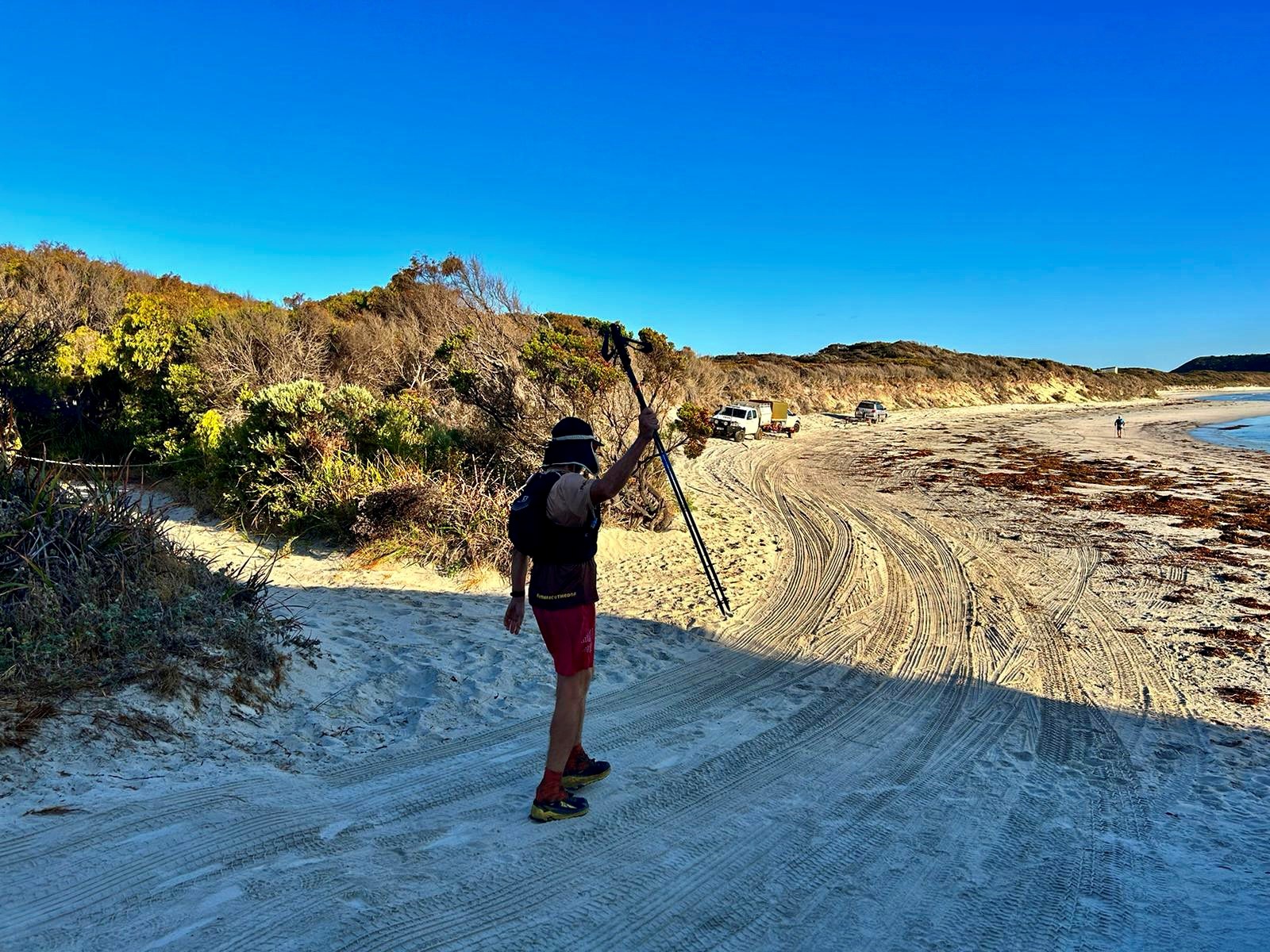
Last weekend I ran the Perth marathon for the fifteenth time, and fifty first marathon, at fifty-nine, with little or actually no marathon training but running around sixty kilometers a week. I finished in three hour and nineteen minutes, good enough for a top 10% finish overall, 379 out of a field of 3,829. My question is how is this possible? Ok, I have experience and have run a lot faster but to finish top 10%, a few months short of sixty years old, with no real marathon training or weekly distance is a concern. So my question is am I superhuman, my preferred explanation, or are marathon times increasing as the event becomes more and more popular, the more likely scenario.
It’s likely the first question that you’ll be asked when you tell people you’re a runner: what’s your marathon time? Running a marathon is a bucket list thing, and clocking a fast sub-something time is the ultimate goal. And if you happen to also beat the marathon time of a colleague or your neighbor, that’s a welcome bonus. Marathons make us competitive. But how long does the average person need to complete 42.2 kilometers? And how has performance developed throughout the years?
Something that can be seen word wide is that the popularity of running marathons has reached a bit of a plateau. That’s what Runrepeat concluded based on 107.9 million marathon results from 70,000 events in the period of 1986 to 2018. After reaching a peak of 9.1 million marathon finishers in 2016, the number of participants shrunk with 13 percent in 2018. Also, runners have never been slower. Especially men. While the average man ran a sub-4 marathon in 1986 (3:52:35 hours), that number is now 40 minutes higher: 4:32:49 hours. That might have something to do with the average age of the participants, which has gone up. In 1986 the average age was 35.2 years, while in 2018 that was 39.3 years.
If we look at the average marathon times per gender, you can see that men relatively slowed down more than women. With 27 minutes, the average time for men went up fast until it reached 4:15:13 hours in 2001; after that it slowly continued to go up. Women on the other hand slowed down more than men from 1986 (4:18 hours) until 2001 (4:56 hours), but in recent years they have actually started to run faster again. That could have something to do with the fact that for the first time in the history of marathon running, women dominated the field in 2018. 50.24 percent of the participants were female in that year.
Looking at the average marathon finishing times my time at Perth last week was well over an hour quicker than the average, and if I was to run the same time in a few months, when I hit sixty, it would be ninety minutes quicker than average. Remember I ran Perth with no specific marathon training, just consistent sixty kilometres week distance and a few ultra marathons chucked in for good measure. Actually, if you add in the races before Perth, I actually rocked up to the start line on fatigued legs from racing ultras.
I put the slower times down to one main point; more people are running marathons. Back in the day only athletes ran marathons, let me rephase that, competitive athletes. It really was a race for very fit people only; the average runner wouldn’t even contemplate turning up at the start line in their Dunlop Vollies. Marathons were for the elite of the sport and also seen as potentially too dangerous for most runners, the risk of injury being too high and also the training and recovery periods taking too long, affecting the rest of the training season.
My first marathon was Perth 2002, and I turned up on the day, entered and off I went. This year the Perth marathon sold out months before the start and there were nearly four thousand entries, a 100% increase on the entry numbers two years previous. Speaking to the Race Director post event he was talking up another doubling of entries next year. We really are in a running boom, but what has sparked it.?
COVID would have a lot to do with this resurgence I feel. When the only way you could get outside was to exercise everybody either brought a dog or started running. Post COVID people actually realised this running lark wasn’t that bad and suddenly they started entering events. Couple this with the emergence of the 5k Saturday morning park run and all of a sudden everybody is lacing up. The stigma of only athletes run marathons is also now long gone and the event is seen as an achievable goal for most runners. Then add in Socal Media and the Run influencer and there you have it, a running boom like no other.
Of course, we are also seeing the completing marathon mindset rather than the competing. Runners are finding the pain box and instead of opening the door and jumping in they slow down, take out their phone, and take a selfie. I must admit at Perth this year I’ve never seen so many phones as arm’s length pointing at the runners who held them.
If these run influencers can encourage more participation, it is a good thing, right? Yes and no. Back in the day if you wanted to get into A World Major marathon it was possible via either a good marathon time or just entering early. Those days are long gone and it’s normally a ballot at best. London has grown so big they are now having two marathons, on separate days over the weekend, to try to accommodate more runners. Even doing this your chance of getting an in is less than 10% as there were over a million entries.
The situation now is ‘proper’ runners can no longer get into marathons to compete because their spot is taken up by a runner who has no intention of pushing themselves and is just interested in the kudos of completing a marathon. I understand that comment is quite inflammatory as what constitutes who has the right to start a marathon, a competitive runner aiming for a sub three-hour finish or a runner just interested in finishing under the cut off time? Are they equal?
One solution would be to only allow entries to certain marathons on previous finishing times. Let’s say a marathon has fifty thousand field and a million requests for entries, (i.e. the London Marathon) then the fastest fifty thousand, on their best marathon times the previous twelve months, would get an entry. You could set aside a small percentage for a ballot and/or charity entries to give everybody a chance, but the main field would be made up of the quickest athletes. At the moment this is the opposite of what happens, for all world majors there is a good for age entry where achieving a certain time qualifies you an entry. The only issue here is there is a larger and larger pool of runners achieving that time and because of that it can come down to the fastest athletes rather than just achieving the time required.
Of course, there is always the option to buy yourself into most marathons, you can always find a company offering marathon packages which would include an entry plus a hotel package and a few extra items thrown in to justify their price. A frend of mine looked in to the Tokyo marathon afeter missing out on the ballot a number of times and it was close to $8K AUD, ouch. An example is Travelling Fit, and I know a few of my running friends have used this company. ( https://www.travellingfit.com/ )
Influencers have their place I suppose, if they encourage more participation in sport that’s a good thing but there is a thin line between encouraging and then coaching. You need to be wary of anyone online and their recommendations unless they are a proven coach or have decent reviews and experience you can trust and there are thousands of these very good influencers doing what they love and bringing you along for the ride. Of course, on the flip side there are also the influencers with dubious practices and loyalty to brands for financial gain rather than brand quality, shock horror.
The best influencers preaching running content earn many times more than professional running athletes, but I suppose people relate batter to the Instagram running influencers than to a professional runner who posts infrequently on events and times that are beyond the normal human being. Runners can relate to an influencer struggling to break a four-hour marathon compared to a professional chasing the two-hour version. Their content is so much better than a professional athlete as it’s their main source of income and they study the trends and algorithms to give them the most exposure and make sure their posts end up in front of the right people. An athlete hasn’t the inclination, or know how, to do this, they are more concerned with making a living running rather than talking about it. This is the main advantage an influencer has, they are appealing to runners going through the same journey as them, they have slick and professional media and can offer brand discounts, they resonate with the aspiring runner. Professional athletes can see aloof or have little or no personality.
When the influencer has some natural ability, they can use it for good. Nedd Brockman is a good example of a running influencer who has put his popularity to good use bringing in millions of dollars for his chosen charity, helping the homeless. ( https://neddbrockmann.com/pages/my-story ) As well as feats of great endurance Nedd is now concentrating on his marathon time and looking to get into the Australian marathon team for the next Olympics. He is the perfect mix of running influencer and natural athlete with a magnetic personality, a combination which has earned his charity millions of dollars and also made Nedd a rich man with his percentage cut of all donations., which is fair as he has to earn a crust.
Perth to Sydney, 46 days.
On the run influencer topic, I retained my second spot in the best Australian running blog list from Feedspot (see below). This website is awesome for all things blogs, news sites and just about anything really. I highly recommend the website and please note there are no kickbacks here. ( https://www.feedspot.com/products )
Feedspot is an RSS Reader that lets you subscribe to blogs, news sites, and any website you want to keep up with.
That’s enough on this topic for the moment, there is so much more I could delve into, but I will leave that for another post, for the moment I have to go for a run to maybe help with the reversal of the ever-slowing average marathon time.
Big shout out to fisiocrem , this product is just incredible for tired and aching legs. I use it daily and have noticed a vast improvement in recovery.
Bix hydration is just ace, a product brought to life by Vlad Ixel a professional ultra runner who knows a thing or two about hydration. ( https://www.bixvitamins.com/ ) The best thing about Bix is it tastes good with many different flavours and you never get sick of drinking it, this is a big plus as Maurten and Tailwind (both great products) can be difficult to digest later in the event. From the website :-
As an Australian elite multiple trail running champion, with wins in over 40 ultra-marathon races across Asia, recovery from training and races has always been my top priority.
In searching for a solid recovery and hydration supplement, I recognized that critical vitamins and minerals – both in diversity and quantity – were missing from almost all supplements on the market. I had the feeling that in an effort to maximize their bottom-lines, companies in the hydration space, failed to deliver a product that could meaningfully assist athlete performance.
In order to address this, I began the development of a hydration product. After two and a half years of development alongside a leading German sports scientist, BIX Recovery, an advanced, high-quality recovery drink was born.
BIX boosts 12 active ingredients scientifically balanced to replace lost electrolytes and assist in immune function. It’s designed with quality vitamins and minerals, in quantities that work!
BIX is a recovery solution for everyone, that will get you to the top of your game!
Great hydration.
What can I say about HumanTecar, ( https://athleticus.com.au/ ) it looks great, smells great and is awesome for recovery or even pre-run/workout. Read about the science behind it first and then try the products. The compression bandages are just magical after a long event. Put these on and the next day you are recovered, I have used them on a number of occasions and they never fail to astound me albeit the family poke fun at me as I look like a ‘mummy and smell funny’ !
Fractel ( https://fractel.com.au/ ) have your performance headgear covered. I love the colours and the functionality of these hats, I guarantee there is one model you’ll fall in love with.
Fractel headgear, just ace.
Shokz headphones, let you keep in touch with the world around while losing yourself in quality tunes or podcasts. ( https://shokz.com.au/ )
Best running headphones EVER !
T8 running apparel is the best you can get, second to none. Designed for the ultra humid Hong Kong conditions the owners live in. It is light and does away with any chaffing worries. T8 is the name given to the highest typhoon warning in Honk Kong, storms and typhoons with gusts exceeding 180kph, which explains the branding. ( https://t8.run/)
Altra supply the best trail shoes on the planet, in my opinion, and none better than the Olympus five. Do yourself a favour and buy a pair. ( https://www.altrarunning.com.au/ )
https://www.osprey.com/au/en/category/hydration/trail-running/ Osprey Australia have come onboard and are supplying me with two running backpacks and travelling luggage for the Run Britannia adventure. I particularly like their running backpacks and am excited to test them over the event. I’ll be using the Duro 6 and the Duro 1.5 backpacks.
Excited to have Coros onboard who have supplied me with the new Apex 2 Pro GPS watch. I already owned the Apex 2 and was stoked when Coros reached out and offered me an upgrade. Even more battery life, can you believe 75 hours using GPS, wow! The watch itself is awesome, so light and well made. The watch is paired with a incredible application to keep track of all your stats, and runners love stats! . ( https://coros.net.au/ )
I was excited about the Perth Running Festival ( https://perthrunningfestival.com.au/ ) this year as it gave me an opportunity for redemption after last year’s poor performance down to lack of training (surprise?) and wearing a race shoe not built for an ankle injury I was carrying into the event. This resulted in a three hour forty five minute finish time but worse was the stumble to the line on an ankle I should have strapped. I was confident I could better that time albeit that would be setting the bar pretty low.
My plan was to hang onto the three-hour fifteen bus and then drift backwards when I eventually got ejected out the back. I had ran three hours twenty-two minutes at the Bibra Lake marathon in July and since then had continued to run often and hit the gym, albeit little or no specific marathon training. I targeted a sub three hours twenty minutes finish as feasible. Post Bibra Lake marathon I averaged sixty-nine kilometres a week and probably three gym sessions where I’d do fifty minutes of Pilates, a five kilometre treadmill run and some weights. I’d also raced the Transcend Ultra ( https://transcendtrails.com/ ) in August and the Lighthorse 24 hour ultra ( Lighthorse Ultra 2026 | The Grand Finale 24-hour Marathon ) in September. Not ideal marathon training as I was missing the mid-week twenty kilometre plus run at marathon pace and long runs, as well as any speed work. Actually, all I was doing was running semi-regularly ?
Heading north into a headwind down the Kwinara freeway.
I got a lift to the start with Jon Pendse who picked me up at 5am. In my mind it was a 7am start so did wonder why he was picking me up so early. It was actually a 6am start which showed how much attention I had been paying to all the emails from the event. It was lucky Jon picked me up or would have started an hour after everybody. Perth is never an A-goal race for me as I’ve never done the specific marathon training and I know that I will be deep in the pain box for the last ten kilometres when, back in the day, I’d be taking names as I always finished strong. Every year I say I’m going to make a big effort, but truth be told I don’t enjoy the training as much as I use to and it’s the racing that keeps me in the sport, which explains my busy calendar. By adopting this approach you are going to race underdone and not hit your true potential, but you also get to do what you love more, so it’s a sacrifice I’m willing to make.
Less than three kilometres to the finish.
The race itself went to plan I suppose. I ran with the three hour fifteen bus until nearly half way when I lost touch into the headwind down the Kwinara freeway. I was happy enough to have held on for so long as at Bibra Lake, earlier in the year, I was ejected off the back of this bus after four kilometres. I reckon I had three to four minutes up my sleeve now, compared to the Bibra Lake marathon time, with half the event done. Once I turned and headed back North up the freeway, with a tailwind, my pace quickened and I even harboured thoughts of catching the bus. Unfortunately this didn’t last long and I was soon back to running around the three minutes forty seconds plus a kilometre.
Once you come off the freeway section, around thirty-two kilometres into the race, there is an out and back loop before the run to the finish. The first few kilometres went well enough but as we turned for the run home I realised why. A headwind is never a runner’s friend but when it’s in the last seven kilometres of a marathon it is particularly nasty. My legs gave up the ghost and the lack of marathon training was now evident for all to see. My pace edged toward five minutes a kilometre and I knew I was hemorrhaging time. This did not come as a surprise of course and I was grateful that all I had to suffer was seven kilometres , it was time to ‘stay hard‘ as Goggins would preach. ( https://davidgoggins.com/ )
With my good mate Mickey Murray, a running Benjamin Button.
I feel for the last seven kilometres I was paying the price for wearing new shoes for the event, similar to last year, what’s that about old dogs and new tricks ! I had brought the Adidas Adizero Adios fours a few days before the event and used them on the day. Overall, they have performed well but I felt they may have been a tad hard for the marathon, probably better suited to shorter races. I could feel my legs were pretty beat up and felt like they would seize up at any minute. The day itself was humid and I hadn’t drank enough either, so many rookie errors in marathon number fifty-one, you’d have thought by now I would have learned with experience, it seems not. With hindsight I should have brought another pair of Nike Alpha Flys, they just work and do give you better protection towards the backend of a marathon. The Alpha’s may have saved me a few minutes in the last seven kilometres, maybe?
In the end I managed to finish in three hours nineteen minutes and forty-eight seconds (net time) which is what I wanted at the start so happy enough. I’m a bit disappointed I finished so meekly though (albeit that headwind didn’t help?) but that’s down to not enough speed work, or long runs at marathon pace, actually not enough running full stop. To be able to run quicker now I need to run more and also concentrate on the marathon specific sessions but balance these with the risk of injury.
The sub 3 machine Jon Pendse, number 74 for him !
So, Perth marathon number fifteen ticked off. Overall, a B+, could have done better but I feel undone by poor footwear choice, again, and a headwind from hell in the last seven kilometres, with no real specific marathon training and not enough training full stop. Actually, maybe I better give myself an A given my lack of preparation. The event itself was so good, and the Perth Running Festival is going from strength to strength. If you’re looking for a scenic marathon in Australia Perth should be on your list, I highly recommend it and I’m sure I’ll be the start line next year, probably in a pair of new shoes, underprepared.
Big shout out to fisiocrem , this product is just incredible for tired and aching legs. I use it daily and have noticed a vast improvement in recovery.
Bix hydration is just ace, a product brought to life by Vlad Ixel a professional ultra runner who knows a thing or two about hydration. ( https://www.bixvitamins.com/ ) The best thing about Bix is it tastes good with many different flavours and you never get sick of drinking it, this is a big plus as Maurten and Tailwind (both great products) can be difficult to digest later in the event. From the website :-
As an Australian elite multiple trail running champion, with wins in over 40 ultra-marathon races across Asia, recovery from training and races has always been my top priority.
In searching for a solid recovery and hydration supplement, I recognized that critical vitamins and minerals – both in diversity and quantity – were missing from almost all supplements on the market. I had the feeling that in an effort to maximize their bottom-lines, companies in the hydration space, failed to deliver a product that could meaningfully assist athlete performance.
In order to address this, I began the development of a hydration product. After two and a half years of development alongside a leading German sports scientist, BIX Recovery, an advanced, high-quality recovery drink was born.
BIX boosts 12 active ingredients scientifically balanced to replace lost electrolytes and assist in immune function. It’s designed with quality vitamins and minerals, in quantities that work!
BIX is a recovery solution for everyone, that will get you to the top of your game!
Great hydration.
What can I say about HumanTecar, ( https://athleticus.com.au/ ) it looks great, smells great and is awesome for recovery or even pre-run/workout. Read about the science behind it first and then try the products. The compression bandages are just magical after a long event. Put these on and the next day you are recovered, I have used them on a number of occasions and they never fail to astound me albeit the family poke fun at me as I look like a ‘mummy and smell funny’ !
Fractel ( https://fractel.com.au/ ) have your performance headgear covered. I love the colours and the functionality of these hats, I guarantee there is one model you’ll fall in love with.
Fractel headgear, just ace.
Shokz headphones, let you keep in touch with the world around while losing yourself in quality tunes or podcasts. ( https://shokz.com.au/ )
Best running headphones EVER !
T8 running apparel is the best you can get, second to none. Designed for the ultra humid Hong Kong conditions the owners live in. It is light and does away with any chaffing worries. T8 is the name given to the highest typhoon warning in Honk Kong, storms and typhoons with gusts exceeding 180kph, which explains the branding. ( https://t8.run/)
Altra supply the best trail shoes on the planet, in my opinion, and none better than the Olympus five. Do yourself a favour and buy a pair. ( https://www.altrarunning.com.au/ )
https://www.osprey.com/au/en/category/hydration/trail-running/ Osprey Australia have come onboard and are supplying me with two running backpacks and travelling luggage for the Run Britannia adventure. I particularly like their running backpacks and am excited to test them over the event. I’ll be using the Duro 6 and the Duro 1.5 backpacks.
Excited to have Coros onboard who have supplied me with the new Apex 2 Pro GPS watch. I already owned the Apex 2 and was stoked when Coros reached out and offered me an upgrade. Even more battery life, can you believe 75 hours using GPS, wow! The watch itself is awesome, so light and well made. The watch is paired with a incredible application to keep track of all your stats, and runners love stats! . ( https://coros.net.au/ )
In a few days I lace up for my fifteenth Perth marathon. Perth was the first of my current fifty marathons when I entered on the day in 2002, running a three hour fifty-two minute race after hitting the wall at thirty-two kilometres, down to no real specific training and very poor hydration and nutrition choices, basically none of either! The only other time I’ve really hit the wall was Perth last year, again putting it down to no specific marathon training (actually no training full stop for three months prior to the event) and an ankle that gave way with ten kilometres to go. It could have been avoided if I’d strapped the ankle the night before I reckon but I didn’t and stumbled home.
My one race of pace this year, Bibra Lake fun run 6k.
Unlike last year I have trained continually this year and have no injuries to speak off. All my races have been quicker, than last year, so feel I could maybe nudge a three-hour twenty finish or quicker finish. I’ll probably run with the three-hour fifteen minute pacing group and try to hang on, similar to Bibra Lake earlier in the year. At Bibra I was ejected within the first two kilometres and knew I was in for a long day at the office. I did eventually pull it together, with a negative split, and a three hour twenty-two finish time. I’d like to go a few minutes quicker for Perth and have brought a new pair of trainers , the Adidas Adizero Adious 4 . Admittedly last year was a disaster with the Puma Nitro Elites but I’m confident these Adidas are a tad more marathon friendly, and both ankles are fine.
My new shoes for the race, they look forgiving right?
Perth marathon times:-
2002 3:52
2003 3:52
2007 3:52 (Consistent for the first three races!)
2008 3:22
2009 3:06
2010 3:05
2011 2:54
2012 2:51
2013 2:41 (my fastest Perth)
2014 2:46
2015 2:49
2016 2:47
2024 3:14
2025 3:45
2026 so far has been a pretty good year.
I’ve gone further at Herdy’s BYU than the previous few years, managing 30 hours this year for an Australian age record (59).
Herdy’s front yard Ultra 30 hours, Australian Age Group record.
Then backed up Herdy’s with a good time, 71 hours, and second place at the Delirious West 200 miler.
Delirious West 200 miler, 2nd place.
Cape to Cape miler was another course PB and a top five finish.
Cape to Cape Miler, 5th overall.
A three hour twenty-two marathon for my fiftieth marathon was a good result on little marathon specific training, well actually no marathon specific training.
Bibra Lake marathon number 50 3:22
Smashed Transcend with a PB by nearly two hours, albeit I was injured last year but I’ll take it.
Transcend Ultra, a sub nine-hour finish.
Then two weeks post Transcend I race the 24-hour Lighthorse Ultra and got seventh male on very tired and beat up legs.
Seventh male at the 24-hour Lighthorse Ultra, two weeks post Transcend Ultra.
Which leaves me ready for Perth 2026.
The post below was one I wrote before the Perth 2025 marathon, worth a read, gives you some background on my Perth journey thus far. Let’s see how I get on this coming Sunday.
Before I moved to the dark side (ultra running) , as my friend Jon Pendse calls it, I use to be a real marathon show pony. Lapping up the adulation of the crowd, enjoying racing and beating as many competitors as possible and always keeping an eye on my fellow runners who were in my sphere of ‘I know I can beat that guy‘. It wasn’t always this way though and it took quite a few years to go from the novice runner to the show pony you see in the image below.
The ultimate marathon show pony. City to Surf marathon 2016.
It all began in 2002 at the Perth marathon. Back in those days you could enter on the day and I had set my alarm for 5am not sure if I would enter or not. The day before I had been surfing with friends with running a marathon the furthest thing from my mind. No carbo loading albeit I think I had a full English fry up from memory ? The alarm sounded and on a whim I decided to go, what was the worst thing that could happen ? I drove to the start line, entered and before I knew it I was running a marathon. My logic for entering was I had completed a half iron man earlier in the year so had managed to obtain a good level of fitness , enough I thought to be able to run a three hour thirty marathon as a minimum. Sounded like a plan but with no specific marathon training at all I would live to regret this decision. Remember we’re talking 2002, before YouTube , Strava or influencers (that may have been a good thing ? as everybody would have said don’t do it of course!) My running spreadsheet didn’t even start until post Comrades in 2008, so I have no idea how much training I had done but it was nowhere near enough. This was also before running marathons became ‘trendy‘ or even normal, bloody influencers !
As it was I started well enough and managed to hold five minute kilometres upto the thirty two kilometre mark , when , you guessed it, I hit the wall and hit it hard ! There were no gu’s in 2002 and all we had was water and fruit at the aid stations. I certainly didn’t take enough of either but I do remember eating a few lumps of chocolate at the thirty kilometre mark, not enough with hindsight. When I did hit the wall it was a surreal experience as your mind is still expecting your body to continue at the pace dialed in from the start but the legs just stop working . It really is a weird feeling and it comes on like a freight train, one minute you’re thinking how easy a marathon is and a minute later you’re wondering if you will even finish. I remember the look of worry on the spectators faces as I stumbled along , and I mean stumbled. At thirty two kilometres I was on track and looking to finish in my target three hours thirty minutes time , as it was I finished in three hours fifty two minutes, ouch ! What kept me going towards the end was the thought of a big Mac with chips and a chocolate milkshake, as soon as I crept over the line I was off to the nearest McDonald’s drive through. After driving home I was stuck int the car as my legs seized up solid and I had to call my wife, from the carport, to help me out the car, so funny.
I entered the following year, 2003, and at least trained for the event. This time I went out incredibly slow and got to the last ten kilometres feeling fresh as a daisy , I then put my foot down and came in like a train. The finishing time, surprisingly , the same time three hours fifty two minutes but felt so good at the end, should have gone quicker. I ran the Rottnest marathon later in the year and finished in three hours twenty seven minutes , a time I probably could have ran in Perth if I had gone out quicker.
I didn’t run another marathon until 2007 when I raced Perth for the third time as my mate Dan Timbers had trained , for months, for the race and I decided to keep him company, a few days out from the start. This time I ran with Dan, who was looking for a sub four hour finish, and I was finding the pace very easy. The Eagles coach , John Worsfold, ran past us returning to the start, it was an out and back, and this was the impetus I needed . I left Dan and chased John down. I eventually caught John a few kilometres from the finishing line, gave him some advice and ran over him. My finish time, three hours fifty two minutes , for the third time !
2008 I ran a three hours twenty two minutes after finishing Comrades earlier in the year ( eight hours, twenty five minutes). 2009 I got my time down to three hours six minutes , after finishing Comrades in eight hours twenty eight minutes. Highlight of the year was my first sub three at the City to Surf marathon post Perth.
2009. Finish line in sight. A PB 3:06.
2010 I was down to three hours five minutes after running a silver time at Comrades, seven hours twenty two minutes, three weeks earlier. I paid the price for this run with my first calf knot, which is better than a tear I suppose. Put me out of action for a few weeks.
The only photo of 2011, racing in Asics Piranhas.
2011 I ran my first sub three at Perth finishing in two hours fifty four minutes, one of six marathons I ran that year all sub three as I started my thirty two sub3’s in a row streak, from 2009 to 2019. This was also the only time I ran a marathon in proper racing flats, Asics Piranhas, and also Skins (compression tights) which were new at that time. I was always an early adopter when it came to anything which I thought would get me to the finish line quicker.
2012 All smiles with Brad, Steve and Jon.
2012 I ran a two hours fifty one minutes after a two hours fifty nine at Bunbury a few months earlier, the closest I came to missing out on a sub3. The following year, 2013, I won Bunbury running a two hour forty three minutes and backed that up with my fastest Perth time of two hours and forty one minutes, and my highest finish , good enough for sixth. Unfortunately I never got that top five finishers medal at Perth, coming sixth twice over the years.
2013 and my fastest Perth finish, 6th place.
In my tenth Perth marathon in 2014 I ran a two hours and forty six minutes after a disappointing Bunbury marathon where I ran fourth as defending champion. I had gone out to quick and paid the price and this knocked the wind out of my sails for a few months, resulting in a slower Perth time compared to the previous year. 2013 proved to be my fastest Perth time.
2014. My now go-to finishing photo.
I got Raf Baugh onboard for Perth 2015 in an attempt to break two hours and forty minutes. My training was on-point and I really put in a big training block but picked up an injury a week out from the race. This really affected my confidence and I finished in two hours and forty nine minutes, good enough for a top ten finish. I remember at half way nearly pulling the pin but then buckling down and accepting my A-goal was gone and just clicking over the kilometres. Can’t knock a top ten finish I suppose.
2015. A great training block ruined by a calf niggle in the last week.
Managed to get a bit quicker in 2016 and ran a two hours forty seven minutes, a time I eclipsed later that year at the City to Surf marathon running another two hours and forty one minutes. I put this down to the continuation of lessons I learnt working with Raf, the previous year. This turned out to be my last sub three at Perth and my last Perth marathon until 2024.
A Dennis Tan classic. 2016
2017 I was sidelined with a calf tear and 2018 I was out with a bad case of Plantar Fasciitis. We all know what happened in 2019 and then I disappeared into the ultra world until 2024 when I ran Perth for the thirteenth time and finished in three hours and fourteen minutes, wearing bib number one as I knew the Race director.
2024 , Perth marathon number 13 and marathon number 48.
So that leads me to next Sunday, Perth marathon number fourteen. I have done little running since the Cape to Cape Ultra ( https://www.cape2capeultra.com.au/ ) in June this year , albeit I have managed four trails run in the last ten days culminating in a forty kilometre run over the weekend, is this enough ? No chance, but I’m hoping if I start conservatively I may be able to pull it off, maybe? I’ll run tomorrow and try and hold 4:30min/k pace for ten kilometres, if I can do that comfortably I may hop on the three hour fifteen bus, otherwise it’s back to where I started in 2002 and try to finish in three hours thirty minutes. I have an impeding sense of Deja-Vu ?
Perth 2025 Running Festival had been on my radar since I hit the wall at the event last year. I was determined to make amends and finish strong. Unfortunately (this seems to be the word of 2025!) after the Cape to Cape miler in June I stopped running , and I mean stopped. I then ran the Transcend Ultra in August and sustained ligament damage in my ankle. ( https://transcendtrails.com/ )
As you can see from the Strava screen shots ( you have Strava right ? ( https://www.strava.com/dashboard ) since the Transcend Ultra in August I only ran five times in virtually three months. I did manage to get out onto the trails four times before Perth but no road running at all. Not ideal.
Being a good friend of the RD helps get me my Perth number. 666.
The plan was to try and run a three hour thirty minutes marathon, maintaining five minutes kilometre pace, and I roped in Haydo and Adam for company. Truth be told I had no right running Perth with my training , or lack of training, and when my alarm went off on the morning off the race I hit the snooze button a few times and was so close to just not even turning up. What made me get out of bed and drive to the start was a post I wrote a few weeks ago than discussed whether a DNF is better than a DNS ? ( https://www.runbkrun.com/2025/08/27/how-much-is-too-much-or-is-a-dnf-better-than-a-dns-part-1/ ) No1 Wife also encouraged me to go and have a go, what could go wrong ?
Running with Haydo and Adam around the 4k mark. The Puma Nitro R3’s still working well as this point.
I thought I needed all the help I could get so went for the Puma Nitro R3 wheels. This turned out to be my undoing in the end. The shoes are awesome if you are running quickly but incredibly unstable when your ankle gives way. I won’t give the game away too soon but needless to say I probably ended up wearing the worst possible shoes for the situation. Sigh,
Weapons of mass destruction, they certainly killed my race.
On the Kwinana Freeway on the way out, around 20k ? Still smiling.. just.
The first 10k went to plan, running just below five minute kilometres with Haydo and Adam and enjoying the event. Surprising the three thirty bus caught us just before the tunnel which surprised us as we thought we were well ahead of them. The bus was being driven by my good friends Ryan Shand and Chris Lark, with Damo on board, a fellow Yelo runner who would run a PB, well done tiger. This is why I run Perth, so many good mates.
The guys and the bus left me just before the tunnel, I stopped to take a Gu with some water and they just slowly moved away as my pace dropped, albeit only a little. I was starting to feel the pace but was still confident I could finish close to my three thirty goal. I was actually feeling better than I did at the same time last year so took this as a small win, undaunted I put my head down and planned to get to the turn around at around twenty eight kilometres with a chance to still go three thirty.
The Kwinana freeway section out and back is the hardest part of the event. You are on a large open space with no protection from the conditions and the sun was starting to play its part in the proceedings, it was heating up. I got to the turn around and was just behind Adam and Haydo and put in a spurt to try and catch them. This is where my Puma’ started to come into the picture. For some reason I felt I was slipping out of the shoe each time I put my foot on the ground, I think because my ankle was starting to flare up I was changing my running gait , this had the effect of making each step very unstable. What initially became a nuisance became something very bigger, very quickly. When I got on to Riverside Drive the camber was the final nail in my marathon coffin. My right ankle, the one I damaged in August at the Transcend Ultra, was now becoming a big problem. In the end I couldn’t run on the front of my foot, too painful, so had to start heel striking which was easier albeit probably looked awful for the spectators.
Another ‘finish from hell’ albeit this time I can blame an ankle injury and shoes ?
Each kilometre got worst and for the last few I was hobbling with one very bad right ankle , it wasn’t pretty and if the marathon was any longer I don’t think I would have been able to finish. I’ve seen video images of me finishing and it really was very ugly. I think the only thing that kept me going was channeling my inner Goggin’s and ‘staying hard‘.
So could this have been avoided ? Definitely, quite a few rookie errors like no training on the road, no strapping of an ankle that was probably still damaged from a previous race a few months earlier and the biggest error wearing racing shoes that really offer no support whatsoever for ankles and become very unstable when it all falls apart. I’m blaming the shoes which are now for sale on facebook but truth be told I got what I deserved. On the bright side I had a great time , initially , with good friends and the event was brilliant. I also finished marathon number forty nine and got a nice new shiny medal, winning.
So that’s twice in a row I’ve stumbled home after hitting the wall late in the event, the first time due to going out way too quick and this year a combination of not enough training and an injured ankle in shoes with no support. This means I must go back next year and try to run a sub three marathon , my last chance in the 55-59 age group, target is 2:59 which is the event age group record. I am motivated and I will not be running in Puma’s that for sure. Will it be Deja-vu for a third year on the trot ?
Big shout out to fisiocrem , this product is just incredible for tired and aching legs. I use it daily and have noticed a vast improvement in recovery.
Bix hydration is just ace, a product brought to life by Vlad Ixel a professional ultra runner who knows a thing or two about hydration. ( https://www.bixvitamins.com/ ) The best thing about Bix is it tastes good with many different flavours and you never get sick of drinking it, this is a big plus as Maurten and Tailwind (both great products) can be difficult to digest later in the event. From the website :-
As an Australian elite multiple trail running champion, with wins in over 40 ultra-marathon races across Asia, recovery from training and races has always been my top priority.
In searching for a solid recovery and hydration supplement, I recognized that critical vitamins and minerals – both in diversity and quantity – were missing from almost all supplements on the market. I had the feeling that in an effort to maximize their bottom-lines, companies in the hydration space, failed to deliver a product that could meaningfully assist athlete performance.
In order to address this, I began the development of a hydration product. After two and a half years of development alongside a leading German sports scientist, BIX Recovery, an advanced, high-quality recovery drink was born.
BIX boosts 12 active ingredients scientifically balanced to replace lost electrolytes and assist in immune function. It’s designed with quality vitamins and minerals, in quantities that work!
BIX is a recovery solution for everyone, that will get you to the top of your game!
Great hydration.
What can I say about HumanTecar, ( https://athleticus.com.au/ ) it looks great, smells great and is awesome for recovery or even pre-run/workout. Read about the science behind it first and then try the products. The compression bandages are just magical after a long event. Put these on and the next day you are recovered, I have used them on a number of occasions and they never fail to astound me albeit the family poke fun at me as I look like a ‘mummy and smell funny’ !
Fractel ( https://fractel.com.au/ ) have your performance headgear covered. I love the colours and the functionality of these hats, I guarantee there is one model you’ll fall in love with.
Fractel headgear, just ace.
Shokz headphones, let you keep in touch with the world around while losing yourself in quality tunes or podcasts. ( https://shokz.com.au/ )
Best running headphones EVER !
T8 running apparel is the best you can get, second to none. Designed for the ultra humid Hong Kong conditions the owners live in. It is light and does away with any chaffing worries. T8 is the name given to the highest typhoon warning in Honk Kong, storms and typhoons with gusts exceeding 180kph, which explains the branding. ( https://t8.run/)
Altra supply the best trail shoes on the planet, in my opinion, and none better than the Olympus five. Do yourself a favour and buy a pair. ( https://www.altrarunning.com.au/ )
https://www.osprey.com/au/en/category/hydration/trail-running/ Osprey Australia have come onboard and are supplying me with two running backpacks and travelling luggage for the Run Britannia adventure. I particularly like their running backpacks and am excited to test them over the event. I’ll be using the Duro 6 and the Duro 1.5 backpacks.
Excited to have Coros onboard who have supplied me with the new Apex 2 Pro GPS watch. I already owned the Apex 2 and was stoked when Coros reached out and offered me an upgrade. Even more battery life, can you believe 75 hours using GPS, wow! The watch itself is awesome, so light and well made. The watch is paired with a incredible application to keep track of all your stats, and runners love stats! . ( https://coros.net.au/ )
The title of this post is an oxymoron for sure, 6k and fun run should never be in the same sentence. This event is dear to us more mature runners’ hearts as there is an over 55 category, in the 6k and 12k and they give out cash prizes. Albeit the cash prize barely pays for the coffees you have to forfeit at Yelo, on Thursday morning if you podium. A few years ago, I ran the 12k and took the win and this year I was returning for the 6k version. Last year it was cancelled due to heavy rain, which if you know Perth you know is as rare as hen’s teeth. As always, I was totally unprepared for any race of this distance with zero speed work at all, probably since my 12k win two years previous? As with that day I had no idea how I’d go and would just go out as fast as I could and hang on for as long as I could, simple really.
Love this shot, getting ready for the fun run . I wasn’t as confident as the image shows.
In the 2k warm up my legs felt heavy and self-doubt was beginning to creep into my race strategy, after all at fifty-nine what were the odds my hamstrings and/or calf muscles even surviving a 6k sprint, slim I reckon. No worries, I was there for the win (age group win that is) so I would go hard from the start and hang on for as long as possible, what could go wrong.
Once the race started, I found myself in the top ten and actually felt reasonably good, I even had to pull myself back a bit, which worried me. The start is a flat road before a slight downhill and when my Coros pipped up a 3:33min/k for the first kilometre I knew I was in trouble. A good indicator of me going too quick was there was no small children running anywhere near me, in this sort of events the kids always start like scowled cats and come home walking.
I had no right running that pace and knew the head gasket would be blowing pretty quickly if I tried to carry on. As it was the next two kilometres were slower but still way better than I thought I could manage, a 3:48min/k and then a 3:51min/k, not too shabby. This put me a three kilometres deep in the pain cave, I mean deep, with half the race still to go.
I spotted Dennis Tan, the event photographer, and sped up.
I had a runner infront of me who I passed and then just got the head down and tried to get to the finish line without injuring myself or slowing down to a crawl or even walking, trust me it had crossed my mind. At this point I was pretty certain I had the win in the bag if I just carried on close to my starting few kilometres pace, albeit slowing slightly of course. I perked up when I saw my friend Dennis Tan, the official photographer, and even managed a smile (or maybe looking at the photo a grimace?) I managed to hang on to 3:55min/k pace for kilometrs four and five and stagged home for the final kilometre in 4min/k flat, mission accomplished. Finished in 22:58 for 6k, average pace 3:50min/k, which I was very happy with. An added bonus was 8th place overall from a field of over two hundred and fifty runners, very stoked.
All smiles post event. Micheal took out the 12k, to my right, and Bartsy finished, too my left.
So, I got away with another event I had no right getting away with. No injuries and an average pace way better than I thought I had in me, sometimes it just all comes together and at this fun run it seems to happen often. Of course, you forget how much pain I was in for the last kilometre which, when you run 5k pace for a 6k race, is probably expected. When I crossed the line, I was done and I mean done, I hit the deck and adopted the recovery position. I had nothing left it the tank, nothing. In the results there was runner one second behind me but honestly, I never knew, I was blinkered., or was that buggered? My main rival for the win, Trevor Scott, finished nearly three minutes behind me and did himself some serious damage in the process. He had to be carried to the podium and helped to his second position spot. Trevor is sixty-seven now and ran an incredible time, which seems to have broken him unfortunately. He was carried off by the medical staff post awards, heading to hospital.
Two years since my last win, at the 12k version of the ‘fun run’.
It felt good to be back on the podium for the age group win and as I said two years ago will this be my last one? Who knows, maybe I should concentrate on the shorter distances again but feel if I actually trained for pace my hamstrings would eventually tear and my calf; either or. I did enjoy the event and even more being at the front of the pack for a change, albeit the field was hardly pro-level being a free fun run but still as far as I was concerned, I was killing it.
Helping the great Trever Scott off the podium.
Right next week is the Choo Choo run, a 33km trail race of sorts, then a three-week gap before the Perth Running Festival, my fifteenth Perth marathon and marathon number fifty-one. Three weeks post Perth it’s probably one of my favourite milers, the Feral Pig. So excited to take on the pig for the sixth time, currently four one to me. Racing is life, the rest is details, away we go.
Big shout out to fisiocrem , this product is just incredible for tired and aching legs. I use it daily and have noticed a vast improvement in recovery.
Bix hydration is just ace, a product brought to life by Vlad Ixel a professional ultra runner who knows a thing or two about hydration. ( https://www.bixvitamins.com/ ) The best thing about Bix is it tastes good with many different flavours and you never get sick of drinking it, this is a big plus as Maurten and Tailwind (both great products) can be difficult to digest later in the event. From the website :-
As an Australian elite multiple trail running champion, with wins in over 40 ultra-marathon races across Asia, recovery from training and races has always been my top priority.
In searching for a solid recovery and hydration supplement, I recognized that critical vitamins and minerals – both in diversity and quantity – were missing from almost all supplements on the market. I had the feeling that in an effort to maximize their bottom-lines, companies in the hydration space, failed to deliver a product that could meaningfully assist athlete performance.
In order to address this, I began the development of a hydration product. After two and a half years of development alongside a leading German sports scientist, BIX Recovery, an advanced, high-quality recovery drink was born.
BIX boosts 12 active ingredients scientifically balanced to replace lost electrolytes and assist in immune function. It’s designed with quality vitamins and minerals, in quantities that work!
BIX is a recovery solution for everyone, that will get you to the top of your game!
Great hydration.
What can I say about HumanTecar, ( https://athleticus.com.au/ ) it looks great, smells great and is awesome for recovery or even pre-run/workout. Read about the science behind it first and then try the products. The compression bandages are just magical after a long event. Put these on and the next day you are recovered, I have used them on a number of occasions and they never fail to astound me albeit the family poke fun at me as I look like a ‘mummy and smell funny’ !
Fractel ( https://fractel.com.au/ ) have your performance headgear covered. I love the colours and the functionality of these hats, I guarantee there is one model you’ll fall in love with.
Fractel headgear, just ace.
Shokz headphones, let you keep in touch with the world around while losing yourself in quality tunes or podcasts. ( https://shokz.com.au/ )
Best running headphones EVER !
T8 running apparel is the best you can get, second to none. Designed for the ultra humid Hong Kong conditions the owners live in. It is light and does away with any chaffing worries. T8 is the name given to the highest typhoon warning in Honk Kong, storms and typhoons with gusts exceeding 180kph, which explains the branding. ( https://t8.run/)
Altra supply the best trail shoes on the planet, in my opinion, and none better than the Olympus five. Do yourself a favour and buy a pair. ( https://www.altrarunning.com.au/ )
https://www.osprey.com/au/en/category/hydration/trail-running/ Osprey Australia have come onboard and are supplying me with two running backpacks and travelling luggage for the Run Britannia adventure. I particularly like their running backpacks and am excited to test them over the event. I’ll be using the Duro 6 and the Duro 1.5 backpacks.
Excited to have Coros onboard who have supplied me with the new Apex 2 Pro GPS watch. I already owned the Apex 2 and was stoked when Coros reached out and offered me an upgrade. Even more battery life, can you believe 75 hours using GPS, wow! The watch itself is awesome, so light and well made. The watch is paired with a incredible application to keep track of all your stats, and runners love stats! . ( https://coros.net.au/ )
Last weekend marked the end of the Ultra Series WA involvement in the Lighthorse Ultra after ten years. ( https://www.ultraseries.com.au/ ) I’m hoping another organisation or group of ultra runners will take over the mantle and continue the event as it’s a little ripper and the only 24-hour timed event in Western Australia. The course had been shortened to just over two kilometres due to road works at one end of the course which disrupted parking, this was actually a good thing as it took out a little hill and it meant you ran past your gazebo, and comfortable chair, more often. (Running past your gazebo more times could be a double-edged sword of course especially when you’re buggered as it starts calling your name!)
I first ran the 12 hour event in 2020 and raced around thirty three kilometers before scuttling home , it was a mixture of never experiencing a timed event and the midnight start. Three hours in I was cooked although I blame Jon Pendse who set the pace and an eventual course record! Funnily enough the following morning I got up and ran another thirty three kilometres. I could have gone back to the event and logged many more kilometres and actually got a reasonable total. In my defence I had moved house the previous week and was probably not in the best mind set for a twelve-hour event, it being my first, add in the midnight start, another first, and I was probably doomed from the start.
Waiting at the start with second to my right, Tom Rado, and the winner , Shane Aris, to my left.
Since then, I have raced the 24-hour version five times from 2021 to 2025, I missed last year as my beloved Fremantle Dockers were playing finals footie and being a Freo’ tragic couldn’t miss it. (We lost by a point!) After racing the Transcend Ultra two weeks prior I knew this final event would be a test, but truth be told underestimated how much of a test. I set my A goal on getting as close to two hundred kilometres without destroying myself, I wanted to enjoy this last dance. Plan B was a miler distance, one hundred and sixty kilometres, and there was no plan C.
Start (or finish) of the event village.
I would be self-crewed for the first time as no one from my usual Yelo crew were not interested but I was happy enough to take on the event alone as I had experience and a good set up on my side, a complete opposite to my naivety in 2020. Karen drove me to the start line thirty minutes before the start, and we set up my gazebo at the end of the start/finish corral, being one of the last to arrive. Once I had my gazebo setup with my chair and table I started to put out all the food I would not eat during the event. It’s a tradition of all ultra runners to buy about ten times more food than they actually consume, it’s more of a ‘comfy blanket’ situation I suppose. When you can’t eat and feel actually sick as a dog it’s good to look around at all the food you brought, which now disgusts you, no one said ultra running was smart !
The boardwalk bathed in moonlight.
This year I had outdone myself and only brought my food stash on the way to the event via a local IGA store which was being refurbished so was half empty. I still spent over seventy dollars but really brought very little, the cost-of-living crisis is real in sunny Perth it seems. I did have weetbix for breakfast and lots of milk as well as hot water in flasks for sweet tea, I figured this would be enough after adding a few bix gu’s. ( https://www.bixvitamins.com/en-au ) During the event it turned out not to be enough as I missed a good evening meal, instead settling for a protein shake, which probably wasn’t enough. This may have contributed to my downfall in the early hours of the morning when at one point I think I did about ten kilometres in three hours, that and the torrential rain.
Enjoy the conditions tucked away in my gazebo with a cup of very sweet tea.
The twenty-four hour race starts at midday Saturday finishing midday Sunday, funnily enough, there is also a twelve-hour race starting at midnight, a six-hour race starting at six am Sunday morning and a three-hour race starting at nine am Sunday. They all finish at midday Sunday. This year was the biggest entry ever with over one hundred and sixty competitors in the twenty-four event alone, overall, I think there was close to four hundred competitors including the relay runners.
Fun and games early on.
So let’s get started, I scuttled to the start and met up with the eventual winner and second place, Shane and Tom, on the start line as well as Edywn, the Birdy’s backyard Ultra runner from a few months earlier, a very packed field. Ed went off like a rocket and was chasing the relay runners while Tom and I also started far too fast, but I thought I might as well enjoy a bit of pace early as it would soon turn into an ‘ultra slog‘ later into the event. Looking at Strava (you have Strava right? Remember if it’s not on Strava it didn’t happen ! https://www.strava.com) I ran at a good pace for the first thirteen kilometres before a quick stop to rehydrate and take a Bix Gu. I then continued to about thirty-six kilometres with no real breaks bar refueling every other lap and taking a bix gu onboard or a chocolate bar.
Chasing runners through the night.
The first six hours were uneventful; I wasn’t feeling great but was lapping relatively consistently between late five-minute and early six-minute kilometre pace. The first test came about eight when the heavens opened and I scuttled to my chair and decided to wait it out with a nice cuppa. As I said earlier, I wanted to enjoy this last Lighthorse and there’s something comforting about sitting in your reclining chair, protected by your gazebo, all nice and warm as you watch runners scuttle past in torrential rain. Unfortunately, I knew I couldn’t sit there forever so changed my top, put on a thermal, gortex rain jacket and waterproof trousers and exploded into the night. I was listening to Hail Mary, one of my favourite novels, and just walked a few kilomters enjoying the conditions before returning to my earlier pace.
Looking at Strava kilometre sixty-four was my first major stop, probably thirty-five minutes. I remember sitting down in the chair and setting my iPhone for a ten-minute timer which I think I may have snoozed. This would have been around seven thirty in the evening, and I should have been eating a good meal but as I mentioned earlier, I didn’t have one, this would come back and bite me late in the evening. An hour later I took another long break, this time nearly fifty minutes but I think this was mainly due to more rain. I would take three more long breaks at around one in the morning, three in the morning and just before sunrise at five in the morning. It just came down to fatigue and not eating enough, which in the end slowed progress to a crawl. It was during this one am to five am period I lost a lot of time to the other runners and was sitting around 18th overall when the sun rose.
This is one of the major drawbacks of no crew, you are left to your own devices and there’s no one there to push you out of your comfortable chair into the dark or even offer words of encouragement. It was just too easy to set timers starting at ten minutes and then twenty minutes and hit snooze when the call to action eventually arrives. My two hundred kilometre goal was well and truly over and early on in the morning my plan B, of a miler distance total, looked under threat. I would need to pull my finger out to make one hundred and sixty kilometres.
Perked up when the sun eventually showed itself.
The only bright side of running very little in the early morning was my legs had pretty well recovered so as soon as the sunrose I got to work, ticking off laps and moving up the field. I was now lapping probably as quick as the front runners, but they have many laps on me. I was able to catch and pass nine runners in the last three hours and grab seventh male and ninth overall, with a reasonable total of 173 kilometres, according to Strava. After the disaster of the previous evening, I was stoked to finish strong and kept running to the very end. This one goes down as a what could have been but with the Transcend Ultra still in my legs I’m pretty happy with a top ten finish, albeit if this event is kept on I will be going again to break two hundred in my sixties, you’d be mad not to right?
So the main take away from Lighthorse 2026 is I can still do hard shit but it’s getting harder, funny that. Training wise, post Transcend Ultra, has been mainly down the local gym on a treadmill with little road running and this has been the story of the last six months. I’m not putting in any ware near enough kilometres for the races I have entered and for the events coming my way towards the end of the year and into 2027. I can get through the Perth marathon in October and the Feral Pig miler in November on experience but the Montane Winter Spine in January is a whole different ball game. ( https://www.thespinerace.com/race/montane-winter-spine/ ) It’s bad enough that any training I do will be in a Perth summer when the event is in an English winter. Training in high thirties to then race in minus temperatures normally doesn’t end well, add in the actual Spine terrain, which is something I don’t have in Perth, and I’m taking this bad boy on blind. The only way I can get to finish is to just go overboard on fitness and get as cardio fit as possible and then hope that fitness and mental toughness will get me to the finish line, after all there will be more hiking than running it seems.
The Winter Spine is billed as the most brutal event in Britain and the suffering seems to be turned up to a ‘Spinal tap eleven’, I seem to have typed that a lot lately? I’m ok with that but do I want to put myself through the mental torture the Spine race will dish out, add in the eighteen hours of darkness ,as you’re running through the depths of January, and it seems to be a sufferfest , which is the point of course but after so many sufferfests when is enough enough?
Taking a power nap with a few minutes to go .
For the moment I need to start thinking about the Perth marathon in October. I have four weeks to try and inject some pace back into the legs and the goal is a three-hour fifteen minute finish or better. It’ll be my fifteenth Perth marathon and fifty first marathon, to go with my sixty-seven ultras, the numbers are starting to get pretty large which as I approach sixty is probably expected. Post Perth it’s the Feral Pig Miler in November ( https://www.feralpigultra.com.au/ ) and then I suppose I’ll know if I’m going to take on the Spine? Right, better get busy I have a marathon to train for…..
Big shout out to fisiocrem , this product is just incredible for tired and aching legs. I use it daily and have noticed a vast improvement in recovery.
Bix hydration is just ace, a product brought to life by Vlad Ixel a professional ultra runner who knows a thing or two about hydration. ( https://www.bixvitamins.com/ ) The best thing about Bix is it tastes good with many different flavours and you never get sick of drinking it, this is a big plus as Maurten and Tailwind (both great products) can be difficult to digest later in the event. From the website :-
As an Australian elite multiple trail running champion, with wins in over 40 ultra-marathon races across Asia, recovery from training and races has always been my top priority.
In searching for a solid recovery and hydration supplement, I recognized that critical vitamins and minerals – both in diversity and quantity – were missing from almost all supplements on the market. I had the feeling that in an effort to maximize their bottom-lines, companies in the hydration space, failed to deliver a product that could meaningfully assist athlete performance.
In order to address this, I began the development of a hydration product. After two and a half years of development alongside a leading German sports scientist, BIX Recovery, an advanced, high-quality recovery drink was born.
BIX boosts 12 active ingredients scientifically balanced to replace lost electrolytes and assist in immune function. It’s designed with quality vitamins and minerals, in quantities that work!
BIX is a recovery solution for everyone, that will get you to the top of your game!
Great hydration.
What can I say about HumanTecar, ( https://athleticus.com.au/ ) it looks great, smells great and is awesome for recovery or even pre-run/workout. Read about the science behind it first and then try the products. The compression bandages are just magical after a long event. Put these on and the next day you are recovered, I have used them on a number of occasions and they never fail to astound me albeit the family poke fun at me as I look like a ‘mummy and smell funny’ !
Fractel ( https://fractel.com.au/ ) have your performance headgear covered. I love the colours and the functionality of these hats, I guarantee there is one model you’ll fall in love with.
Fractel headgear, just ace.
Shokz headphones, let you keep in touch with the world around while losing yourself in quality tunes or podcasts. ( https://shokz.com.au/ )
Best running headphones EVER !
T8 running apparel is the best you can get, second to none. Designed for the ultra humid Hong Kong conditions the owners live in. It is light and does away with any chaffing worries. T8 is the name given to the highest typhoon warning in Honk Kong, storms and typhoons with gusts exceeding 180kph, which explains the branding. ( https://t8.run/)
Altra supply the best trail shoes on the planet, in my opinion, and none better than the Olympus five. Do yourself a favour and buy a pair. ( https://www.altrarunning.com.au/ )
https://www.osprey.com/au/en/category/hydration/trail-running/ Osprey Australia have come onboard and are supplying me with two running backpacks and travelling luggage for the Run Britannia adventure. I particularly like their running backpacks and am excited to test them over the event. I’ll be using the Duro 6 and the Duro 1.5 backpacks.
Excited to have Coros onboard who have supplied me with the new Apex 2 Pro GPS watch. I already owned the Apex 2 and was stoked when Coros reached out and offered me an upgrade. Even more battery life, can you believe 75 hours using GPS, wow! The watch itself is awesome, so light and well made. The watch is paired with a incredible application to keep track of all your stats, and runners love stats! . ( https://coros.net.au/ )
The Transcend Ultra is a beast of an ultra. Sixty-five kilometres but nearly three thousand metres of elevation and trust me that is a lot. Looking at the graphic above you can see if you’re not going up a very steep hill you’re stumbling down the other side. This means the quads and hammys are being continually beaten. I was better prepared than the first time I ran it last year where a lack of training and a sprained ankle had me stumbling home in just over eleven hours. It’s worth a read so here’s the link to the post :- https://www.runbkrun.com/2025/08/20/transcend-ultra-2025/
This year I was consistent in my training in the fact I did something most days but that something more than not involved going to the gym, hitting the Pilates Reformer machine and a 5k treadmill run before a few weights. Not ideal preparation for a sixty-five kilometre ultra with some serious vert on trails. This year I think I’ve been on trails twice, once for the Delirious West 200 miler in April ( https://www.deliriouswest200miler.com.au/ ) and then again for the Cape to Cape miler in June. ( https://www.cape2capeultra.com.au/ ) This seems to have become a thing lately, just no time on the trails bar long multi day’s events. Funnily enough with muscle memory, experience and general fitness I find I don’t need any trail or even elevation training and by not running on trails when you actually do it make the whole experience more enjoyable? Logic in my madness, not so sure.
Racing the sunrise up the first hill.
WALYUNGA – AVON RIDGE ESTATE PARK 12.6KM +604m
Walyunga stands for ‘happy place’ so what a great place to start! As the sun rises over Boongarup Pool the runners will start their journey on the Pilgrim single track along the river banks of the Avon river, heading down stream. They will then face a steep incline up to the ridge line of Mt Mambup with the Perth city in view and the beautiful Avon Valley behind them.
The descent is on a mountain bike track, which does get technical at points so take your time. It won’t be long before your reach the river again and re-join the Pilgrim Trail for a nice flat, fast and technical section to the Bells Rapids bridge, which you cross and make you way over to the Orlov Bridal Trail Tunnel.
From here it is a reasonable climb and then a drop into the valley where you meander up along a creek that takes you to the breath taking Bells Falls.
I was a lot happier this year compared to last year when, by this stage in the race, I was hobbling on a ‘bung ankle‘ and with no training questioning my life’s decisions. This year I was chasing my mate Sheng as he had indicated he was after a sub nine-hour finish, which I was also targeting, why not sit back and let the young fella do all the pacing work. The first section contains two steep ascents and one seriously testing descent, which Sheng was taking at break-neck speed. Because we were pretty bunched up, being so close to the start, you always had someone right on your tail which make you push that bit harder. My descending skills are similar to Bambi on acid, not an ideal situation. It would have been so easy to go over and do another ankle. Luckily, I survived and was actually relieved to see the waterfall ascent because at least I was probably not going to fall.
What comes down must go up, and up… and up.
Post waterfall climb you run along a ridge, through some single-track trails and before you know it, you’re at Aid 1, which as you can see from the image below, I was pretty stoked to be at. This time last year I was contemplating pulling out, this year I was feeling good and ran through after filling my drink bottles, leaving Sheng in my dust. With hindsight I should have waited for Sheng and maybe I could have dragged him to his sub nine-hour finish, he finished twenty or so minutes past the hour. Truth be told I never looked at my watch the whole-time, bar checking my kilometre splits, so when I did finish under nine it was a total shock.
Happy to make Aid 1 injury free for a change.
AVON RIDGE ESTATE TO WALYUNGA SCENIC LOOKOUT 13.3km +636m
Out of the aid station you will commence a decent down into the valley along the creek. The course then turns right to run along a narrow plateau single trail that gives you a beautiful view of the Walyunga valley. You will intersect a gravel track which takes you further down into the valley. You then take a sharp right hand turn, for a steep gravel track ascent that goes over the ridge to a meandering steep descent. Once you reach another gravel track that is parallel to Wooroloo Brook Creek turn right. This path leads to a small water crossing, the Wooroloo Brook Creek Ford. From here you then face a long steep ascent through some beautiful Wandoo Forrest and granite outcrops.
At the top of the challenging climb, you veer left to follow the ridge line that looks over the Avon River and, in the distance, the grassy green slopes of Shady Hills Estate. The track joins on to the Survey Heritage Trail heading up towards Ewing Road. A sharp left turn just before the public road places you on a fire trail that takes you out to the monument cairn marking a survey point by John Forrest from the 1870’s. This gives an amazing view of the valley up towards Toodyay and back to where you started at Walyunga National Park.
Here you are at the perimeter of Paruna Wildlife Sanctuary, which is Noongar for ‘stopping place’. There is a shed and toilet block there that will be the support aid station.
The next section is undulating with serious climbs and descents built to take out your ankles (this seems to be a common theme of this event?) and I saw a few runners go over, which always focusing the mind. I was expecting Sheng to come and pass me and just got my head down. I always find the later stages of an ultra easier than the initial ones, later in the game muscle memory kicks in and your legs normally ‘wake up’. You also get into a routine of suffering I suppose and towards the end, when you can see the finish, the mind starts to release more resources to get the job done. It stops trying to protect you (with its best mate fatigue and self-doubt) and concentrates on ending the pain as quickly as possible?
The water crossing was fun and with my Altra Olympus 275’s not a problem (thanks https://www.tribeandtrail.com.au/ ) as they miraculously dry themselves very quickly, this paired with Injinji socks means no issues post water crossings. I have no footage as my GoPro decided to start playing silly buggers and switched itself off, or probably I did something I shouldn’t have, more likely?
More hills, great.
WALYUNGA SCENIC LOOKOUT TO NISSEN HUT 11.5km +624m
Paruna Wildlife Sanctuary is a single trail heaven! The Numbat track takes you along the undulating valley ridge until you branch off on to the Quenda Trail. These single trails feature small creeks, man made platforms and a monument over another survey marker. There are quite a few steps in this section, so it is a good idea to include some in your training.
The far east aspect of the Quenda Trail intersects with an access track which we will use to direct you to the Nissen Hut on the Paruna Wildlife Sanctuary border near Copley-Dale Rd.
Post Aid station two you are spat out into the best part of the event, in my view. Beautiful single trail, switchbacks and running next to creeks. It really feels like you’re in Europe, without the snow. The only downside is stairs, lots of stairs going down and up. You start this section around twenty-five kilometres in to the event and this is where it starts to hurt as you still have just under a marathon to the finish, so your mind is in protection mode rather than finish mode. On one of the steep ascents I videoed myself and I think that was my last video, I needed to concentrate on the race itself, I couldn’t video and race, I was buggered. Ten minutes earlier I was hurtling down some switchbacks having the time of my life, that’s ultra running I suppose. I’ve attached links to both videos below.
I must mention the aid stations before I continue. Shane and Mitch, the Race Directors, must have serious sweet tooths because the aid stations are like sweet shops on steroids, so many options and to contrast the sweet options they even had pickles. I always grabbed a handful of sweets and oranges to compliment my Bix Gu’s, and this was enough to get me to the finish feeling good, nutrition wise. This together with the tailwind, for hydration, was perfect fueling. Section three is hard and I mean hard compared to the rest of the sections of the event, which are also hard, but three is harder. If sections were people section three would be Chuck Norris, that hard!
NISSEN HUT TO VALLEY CAMPGROUND 16.4km +499m
Once you pass through the Nissen Hut you are then greeted by a steep descent into another valley with a small creek crossing followed by an incline before making a final descent down to the fire trail (not the ARC Infrastructure Road) that is parallel to the train line. You then follow the boundary track up to the ‘Stronghills’ Private Property. After the campsite there is a small creek. After the campsite there is a small creek and a short distance later you enter the beautiful Avon Valley National Park and continue to run along the undulating access road. At approximately 14km into this leg you will encounter a goat trail through some bushland that involves a scramble up an incline and fairly technical decent. On the other side there is a short section of fire trail again until a right-hand turn which, takes you to the secluded Valley Campground. Here you have the opportunity to refuel or tag in your team mate.
Section four is the longest but also the most runnable as you have a large section of fire trail or wide-open road like trails, after a nice descent post aid station. You could get the poles out and virtually run the whole section, which I’m sure the front runners did. I ran the flat or descents but any slight ascent and I was walking, saving the legs for the final stage and the king of the mountain hill that just goes on and on. You also start to think about the finish on this stage as you know when you get to the final aid station there’s only just over twelve kilometres to go, albeit a large proportion of that is uphill.
My good friend Nancy Shaw was on the mike for aid station four and hearing her voice put a pep in my step as I rounded the corner and saw the aid station. At that point I knew I had the race in the bag, and it was just a small matter of the king of the hill climb and then the finish.
VALLEY CAMPGROUND TO COBBLER POOL 12.3km +489m
The final leg continues on the undulating access trail until the right hand turn for Quarry Rd. It is here you head up towards the highest point of the Transcend Ultra at 296m. Quarry Rd intercepts South Break Access Road which takes you to the boundary of the Avon Valley National Park. From here you make your way through three private Toodyay properties, which offer a mix of paddock and single trail running. Relay runners can meet their team members at the bottom of the final hill where there will be an opportunity for you all to cross the finish line together.
At the finish line all competitors will be greeted by their supporters and fellow competitors for rising up and going beyond, transcending the Avon Valley on foot in one day! Competitors have reached the Duidgee region which stands for the ‘land of plenty’, here they will have the opportunity to replenish and unwind. Upon finishing, competitors will have the opportunity to give back to the land and plant a native tree in the region to help ensure there is beautiful environment for many generations to experience in years to come.
At the finish line we have entertainment, food and drink vans and we will provide as much shelter as feasibly possible.
Once I left aid station four I was in finish mode, just the king of the mountain hill to conquer, a small but steep incline, a creek crossing and then some single track to the finish, simple. My legs were behaving and I was able to power hike up the hill passing a few runners along the way. I was able to take a few more souls on the final incline and then a few more on the last single track. I’d actually not lost any places during the event and moved up the field at every aid station, a perfect scenario. Maybe I should have went out quicker initially, but Sheng was setting a good pace, I don’t think I could have. I think I paced the event just about perfectly and got the result I was chasing, without constantly checking my watch, just running by feel and as fast as I could.
Taking names, one aid station at a time.
So, what did Transcend 2026 teach me? I need to train on the terrain I race on, an obvious statement and I knew I was coming in under trained on any terrain. Muscle memory and racing multi day events often can get you to the finish line of just about any race, but you won’t get the time you could if you train, another obvious statement. Transcend comes at the end of a Perth Winer, which isn’t that bad in the scheme of things, but you get used to nine months of perfect conditions and the three months of inclement weather, at best, if enough to give you an excuse to scuttle off to the gym. I find after the Cape to Cape ultra marathon in June I always drop my training totals. Post Transcend, with the weather improving, I tend to step it up knowing the Feral Pig miler is incoming in November. Post Feral Pig I target Herdy’s in March and then Delirious West in April, Cape to Cape in June etc. I am a runner who likes routine.
Next year though will be different, at the moment I’m signed up for the Winter Spine in January ( https://www.thespinerace.com/race/montane-winter-spine/ ) and then the summer version in June ( https://www.thespinerace.com/race/summer-spine/ ) and I’ve also shown interest in the new Montane race the Wrath in May, basically the whole Cape Wrath Trail virtually unsupported. That may be a bit too much truth be told but I’m keeping my options open. If there’s a good refund option, I may enter and re-access after the Winter Spine. Four two hundred milers and then some, (the Spine is 268 miles), including probably three of the hardest races in Europe, in six months, too much? Probably.
The main issue I will have for the Winter Spine will be training in a Perth summer, with no altitude to speak off, for a race in subzero temperatures and eighteen hours of darkness. This is where I hope my general cardio fitness and muscle memory come into play. Can I finish the Spine using more mental toughness than physical conditioning? After all I don’t expect to be running a lot of it due to the terrain and the conditions, it’s just a slog where it’s you against you and that’s the point of this event. Funnily enough in the middle of the day, after a few coffee’s, I’m mad for it and can’t wait but getting up early to run in the dark and I think I’m mad, why put yourself through it? Again, that’s the point, do hard shit while you still can. I’ll be taking on the Winter Spine a few days short of my sixtieth birthday, I haven’t got time to pontificate and try to enter in 2028, to quote Elvis ‘It’s now or never’
Big shout out to fisiocrem , this product is just incredible for tired and aching legs. I use it daily and have noticed a vast improvement in recovery.
Bix hydration is just ace, a product brought to life by Vlad Ixel a professional ultra runner who knows a thing or two about hydration. ( https://www.bixvitamins.com/ ) The best thing about Bix is it tastes good with many different flavours and you never get sick of drinking it, this is a big plus as Maurten and Tailwind (both great products) can be difficult to digest later in the event. From the website :-
As an Australian elite multiple trail running champion, with wins in over 40 ultra-marathon races across Asia, recovery from training and races has always been my top priority.
In searching for a solid recovery and hydration supplement, I recognized that critical vitamins and minerals – both in diversity and quantity – were missing from almost all supplements on the market. I had the feeling that in an effort to maximize their bottom-lines, companies in the hydration space, failed to deliver a product that could meaningfully assist athlete performance.
In order to address this, I began the development of a hydration product. After two and a half years of development alongside a leading German sports scientist, BIX Recovery, an advanced, high-quality recovery drink was born.
BIX boosts 12 active ingredients scientifically balanced to replace lost electrolytes and assist in immune function. It’s designed with quality vitamins and minerals, in quantities that work!
BIX is a recovery solution for everyone, that will get you to the top of your game!
Great hydration.
What can I say about HumanTecar, ( https://athleticus.com.au/ ) it looks great, smells great and is awesome for recovery or even pre-run/workout. Read about the science behind it first and then try the products. The compression bandages are just magical after a long event. Put these on and the next day you are recovered, I have used them on a number of occasions and they never fail to astound me albeit the family poke fun at me as I look like a ‘mummy and smell funny’ !
Fractel ( https://fractel.com.au/ ) have your performance headgear covered. I love the colours and the functionality of these hats, I guarantee there is one model you’ll fall in love with.
Fractel headgear, just ace.
Shokz headphones, let you keep in touch with the world around while losing yourself in quality tunes or podcasts. ( https://shokz.com.au/ )
Best running headphones EVER !
T8 running apparel is the best you can get, second to none. Designed for the ultra humid Hong Kong conditions the owners live in. It is light and does away with any chaffing worries. T8 is the name given to the highest typhoon warning in Honk Kong, storms and typhoons with gusts exceeding 180kph, which explains the branding. ( https://t8.run/)
Altra supply the best trail shoes on the planet, in my opinion, and none better than the Olympus five. Do yourself a favour and buy a pair. ( https://www.altrarunning.com.au/ )
https://www.osprey.com/au/en/category/hydration/trail-running/ Osprey Australia have come onboard and are supplying me with two running backpacks and travelling luggage for the Run Britannia adventure. I particularly like their running backpacks and am excited to test them over the event. I’ll be using the Duro 6 and the Duro 1.5 backpacks.
Excited to have Coros onboard who have supplied me with the new Apex 2 Pro GPS watch. I already owned the Apex 2 and was stoked when Coros reached out and offered me an upgrade. Even more battery life, can you believe 75 hours using GPS, wow! The watch itself is awesome, so light and well made. The watch is paired with a incredible application to keep track of all your stats, and runners love stats! . ( https://coros.net.au/ )
My good mate Phil Gore has started his Project 168 which is running a 6.7 kilometre loop on the hour every hour for 168 hours, that’s a full week of running. For the uninitiated a Backyard Ultra is completing a 6.7 kilometre loop within an hour and any time left over is for rest, refueling or generally mucking about. The next lap starts on the hour and continues until there is only one person left, the winner. Phil holds the World Record at 119 laps and is also the World Champion. He has won all but two of races in this format and set the World Record on a number of occasions. The problem is, for Phil, the format requires the race to stop when the second last runner taps out. This means Phil has never been able to see how far he can really go because he is forced to stop.
To overcome this inconvenience Phil came up with Project 168, just him against the lap counter with the goal a massive 168 hours. The event would also be a fundraiser for a much-loved WA charity Telethon, https://www.telethon7.com/ .
The BYU GOAT.
As part of the fundraising strategy us mere mortals could buy a lap with Phil and he reached out to me and offered me lap 47 as this was the lap when Phil and I set the Australian record for this format in 2021, the video of that momentous achievement can be found here, I highly recommend you watch it.
BK Lap , 47.
So, this morning I rocked up to the event site for a 6am kick off and Phil and I ran a loop, his 47th. We started in the dark and halfway through the lap the sun rose. It was a pretty special moment, two old friends just enjoying the moment and reminiscing about the journey. Phil has come a long way from setting Australian records in 2021 to becoming the best backyard ultra runner in the world, bar none. This is the main reason for this post. If any reader who has got this far please go to http://philgore.com.au and donate or alternatively go to YouTube channel and immerse yourself in the record attempt (just search on Project 168 in YouTube, while the event is on)
You never know, if you’re unlucky you may see me on the live stream..
Big shout out to fisiocrem , this product is just incredible for tired and aching legs. I use it daily and have noticed a vast improvement in recovery.
Bix hydration is just ace, a product brought to life by Vlad Ixel a professional ultra runner who knows a thing or two about hydration. ( https://www.bixvitamins.com/ ) The best thing about Bix is it tastes good with many different flavours and you never get sick of drinking it, this is a big plus as Maurten and Tailwind (both great products) can be difficult to digest later in the event. From the website :-
As an Australian elite multiple trail running champion, with wins in over 40 ultra-marathon races across Asia, recovery from training and races has always been my top priority.
In searching for a solid recovery and hydration supplement, I recognized that critical vitamins and minerals – both in diversity and quantity – were missing from almost all supplements on the market. I had the feeling that in an effort to maximize their bottom-lines, companies in the hydration space, failed to deliver a product that could meaningfully assist athlete performance.
In order to address this, I began the development of a hydration product. After two and a half years of development alongside a leading German sports scientist, BIX Recovery, an advanced, high-quality recovery drink was born.
BIX boosts 12 active ingredients scientifically balanced to replace lost electrolytes and assist in immune function. It’s designed with quality vitamins and minerals, in quantities that work!
BIX is a recovery solution for everyone, that will get you to the top of your game!
Great hydration.
What can I say about HumanTecar, ( https://athleticus.com.au/ ) it looks great, smells great and is awesome for recovery or even pre-run/workout. Read about the science behind it first and then try the products. The compression bandages are just magical after a long event. Put these on and the next day you are recovered, I have used them on a number of occasions and they never fail to astound me albeit the family poke fun at me as I look like a ‘mummy and smell funny’ !
Fractel ( https://fractel.com.au/ ) have your performance headgear covered. I love the colours and the functionality of these hats, I guarantee there is one model you’ll fall in love with.
Fractel headgear, just ace.
Shokz headphones, let you keep in touch with the world around while losing yourself in quality tunes or podcasts. ( https://shokz.com.au/ )
Best running headphones EVER !
T8 running apparel is the best you can get, second to none. Designed for the ultra humid Hong Kong conditions the owners live in. It is light and does away with any chaffing worries. T8 is the name given to the highest typhoon warning in Honk Kong, storms and typhoons with gusts exceeding 180kph, which explains the branding. ( https://t8.run/)
Altra supply the best trail shoes on the planet, in my opinion, and none better than the Olympus five. Do yourself a favour and buy a pair. ( https://www.altrarunning.com.au/ )
https://www.osprey.com/au/en/category/hydration/trail-running/ Osprey Australia have come onboard and are supplying me with two running backpacks and travelling luggage for the Run Britannia adventure. I particularly like their running backpacks and am excited to test them over the event. I’ll be using the Duro 6 and the Duro 1.5 backpacks.
Excited to have Coros onboard who have supplied me with the new Apex 2 Pro GPS watch. I already owned the Apex 2 and was stoked when Coros reached out and offered me an upgrade. Even more battery life, can you believe 75 hours using GPS, wow! The watch itself is awesome, so light and well made. The watch is paired with a incredible application to keep track of all your stats, and runners love stats! . ( https://coros.net.au/ )
Tomorrow is the Transcend Ultra, one of the best races in Western Australia. ( https://transcendtrails.com/ ) A 65k trail race through pristine trails that are normally off limits as some of it is on private property. I ran it last year and had a blast after recovering from a nasty sprain two kilometres in. Strapping and hard painkillers got me to the finish line, seems to be the story of my life these days ! Read all about here :- https://www.runbkrun.com/2025/08/20/transcend-ultra-2025/
So today is a good day to write a post on tapering and sit down a lot and do nothing, although I may sneak off to the gym later, it’s only 65k right?
A previous post on tapering.
I have marathon number forty seven just over a week away and aiming for sub 3 number thirty three. With marathons the taper is an important part of being ready and it allows the body and mind to prepare themselves for what’s to come. Physically the body needs a taper to rebuild but the mental side of a taper is often overlooked. The last couple of weeks before a big race you need to work on visualising yourself achieving the goal you have set yourself. Understanding the pacing required and deciding on strategies to meet that end goal time. For example in a marathon there are certain splits that are important , the first ten kilometres and then the half marathon times are good indicators of how you’re progressing. It’s best to give yourself a few minutes, minimum, at half way so for a three hour marathon you’d want to go through halfway quicker than one hour twenty eight minutes, but not too much quicker. Of course on the day you may feel great and run a negative split but this is rare and a positive split of one or two minutes is , to me, a perfectly executed race.
For Bibra ( https://raceroster.com/events/2024/78245/bibra-lake-runningworks-festival ) I’ll be aiming for a 1:26-1:28 halfway split. My good friend Ben Tay is pacing the three hour bus so I’ll probably just hang on and hope I have something left in the tank to either push on or continuing hanging on. It’s a six lap loop course , totally flat, so perfect for a good time if all goes well. I say if, I mean when , remember visualise success.
I’ve attached a couple of posts I’ve written on tapering that may help you navigate this important, but also testing, part of your marathon training.
With the Unreasonable East 200 miler race ( https://unreasonableeast200miler.com.au/ ) less than two weeks away its time to talk about tapering, every runners nightmare. I have found with age comes wisdom and now I embrace the taper before a race and adjust according to the event. My good friend Dave Kennedy, 6 Inch Trail Ultra race director ( http://www.6inchtrailmarathon.com/ ) doesn’t believe in tapering for ultras and over time I have certainly ran more before a longer event albeit distance over pace, just ticking the legs over I suppose. I wouldn’t launch into tempo or threshold runs the week before an event but am quite happy to run every day at a relaxed pace and noting more than 10k.
Remember the number one rule of tapering, you can only do too much on the week before a race, never too little. So if you do nothing for the week you will not lose fitness. The only caveat is you probably need to adjust your diet and drop the calories at the start of the week before launching into a carboloading frenzy three days before the event. Another caveat, for ultras, the carboloading phase is probably not as necessary as there will most likely be a smorgasbord of tukka during the event, also weight isn’t as big an issue as say for a marathon runner. Ultra running really is the sport that keeps on giving.
From an old post of mine :-
For the 6 inch ultra marathon in December last year I experimented by not tapering nearly as much as I would for a marathon. On the week of the event I actually ran twice a day Monday through Thursday and only had 48 hours rest before the race. Admittedly all runs on race week were slow and easy but I still managed over 80km’s pre-race. On the day I felt great and ran a good race for a 7th place finish but more importantly I was 4th quickest over the second half of the race. I actually ran my first negative split for an ultra. The week before the ultra I had ran 140k so there really wasn’t a taper period to talk off. ( http://www.6inchtrailmarathon.com )
Could this work for a marathon ? I don’t think so. The ultra is normally ran at a more subdued pace and although longer I feel not as testing as ‘racing’ a marathon. (Well ultras less than 100k, when you get above 100k I’m sure it becomes a tad more testing that a marathon. Once I run further than 100k I’ll confirm?) In an ultra the race pace normally decreases brings your overall cardio fitness in to play more than resting the legs a few weeks before. If you haven’t got the fitness a two week taper will not help, you’ll still be underdone. With a marathon, as the distance is less, you normally have the fitness required to finish the event, the tapering helps more by letting tired muscles recovery.
Also I feel running a good ultra is more dependent on the nutrition and hydration plan, get this right will benefit you so much more than a taper period. Again get this plan wrong and the taper will not save you. In an ultra any mistakes will be paid for, that is a certainty. In an ultra there is no where to hide.
Researching tapering and ultras on the web and there are stories advocating no tapering and setting PB’s while others advocate a 3 week steep taper and lean more towards relaxing rather than stressing about the event. All have their pro’s and con’s and as with all things running there’s no one shoe fits all. It really depends on the runner and also their experience and fitness. The more experienced runner with a good foundation of distance training under their belt will be more likely to be able to go into an event without tapering. They will not need the confidence boost that comes from a good taper as much as someone with less experience. Remember a good taper will also aid confidence and going into any race this is important, anything that helps put you in a positive mindset is welcome and needs to be embraced,
Of course if you have any niggling injuries an enforced taper may be called for. When this happens there is nothing you can do about it, just sit back and smell the roses concentrating on things you can influence like carboloading. Now carboloading, that is a whole new post and one I shall tackle next. Until then enjoy this article below by Ian Torrence which highlights ‘peaking’ rather than tapering as a benefit, pre-ultra. Ian is part of the Greg McMillan stable of writers so has a wealth of knowledge and experience to call upon. (Please note I do not advocate the Joe Kulak method of peaking described below but as you can see in the photo below my friend Jon is convinced it works… ?)
Jon practicing the Joe Kulak method of peaking !
The final weeks before an event are the toughest to get right. The common notion that all hard work must cease and inactivity must ensue is incorrect. It’s also foolhardy to continue amassing mileage and tough workouts as race day nears in hopes of improving fitness. Depending on your approach to this all-important time period, you may be left feeling lethargic or simply exhausted. A runner with the proper peak will feel rejuvenated and ready to go on race day.
Greg McMillan, my mentor, has devised a set of rules to live by as race day approaches. Greg explains, “By studying peak performance research – both physiological as well as psychological – as opposed to just the tapering research, I’ve been able to dial in how to truly peak on race day. It works for all athletes no matter where you find yourself in the pack come race day.” By placing Greg’s simple and effective system into context, let’s get you prepared for your next ultra.
1. Do not drop running volume drastically
Though there are some that prefer three weeks to peak, two weeks seems to be the most popular choice. During the first week of a peak, drop the length of each run by 10 to 20 minutes. The week before your event, drop volume by 20 to 30 minutes per run. I recommend that ultrarunners limit their last long run(s), done a week before the key event, to 90 easy minutes (regardless of the distance of the event). This is enough to give you that long run feeling, but short enough that muscle recovery and glycogen-storage continue. Light, non-impact cross training can be done in lieu of runs, but only if you are used to those forms of exercise.
2. Keep the routine
Run, eat, sleep, work, and socialize when you do normally. Your body and mind have achieved stasis over the past few months of training. Keep them both happy and the keel even. Now is not the time to experiment with new workouts, forms of exercise, foods, and social events. Use the extra time not spent running for sleeping and sticking to “safe” hobbies.
3. Keep the intensity and build confidence
Before the 2007 JFK 50 Mile, I had an exchange with fellow competitor Andy Mason. Nine days before the race, he completed a round of very quick mile repeats on the track; his last quality workout before the race. I knew he was fit and feeling confident. That year, Andy finished in the top ten.
Though most ultrarunners do not need to perform a tough round of mile repeats before their next race, they might consider doing some sort of confidence-building workout 10 days to two weeks out from their event. This workout, however, should be in tune with recent training. Running a 30-mile training run or time trialing up and down Hope Pass (like the author) a few days before a race is neither smart nor beneficial. A moderate length workout that you’re familiar with, that is aerobically challenging, allows for adequate recovery before race day, and demonstrates your fitness should be the order of the day. If you don’t routinely perform hard hill, stamina-building, fartlek, or fast finish workouts then this is not the time to start. Maintain your current training and follow the guidelines for reduction in mileage as mentioned above.
Now is also the time to reflect on all of the training you’ve done thus far. Remember that you’ve done the work necessary to get you to the finish line.
4. Stick to the original race plan and have fun
No one starts a race without a goal. Whether it be to keep your Grand Slam hopes alive, finish your first ultra, or win the event outright, don’t lose sight of why you’re out there. Be deliberate in your actions and calculate each move you make on the race course. Run your own race and enjoy the time you’re having on the trail or road. Greg McMillan sums this up perfectly, “Let’s face it. Most of us aren’t going for an Olympic gold medal here. We are simply enjoying the challenge of doing our best. There is no real pressure, so quit putting so much on yourself. We run for fun, and you should remember that. Have fun!”
PEAKING FOR MULTIPLE RACES
What if you’re gearing up for several important races that are separated by a few weeks or less? The Grand Slam of Ultrarunning, as well as others of that genre, and several race series like the NorCal and SoCal Ultra Grand Prix are perfect examples. In essence, you are recovering and peaking in unison between events. There are two ways to approach situations like this:
1. Reverse taper
This is like returning from injury. Gradually and slowly increase the length of your post-race easy runs and avoid fast and difficult workouts. You won’t reach your normal training level, but you’ll satisfy the need for a few runs before your next event.
2. The Joe Kulak Method
When I asked Joe Kulak what he did between each of his four 2003 Grand Slam record- setting 100-mile races, he quipped, “I sat on the couch and drank beer.” If beer is not your drink of choice, water works just as well. The reality is that you can’t gain fitness in the two or three weeks between long ultras. Recovery will be your best “workout” while preparing for your next event.
Another post of mine from the dim and distant past on tapering, I seem to write a lot about tapering funnily enough?
My legs still feel fatigued but they felt the same pre-Fremantle half two weeks ago and still managed a good PB so it’ll be another ‘trust in your training’ sprint from the start line and hopefully I’ll be able to maintain whatever pace I settle into until the end. Rottnest though is a different animal compared to Fremantle. Three nasty hills on a two lap course means six nasty hills, add in heat and possibly wind and the pressure of a PB is non-existence. This weekend is about a top 5 place (depending on who turns up of course?) and pushing myself into the ‘pain box’ for the last time on a race of distance pre-Masters Marathon November 6th. ( http://www.perth2016.com )
It will be the first time I’ve ran a half at Rottnest, actually the first time anyone has as it’s the inaugural event. I’ve ran the marathon ten times so it will be weird running at half pace on a course I have only ever ran at marathon pace. Judging the hills for pace will be a challenge but truth be told it’ll just be the normal ‘suicide pace’ until either something blows or the finish line.
Predicted time will be hard because so much will depend on the conditions on the day. You are exposed on sections of the course so a head wind would be a challenge. Heat wise we are expecting 25-28 degrees which will be the first time I have raced in anything above 20 for the year probably. Coming from the UK originally I’m not a fan of racing in the heat and this will certainly affect my time. (I do enjoy horizontal rain and extreme cold funnily enough, we call that summer in Cornwall!)
On the bright side I have a week to recover on the Island so will be treating it as a training camp with some speed work pre-Masters 5k the following Saturday. This will also be the first week of my marathon tapering so will do my best to only run once a day. This will be a challenge as I am now totally accustomed to double-up days, need to look at the bigger picture though. A good taper is so important as the legs and mind need to be fresh for the marathon. I have attached an article from Running Competitor which gives you some tips to taper like a pro. Hey, if we can’t run like a pro we can at least taper like one…
Mastering the final few weeks of training is trickier than it seems. Marathon training is hard—the long runs, hill repeats and the arduous track sessions take a tremendous toll on both the body and mind. When many marathoners review their training schedule they get giddy at the sight of the taper, which typically starts two to three weeks out from race day. The reduction in volume and intensity is a welcome one. But what many runners don’t realize, however, is that the taper can be just as (or even more) difficult as the rest of the training cycle.
Why is this? How does a taper help a marathoner in the first place and why do you need them?
First, the benefits: According to 2006 U.S. mountain running champion Nicole Hunt, who now coaches at Speedendurance.net, tapers “bolster muscle power, increase muscle glycogen, muscle repair, freshen the mind, fine-tune the neural network so that it’s working the most efficiently, and most importantly, eliminate the risk of overtraining where it could slow the athlete down the most.” Additionally, Hunt notes that a well-designed taper will increase a runner’s performance. “Studies have indicated that a taper can help runners improve [performance] by 6 to 20%,” she contends.
So what exactly is a “well-designed” taper?
The key is to find the optimal balance between three key training elements: duration, weekly mileage, and key workouts. A taper that doesn’t incorporate enough rest can leave a runner feeling burned out going into the race, while a taper overabundant with rest can be mentally taxing and result in a deterioration of fitness
How long you taper for usually depends on the distance of the race you’re targeting and what kind of mileage you’ve been logging from week to week in training. A typical taper for a marathon is two to three weeks, but some runners like American-record holder Deena Kastor only taper for 10 days beforehand.
Conversely, Hunt usually prescribes a three-week taper for her athletes. If you haven’t felt “fresh” at the starting line for recent races, look at the duration of your taper. Consider adding an extra week (or even a few days) of reduced volume and intensity to your schedule. On the other hand, if you’ve been prone to longer tapers and feel like you’re heading into your races too rested, shorten them up a bit.
Weekly Mileage
Regardless of their duration, a taper requires backing off your weekly mileage in order to rest the legs for race day. Mammoth Track Club coach Terrence Mahon, who guides elite marathoners Kastor, Josh Cox amongst others, has his top runners running 120-130 miles per week during their peak training periods. Surprisingly, however, he doesn’t cut down their overall volume too much during their taper, reducing it down for most to a relatively still high 90 miles in the final week before a key race. “We have found in the past that dropping mileage too much leads to a de-training effect,” Mahon says. “We don’t lower things universally in our tapers.” Mahon believes marathoners need to keep doing long runs throughout their tapering phase. “The farther you get away from big [mileage] numbers, the more confidence you lose,” he says. Mahon maintains that the best way to keep his runners close to the “big numbers” is to give them a longer single session, approximately 17 miles, during their taper period, and then follow up the next day with a short 6 easy miles. “It keeps their head close to the race distance,” he says.
Hunt is more systematic with how she handles weekly mileage during the taper phase. In general, Hunt assigns “about a 10% reduction in mileage the third week out, a 15% reduction the second week out and the week of the marathon about a 50%+ reduction.”
Key Workouts
Workouts, along with running mileage, are stressors on the body. As such, a sound tapering regimen reduces both the frequency of the workouts, along with their duration, in order to maximize rest and recovery leading up to the race day. During the taper phase Mahon has his runners completing the same type of workouts they’ve been doing all along in training–mile repeats for example–but gives them more time for recovery. He calls this element the “density” of training. “We try to put some extra space in our workouts during the taper,” he says. Specifically, Mahon may give runners more time to recover between repetitions in a workout, or he may give them fewer workouts to complete during the week.
As opposed to increasing recovery time both during and between workouts, Hunt has her athletes completing shorter, faster speed sessions during the taper. “For the final two weeks I gradually cut the mileage but maintain speed with strides and short intervals,” she says. “The focus is on recovery and goal pace for muscle memory and short bursts of speed.” Some examples of Hunt’s taper surges are 20 x 15 seconds or 10 x 30-45 seconds mostly at 3K to 5K effort.
Experiment, Learn & Trust
Taking these two differing philosophies into account, look at your next taper as an opportunity to vary it in some way. Aim for the right balance in your routine: adjust your mileage and fine-tune your workouts by either giving yourself more time to rest or maybe even picking up the pace. Find what works best for you.
At the end of the day, the most important thing is to trust in your training. As Tyler McCandless, U.S. Olympic Marathon Trials qualifier, says: “the best advice on tapering is to believe in the process.”
Extreme tapering ?
Right one more post on tapering should just about cover it I reckon…
A day off running pre-race tomorrow, unlikely.
As I’m racing tomorrow there was no early morning run this morning. I am now wondering around lost. I have persuaded my Wife to get up early so we can drive to Yelo for a coffee and muffin breakfast (carbo loading for a 10k?) and after that I will return to my ‘lost’ state.
I’m a runner who loves to run and hates not running. Even now i’m making excuses for reasons why running today would be a good idea, not twice as that would be silly wouldn’t it? So my reasoning behind a run would be to loosen the legs (they aren’t tight), it’s not really a target race tomorrow (that is actually true, tomorrow is really a good hit-out pre-half next weekend) or get rid of some pre-race nerves (I ain’t nervous) . No luck there, let’s face it the reason I want to run is I love running, plain and simple.
Tapering for my next marathon will be a challenge. The last one I ran 100k the week before and called that tapering as I was averaging 130k a week. I’m normally ok on marathon week as even I understand the need to rest. I normally only run twice in the week before a marathon and actually enjoy the calm before the storm, but for a 10k tomorrow, hell I should be running now not typing.
So will probably sneak out for a ‘relaxing’ 10k sometime today, c’mon you’d be mad not too wouldn’t you…..
A quick article on tapering below by Pete Pfitzinger, M.S. suggests a 7-10 day taper for a 10k, I’m thinking 7-10 hours.
Most performance oriented runners will do pretty much what they’re told in training. Run 8 x 800 meters at the track? Sure. Do a 40-minute tempo run? No problem. It’s when we’re instructed to scale back, run less and conserve our energies, that we balk.
Training provides long-term fitness improvements but produces short-term fatigue. Leading up to an important race, the challenge is to find the optimal balance between maintaining the best possible racing fitness and resting to reduce the fatigue of training. This is referred to as a well-planned taper.
To achieve your best when it counts, you can only afford to do a full taper before a few key races each year. If you race often and were to taper thoroughly for each race, you would have little time left for hard training. So you learn to “train through” some races. But for the big ones, you will want to go all out to achieve your best.
A recent paper published in the International Journal of Sports Medicine reviewed more than 50 scientific studies on tapering to find out whether tapering betters performance, and how to go about it. The review showed that there is no question tapering works. Most studies found an improvement of about 3% when athletes reduced their training before competition. This translates to more than five minutes for a three-hour marathoner or more than a minute for those racing 10K in 40 minutes.
How Long Should You Taper?
Several of the studies concluded that the optimal length of taper is from seven days to three weeks, depending on the distance of the race and how hard you’ve trained. Too short a taper will leave you tired on race day, while tapering for too long will lead to a loss of fitness. How do you find the right balance? Consider than any one workout can give you far less than a 1% improvement in fitness, but a well-designed taper can provide a much larger improvement in race performance. Therefore, it is probably wiser to err on the side of tapering too much than not enough. The optimal number of days to taper for the most popular race distances are as follows: marathon, 19 to 22 days; 15K to 30K, 11 to 14 days; 5K to 10K, 7 to 10 days.
Of course the one benefit of tapering is you know carboloading is close…
One final word on tapering, it’s not all bad because towards the end of tapering comes my favourite part of running, carboloading. It’s time to pig out on bacon, excuse the pun , and pancakes swimming in maple syrup but I’ll save that for another post.
Another post I wrote on tapering ,
I normally run only on Tuesday and Thursday the week of a marathon. Tuesday I ran lunchtime but due to a heavy work load (on marathon week, how does that happen?) I needed to run Thursday morning pre-work. I set my alarm for 5am but was far too excited after so little running and woke at 4:15am. After contemplating going back to sleep I decided the best cause of action was to go for a run. Actually when prompted this is my go-to call, go for a run. ! So off I set around 4:30am into my old favourite 10k that I have now run 167 times (thanks Strava).
Being the second run this week (and it’s Thursday, when I would normally be on run 7 for the week) my legs felt heavy but this is to be expected at this stage of the taper week. It is normally around this time of the taper period you experience ‘niggles‘ , you’ll find you can just about finish your run and convince yourself you are about to have a major meltdown. I read on a tri-website that these niggles are just your body recovering but they don’t feel like that I can tell you. Fortunately this morning I was ‘niggle’ free, which should probably worry me.
Reading the article below by Isaac Walker it reiterates several points I have already mentioned in previous posts. Hay in the barn , trust your training etc. all common sense advice but worth a second read, if nothing else to put your mind at ease. Taper time is a testing time at best, helped only by the extra ‘tukka’ on offer for the last 3 days. (just before my old friend ‘weight gain‘ comes a calling…)
Must admit I’m tempted to sneak out tomorrow morning because it will be glorious and I hate missing glorious mornings. I must be strong, the right thing to do is lay in bed and relax but the call of old faithful, my favourite 10k, may be too much.
9 Ways to Deal With the Big Event Taper Blues By Isaac Walker
Sixteen weeks. Four months. One hundred and twelve days of early mornings, sore legs, injury worries, emotional highs and lows, and long hard weekend runs. And now you are supposed to ease right back on the throttle and cut your training. By a lot. You start to get moody. You have so much energy you feel like you are going to jump out of your skin. Your partner has had enough of your complaining. You think every little ache, sniffle and niggle is a catastrophic event-cancelling injury or illness. You start feeling sluggish and lazy. It sounds like you are going through what many runners experience leading up to a big event – the ‘taper blues’.
Tapering (for most) is a critical part of training plans. Whether you taper two days prior to a 5km road race or three weeks or more for an ultra distance, you are basically performing the same function. After stressing our bodies for so long the taper is there to let us heal and recover to a point where we can then operate the most efficiently and to our maximum ability on race day.
There are many differing views on tapering out there. My advice is simple – the shorter the distance the shorter your taper. The longer the distance the longer you taper. Reason being shorter and sharper training sessions will usually take a lot less time to recover from than long hard distance runs. Long runs beat your body up and you need that extra taper time to recover.
So the symptoms of the ‘taper blues’ usually kick in after a week or so of taper and are usually associated with longer distance events. If you have never had them before they can be quite discouraging and even a little scary. So here are a few tips and general points to help you pull through the taper blues and onto race day.
1. The taper blues are completely normal! You are probably not getting sick. You most likely do not have an injury that has decided to rear it’s ugly head one week prior to your big day. And yes, your other half is getting annoyed with your grouchy mood. Accept you are a little down then address it. Remember you are not alone. Chat with friends doing the same event or others who have been through this taper nonsense before.
2. Look back on what you have done. And be proud. One of the reasons we get taper blues is regret for what hasn’t been done. Think of the countless hours of training, early mornings and/or late nights and all the other strings that come along with training for a longer distance event. That is an achievement right there, regardless of what comes next.
3. Evaluate. Go back over your training and write down all the positives. All the things you enjoyed about your training. Then also write the negatives down and the things that may have not gone so well. These are the things to keep in mind and perhaps improve in your next training programme.
4. More events? It is a little crazy but many of us use the taper time to plan more events after the one we are tapering for! You don’t have much time to wallow in taper blues when you’re busy getting excited about your next goal. If you don’t have an event in mind then plan for something else. A personal fitness goal. A family holiday. Home renovations. Anything you can do to keep your brain ticking over and stimulated.
5. Taper means taper! You may be tempted to go out and get one last long run under your belt or smash out a hard tempo track session. You might be fine but my advice is once your taper period has begun, it is exactly that – taper time. Plus, this won’t rid you of your taper blues anyway. This means sticking to your plan and not being tempted to go out and possibly undermine some of the training you have done by adding fatigue to your system this close to your big event.
6. Active recovery more than ever. Taper time is a perfect opportunity to fit in more active recovery. Playing with your kids, massage, walking, swimming, stretching, rolling on your foam roller – anything that keeps you moving can be very beneficial. Don’t feel guilty for not going hard, that just leads to more taper blues. Enjoy the easy, liberated movement your fit trim body is allowing you.
7. The hay is in the barn and there is nothing much else you can do to enhance your training. You can however undermine your training by not tapering efficiently. So rest! Chill out! Make up some of those hours with the family and friends that you used for training. Spending time with loved ones will also help ease some of the tensions and stress prior to an event.
8. Last minute checks. Most people will have their nutrition and game plan locked down by now. It is a good time to run over everything and double check you have all your supplies ready to go. The last thing you want is to discover the night prior to your event that you left your favourite pair of socks in the washing basket.
9. Visualisation techniques. Visualisation can be a very good way to prepare your mind for an event and propel you out of your taper blues. Picture yourself standing at the race start. Imagine how you feel. Put yourself in a bad situation during the race and visualise how you would like to react to that situation. Place yourself being surrounded by your friends and family cheering you on as you come towards the finish line. Visualising these situations will help you prepare your mind for dealing with them in real life.
Big shout out to fisiocrem , this product is just incredible for tired and aching legs. I use it daily and have noticed a vast improvement in recovery.
Bix hydration is just ace, a product brought to life by Vlad Ixel a professional ultra runner who knows a thing or two about hydration. ( https://www.bixvitamins.com/ ) The best thing about Bix is it tastes good with many different flavours and you never get sick of drinking it, this is a big plus as Maurten and Tailwind (both great products) can be difficult to digest later in the event. From the website :-
As an Australian elite multiple trail running champion, with wins in over 40 ultra-marathon races across Asia, recovery from training and races has always been my top priority.
In searching for a solid recovery and hydration supplement, I recognized that critical vitamins and minerals – both in diversity and quantity – were missing from almost all supplements on the market. I had the feeling that in an effort to maximize their bottom-lines, companies in the hydration space, failed to deliver a product that could meaningfully assist athlete performance.
In order to address this, I began the development of a hydration product. After two and a half years of development alongside a leading German sports scientist, BIX Recovery, an advanced, high-quality recovery drink was born.
BIX boosts 12 active ingredients scientifically balanced to replace lost electrolytes and assist in immune function. It’s designed with quality vitamins and minerals, in quantities that work!
BIX is a recovery solution for everyone, that will get you to the top of your game!
Great hydration.
What can I say about HumanTecar, ( https://athleticus.com.au/ ) it looks great, smells great and is awesome for recovery or even pre-run/workout. Read about the science behind it first and then try the products. The compression bandages are just magical after a long event. Put these on and the next day you are recovered, I have used them on a number of occasions and they never fail to astound me albeit the family poke fun at me as I look like a ‘mummy and smell funny’ !
Fractel ( https://fractel.com.au/ ) have your performance headgear covered. I love the colours and the functionality of these hats, I guarantee there is one model you’ll fall in love with.
Fractel headgear, just ace.
Shokz headphones, let you keep in touch with the world around while losing yourself in quality tunes or podcasts. ( https://shokz.com.au/ )
Best running headphones EVER !
T8 running apparel is the best you can get, second to none. Designed for the ultra humid Hong Kong conditions the owners live in. It is light and does away with any chaffing worries. T8 is the name given to the highest typhoon warning in Honk Kong, storms and typhoons with gusts exceeding 180kph, which explains the branding. ( https://t8.run/)
Altra supply the best trail shoes on the planet, in my opinion, and none better than the Olympus five. Do yourself a favour and buy a pair. ( https://www.altrarunning.com.au/ )
https://www.osprey.com/au/en/category/hydration/trail-running/ Osprey Australia have come onboard and are supplying me with two running backpacks and travelling luggage for the Run Britannia adventure. I particularly like their running backpacks and am excited to test them over the event. I’ll be using the Duro 6 and the Duro 1.5 backpacks.
Excited to have Coros onboard who have supplied me with the new Apex 2 Pro GPS watch. I already owned the Apex 2 and was stoked when Coros reached out and offered me an upgrade. Even more battery life, can you believe 75 hours using GPS, wow! The watch itself is awesome, so light and well made. The watch is paired with a incredible application to keep track of all your stats, and runners love stats! . ( https://coros.net.au/ )
September 20th, 2026 we are back racing a new train after a two-year absence as TransWA rebuilt the track and ordered a new train albeit probably not for our annual ten minute train ride. I’ve attached a few of the posts over the years as our heroic runners take on the train in a ‘leave as late as possible‘ to make the train race. It’s all described below and if you are at a loose end on September 20th, I highly recommend you pop along. There’s also a facebook page , search on ‘Choo Choo – Race the Train‘ , right, all aboard.
The best Deli in Serpentine. Back in the day , racing trains not a bus.
The Choo Choo run is one of my favourite events as it’s such a unique concept. The concept is simple, you start at North Dandalup train station any time you want but you need to be at Serpentine train station by 9:44am to catch the only train back to the start. This year, the same as last year, the train service was cancelled due to track upgrades so we were actually racing a bus but the principal is the same of course, just a different mode of transport back to the start.
Over the years I’ve left with less than three hours to make the thirty three kilometres, mainly trail running on the Mundi Biddi track ( https://mundabiddi.org.au/ ) , to Serpentine and usually make it with ten or so minutes to spare, give or take a few minutes. This year I was nowhere near the fitness levels for a sub three hour attempt as my legs hadn’t recovered from the Cape to Cape miler five weeks previous ( https://www.cape2capeultra.com.au/ ) and I’d done little or no running since. An added bonus was the chance of a storm front coming through while we were running and the BOM confirmed we would be getting pretty wet. Because of this weather warning, and also the train being cancelled again , there was a total of two of us racing the train (bus) this year.
A far cry from the forty or so who would normally run this event when the train was running. No worries I channeled my inner Goggins sank a ‘can of hard’ and dropped a ‘few suck it up pills’.
I see trouble ahead.
The bus was leaving Serpentine at 9:44am, which is earlier than the train which use to leave at 10:21am. Add in my earlier departure time due to my total lack of running fitness and I would be running up the scarp and onto the trails in the dark, and alone, as Dave Martin, the other bus racer for 2025, had started at 5:20am. With the BOM forecast I knew I would be getting pretty wet along the way so put on a thermal top under my running top with a Gore-Tex jacket as my final protection for the elements.
The traditional photo of the start train station, North Dandalup. There’s normally more than me at this stage and it’s a lot lighter.
One more photo below with my beanie , headtorch and fully ‘weather ready’ before setting off. Looking at Strava ( you do have Strava right ? If you want so see the run in all its glory the link is here : https://www.strava.com/activities/15247879970 ) I left at 6:03am, giving myself three hours and forty minutes to get to Serpentine, more than enough time I thought ?
Ready ?
Off into the night I stumbled and I mean stumbled, after the first few kilometres I was reassessing my finishing time and doing mental arithmetic working out how slow I could run to make it , I reckon I had about an extra minute a kilometre up my sleeve, compared to my usual running average , so as long as I stayed in the six minutes per kilometre average I would be ok. The first ten kilometres is virtually all up hill as you rise up to the scarp , it’s then thirteen undulating kilometes across the top of the scarp before a good ten kilometres of downhill and flat coming off the scarp to the train station, simple right.
I was treated to a beautiful sunrise and conditions were perfect as I struggled up the road to get to the trail, five kilometres ahead of me. The road section is steep and you second guess yourself as you haven’t got your second wind, actually you haven’t got any wind, you just keep moving forward. There was the usual flurry of cars coming up and down the road and they would have been confused seeing this runner with a headtorch that makes night into day , the Silva Exceed 4XT headtorch ( apparently you can see it from the Moon) , moving towards them. I made a consensus effort to bow my head and cover my head torch as I didn’t want to cause an accident and waste time saving lives, I had a schedule to keep.
The Sunrise was spectacular.
The first five kilometres was testing and I was getting slower and slower as I started to fully realise how little running I had done in the last month and how it had affected my fitness. I had also battled a nasty cold that was doing the rounds in sunny Perth and this had kept me restricted to basically a run a week, just enough to keep my Strava streak of some sort of exercise activity weekly. I finally made the trail section where the gradient flattened out and started to sneak back into the high five minute a kilometre pace. I caught up with Dave around the eight kilometre mark which was a worry as he had started forty or so minutes ahead of me. It turned out he had done the original longer course which has an extra four kilometres, so he was already ran twelve kilometres when I caught him.
The weather took a turn for the worst , as expected, and I was thankful for my Gore-Tex jacket and beanie, without these it would have made for a rather unpleasant experience. I did make the rookie error of bringing gloves but leaving them in the car, silly boy. The temperature never really improved and with the added bonus of torrential rain we were in for a beating , but that’s the point right? Dave started to drop off the pace after a fall so I motored on to the 23k road crossing point for the traditional photo, see below. If Dave had ran faster he could have been in it.
Traditional 23k road crossing photo.
Doing the maths at the road crossing, with around ten kilometres left and a hour to beat the bus, I reckoned we were in a pretty good place. I knew the hardest part was behind us and with a few kilomteres until we dropped off the scarp and some serious downhill running was confident we’d have ten minutes or more for deli time Unfortunately I had not factored in the fatigue which was building quickly and when it came to the downhill section I was still running in the five kilometre pace , moving towards the higher end as we reached the final three kilometers to Serpentine on the highway.
I decided to step on as much as I could so I would be able to stop the bus from leaving Serpentine if Dave couldn’t keep up. No looking back now it was on, we were racing the bus ! As it was I made the Deli with about four minutes to spare, got a random to take a photo of me outside and then saw Dave charging towards me, he was going to make it. We snapped a selfie at the deli and then stumbled to the train station as the bus arrived just as we did, albeit it was two minutes early. Mission accomplished, just.
Another traditional photo of the Serpentine Deli, just no time to go inside for a pie and brownes Mocha
Only thing to do now would be a selfie outside the bus , all smiles.
That was cutting it fine. 9:42am for a 9:44am departure.
One final selfie on the bus and racing the train (bus) for 2025 is done and dusted. Talking to the bus driver he assured us next year we’d be back racing trains so maybe me and Dave will get some company.
So we made the bus but it was close but that’s the point of this run, it’s race the bus not run to the bus and there is a world of difference. We could have easily missed the bus if we had dropped off the pace earlier and save a marginally quicker burst at the end we would have had to beg the bus to stop as it left Serpentine on it’s way back to North Dandalup. Quite a few runners decided against racing the bus this year so the bus company were expecting more passengers but given the conditions , and with no train, I can understand why so many pulled the pin. As it was I thoroughly enjoyed the time on the trails and the conditions were bearable as I was dressed for them, similar to the Cape to Cape miler weeks earlier.
Mission accomplished , see you all in 2026, back on the train.
Right that’s bus racing for 2025 albeit Irwin is talking about maybe going again later in the year when weather conditions improve. I’ll certainly be keen. All aboard.
In three weeks, Sunday July 23rd, it’s the annual runner vs train trail ultra. This is without doubt the most fun you can have racing trains, albeit probably the only race that actually pits runner versus machine, a sort of Terminator type event for runners. The concept is simple, you park your car at North Dandalup train station and then run a 32k (or 34k) trail , on the Munda Biddi trail, ( https://mundabiddi.org.au/ ) to Serpentine train station and arrive before 10:21am where the only returning train departs and takes you back to then start. Simple right, you’d be surprised at the number of people who have miscalculated and missed the train. They are then faced with the drive of shame back to the start or a long walk if no one takes pity on them.
Over the years the event has grown to such an extent the train company reserves a whole carriage for the ten minute trip from Serpentine to North Dandalup. I must admit the returning journey always seem to be shorter than it should be after nearly three hours running, which translates to ten minutes on a train, albeit the train takes a shorter route back of course; as the crow flies so to speak.
Check out the previous years posts for an idea of the event.
Last year we left at the latest we have ever left and cut it very short due to the train being on time for a change. I reckon we made it by less than five minutes. Didn’t even have time for my Brownes Mocha, very disappointed. Cedric cut it even shorter and missed the train completely and Jon missed it by a county mile. ! Luckily they both managed to get a lift back to the start. I’m not sure we’ll leave as late this year albeit we could roll the dice and hope the train is late ? This is the whole point of the event, you need to be second guessing yourself the whole time and keep the pressure on, the last few kilometres you really should be under the pump.
Ticket details for the big day. Best $9.10 you’ll ever spend.
For all runners popping along make sure you all bring some tukka for post run, as you know the only thing better than running is eating great food and talking about running.
Proof of starting time albeit it’s on Strava of course.
Over the years there have been some classic stories including Barts running out of puff on the first hill and getting left like a bad rash. Then as we waited for the train he miraculously appeared , albeit coming from the wrong direction. To this day he has never revealed how he achieved this but the word Uber comes to mind, albeit I’m not sure they even have Uber in Serpentine, actually I’m not sure they have invented cars yet in Serpentine. ? There was also the first runner to miss the train completely by following the Mundi Bindi blindly forgetting to take a left turn to get to Serpentine, ending up in Jarrahdale before he realised his mistake. Adam had left his group which contained a runner with a GPX route on their watch and just kept on running, albeit he was joined by a few other runners. Needless to say he suffered at the post race tukka-fest, being forced to stand alone in the naughty corner, while being ridiculed from afar. Last year Cedric was running with us when he made the fatal mistake of running ahead with a couple of fitter runners who decided to run the longer version of the course, unbeknown to Cedric. The other two runners caught us and made the train, Cedric unfortunately didn’t. Jon ‘Trailblazer’ Philips also missed the train last year despite starting very early, luckily for him I took pity on the poor soul and sent a car for him before he stumbled off the scarp.
I wonder who’ll join this illustrious group of train no-shows this year , to find out you need to book yourself a train ticket, get yourself to North Dandalap train station early Sunday morning and get running, what could possibly go wrong ? All aboard…
Lauren and Katt leaving a few minutes before the 7:25am group.
Choo Choo 2022, runner versus train, sometimes the train wins.
Once a year we run the underground event that is the Choo Choo race, runner versus train. The idea is simple you turn up at North Dandalup train station and run to Serpentine train station on the Munda Biddi trail, a distance of either 33km (the short course) or 34.5km (the original course). The return, and only, train leaves at 10:21am from Serpentine train station. You choose what time you leave North Dandalup, and hence the concept of ‘racing the train.’ Over the years we have left at various times after 7am but this year we decided we’d push the boundaries and leave at 7:25am. There was talk of a 7:30am departure but luckily , in hindsight, we decided against it and erred on the side of caution, we are getting older.
The rail line is used mainly for goods trains with the Transwa Australind train running once a day between Perth and Bunbury. It runs through North Dandalap, from Bunbury, at around 7:23am and then returns via Perth through Serpentine at 10:21am.
An early goods train, cars everywhere. The locals get very confused, which is easily done apparently.
This year there was well over fifty runners and the car park was packed as is the norm for this event. We managed to find a spot on the grass and just off the pavement, honest, the benefit of a four wheel drive. Arriving late car parking is limited as the usual parking capacity is around twos cars at best. As I said before the station is called North Dandalup but I’ve yet to find the rest of it, it’s small ! There was seven of us booked to leave at 7:25am giving us less than three hours for the 33km short course. Lauren and Katt decided to leave at 7:15am to give themselves some breathing space which wasn’t needed as they both ran a quicker time than all of us.
Lauren and Katt leaving a few minutes before the 7:25am group. The girls could have easily ran with us, albeit we would have slowed them down.
As this was the latest we had ever left I don’t recall seeing the train returning to Perth before. The previous latest time was a few years ago when Mark Lommers , Jeff and I left at 7:22am , giving ourselves just less than three hours. Last year we left twenty minutes earlier. There was talk in the week of leaving at 7:30am and it was only a last minute change of heart from yours truly that gave us the extra five minutes. This was , in hindsight, a masterstroke.
The 7:25am group with the train returning to Perth from Bunbury arriving at North Dandalup station.
We always love the photo of the watch with the time on it to prove what time we actually left North Dandalap but truth be told it’s always on Strava and in Strava we trust… ( http://www.strava.com ) In the photo below it’s Jon showing the time on his watch and Adam confirming. Jeff has already started and Mark Oakshott is poised to explode. Mark ran the longer course and still passed us before half way, in our defence he is younger, more committed and just generally more talented than us ‘older runners’.
Proof of starting time albeit it’s on Strava of course. Mark waiting patiently, Jeff jumping the gun and Jon and Adam poised..
The first 8km of this run is all up hill , up to the top of the scarp, and some parts are steep. If you were to take your average pace for this part of the run you’d never make the train, if you left late enough. The next 15km or so is undulating running through some pretty good trail on the Munda Biddi ( https://mundabiddi.org.au/ ) , the best bit of course if coming down of the scarp. Ten kilometres of some seriously good downhill running starting with crushed limestone trail and finishing off with sealed road. It is here you make up serious time and catch the train. Of course it is also here you hemorrhage time and miss the train, you decide.
Every year we run this race we get four photos. The obligatory start photo, half way , all the runners at the deli and the same runners on the platform at Serpentine. I added in the runners in the train shot last year when TransWA gave us a carriage all too ourselves, which they did again this year, thanks TransWA. The image below shows the guys at halfway, Mark Oakshott had just passed us so missed out, the one downside to being too quick. Myself, Adam, Jeff and Jon had run the shorter course.
At this point I had not looked at my watch , just assuming we were running well and would make the train if we continued at the normal Choo Choo pace which would include a fast finish, as is tradition. I remember hearing Jeff saying we had an hour as we posed for the halfway photo and as such plenty of time. At the time I ignored him as I assumed he had that wrong but it turned out he hadn’t. I reckon Jon , being an accountant, did the maths as he left us here like a scolded cat. We all ran hard but there was never ever any talk of missing the train or even being close, this was probably a mistake or a good thing ? A mistake as I could have gone quicker, maybe, or a good thing as I wasn’t stressed about missing the train. I really believed I would arrive at Serpentine with at least five minutes up my sleeve, grab a Brownes Mocha and enjoy the adulation of leaving last ( or close to last as Allistar Caird and Sean Ralphn left at 7:35am and made it easily!)
The obligatory halfway photo, that nearly cost us !
We all put on the afterburners after the traditional half way photo (it’s actually about 20km but we were never any good at maths), everyman for himself as we each decided how much pain we would embrace to make the finish. We passed our good friend Jon ‘Trailblazer’ Philips with about 7km to go and he was not in a good way. His chances of making the train were nil, or worse, and I promised to send a car to pick him up and transport him back to the start. No one has actually been forced to run back to the start, we talk about it but that would be really cruel. Jon had lost himself to chocolate of late and was moving towards a 100kg goal weight, great for mud wrestling not so good for train racing. He was probably regretting his fifth mars bar as he neared the top of the scarp and was faced with a sub 30minute ten kilometres to make the train ! Needless to say he didn’t and Sam Hoffman and his beautiful young family picked him up.
The Deli photo, minus about 40 runners !
As I have mentioned the Serpentine Deli is one of my favourite shots but this year I was so late they didn’t wait for me and all the runners started towards the train as I was probably a few hundred metres away. It was at this point I realised I had probably cut if fine, very fine. I did manage to grab a few stranglers including my mate Cam who had ran with me on the Feral Pig 100 miler last November, his first ultra and he nailed it, a young man with a big future under the tutorage of Carl Douglas. As you can see from the photo not quite the fifty or so runners who completed the event but you get the idea. To add to my woes the deli had sold out of Brownes Mocha’s so I had to make do with an Up ‘n’ Go chocolate milk drink, good but not the same truth be told.
I insisted on the Serpentine platform photo, it is tradition.
Once I grabbed my Up’n’Go milk drink I scurried off to the platform and organised the Serpentine train station photo with the help of Irvin, my partner in crime. It’s not all the runners as at least three were still on the way to the platform at this time , of which only one, Adam, made it. There were also other runners who had cars at Serpentine and left before the photo, rookie mistake. The numbers go up every year and so they should, it’s a great event and the best part its free, bar bringing some tukka for the post event debrief back at North Dandalup.
All aboard, it was about this point Adam turned up, and Cedric didn’t .
It was about at this point Adam turned up as we were boarding the train. Adam was one of the first runners to miss the train in 2020 when he kept on running on the Munda Biddi trail rather than turn off and head down the scarp to Serpentine. In his defence the turn off is unmarked and he assumed the trail went to Serpentine, unfortunately it went to Jarrahdale, where he realised his mistake. He wasn’t the only one that year funnily enough. This year he had ran with myself, Jon and Jeff as well as a couple of runners we had picked up on the way. The last 10km or so was an ‘every man for himself‘ type sprint to the train station, he was last and thus just made the train. I will say I have ran this event maybe eight times and this was the first time the train was anywhere near on time. I had always factored in 5-10 minutes , minimum, wiggle room, not this year.
All aboard.. Choo Choo class of 2022.
Once on the train it was time for another traditional runners on train photo. TransWA had given us a whole carriage again and this photo just sums up the whole event, I mean how good is this. Where else in the world can you get to race a train and then return riding in a carriage to yourselves, for the cost of a single ticket, less than $9, priceless.
Once we got off the train at North Dandalup everybody got out their tukka as requested and we had a magnificent feast in the bus shelter as the rain that had been teasing us all morning decided to come in. As always there was way too much quality food and the conversation was flowing with everybody had a story or three from the mornings adventure. This is probably my favourite part of the event , like minded people chewing the fat over quality tukka, after fishing a great trail run and beating a train, it really doesn’t get any better. The rain came in big time later in the afternoon so we were very lucky to avoid it, bar a smattering while we ate.
As we ate the last runner was brought back to us. Cedric had started with us albeit a little late so he missed the starting photos. He was ahead of me when we reached the point where you turn right for the short course or continue on for the longer version. I’m not sure what course he wanted to do but , with hindsight, he chose the wrong one and went long. This cost him as he missed the train by about 500 metres, small decisions big consequences. Luckily there was still people hanging around at the Deli and they took pity on a him and drove him back to North Dandalup, with a great story. So this year the train claimed two more victims, I’m pretty sure the train driver now realises our little game and will be making more of an effort to catch us out from now on, and why wouldn’t he after all it is a race right.
Bunbury is the gateway to the South West—one of Western Australia’s most popular tourist destinations—and we’ve been getting passengers there since 1947. Initially, a steam locomotive travelling at 63 km/hr, our current train, the Australind, makes the 167 km journey in just two and a half hours. The train is an ADP/ADQ built by Comeng right here in WA.
With an onboard buffet and air-conditioning, sit back, enjoy the ride and start your trip off on the right foot.
It’s that time of year again when runner takes on the train. North Dandalup train station this Sunday, 17th July, to leave at whatever time it takes to get to Serpentine train station before 10:21am when the only returning train departs.
The premise is simple we leave North Dandalup as late as possible to make the 33k route on the Munda Biddi ( https://mundabiddi.org.au/ ) to Serpentine before the 10:21 train Australind train leaves heading to Bunbury. ( There is a longer version we use to run before part of the track was closed but the 33k route seems to be the route of choice at the moment ? I assume the GPX on the facebook page is the 33km route?)
There’s no second chance as there is only one service per day so if you miss the train it’s either a long run back on the trail or a shorter run , as the crow flies, on the main road. Over the years we have had a few runners miss the train but they have always managed to grab a lift back to the start, a runner on the side of the road crying does attract attention apparently.Note: The Munda Biddi runs to Perth, if you get to Jarrahdale you’ve gone too far !
Ticket purchased and so excited, I’ve attached a few posts from the previous years to get you all in the mood. Also please bring some tukka as the best bit about racing a train is talking about how you beat it afterwards , with good friends while eating cake, simple.
One final word of advice , it’s called ‘Race the Train‘, not ‘Run to the Train’, please make an effort to actually race the train by not giving yourself too much time. Over the years I had a few close calls and that’s the point of the event, we need to give the train a chance. Note: in the eight or so years I’ve been racing, and beating, the train it’s always be late so you could probably factor that in, albeit not TransWA have read this they’ll probably be early ! But joking aside it is actually more fun to have that touch of danger hanging over you. There was talk of a fine for people arriving too early and we’ll discuss this at the feast afterwards, it could involve press ups equal to the number of minutes you arrived too early , multiplied by a factor of X !! Myself and Irwin will discuss this week.
Best $8.90 you’ll ever spend…including GST.
Racing trains is so much fun .. Choo Choo 2021
One of the last groups to leave at the start
The Choo Choo run has been going for around 10 years, a Simon Coates idea, but its been more of an underground run until last year when Irwin Swinny put out the word and the runners came, in droves. This year was no different and what a turn out. When we arrived at North Dandelup train station it looked like a car park at a mall in Christmas, cars everywhere. I have no idea what the locals thought, I reckon we doubled the population of Dandelup that morning ! (Funnily enough I have no idea why the station is called North Dandelup, trust me there’s no South, West or East Dandalup, it really is a one horse town and probably a pit pony at that !)
The image above is not the passenger train returning to Perth but an commercial train, probably mining, with about 100 carriages, estimated ! It was starting to get light before the last carriage passed us. In Australia we do big trains ! Great selfie by Mark to capture the image by the way.
This year we aired on side of caution and decided we were all nowhere near our fitness levels of last year so left just past 7am , giving us just over 3 hours for the 33k trail run. In our defence it had been raining for like weeks and the trail was going to be soft underfoot. No record breaking times this year and this seemed to be the case for all runners, it wasn’t a case of racing a train more like running between two train stations comfortably. This will need to be addressed next year with fines for arriving too early at Serpentine, maybe arriving 10 minutes or more before the train will attract some form of forfeit !
We were the last to leave and had a good group consisting of myself, Mark, Cedric, Tom, Mitch and ultra Jon. (I say ultra Jon as this is the bigger, and happier, version of marathon Jon, who is lighter and always grumpy!) The group set off at a good pace and this was to continue for the whole journey.
The first hill as the sunrise peaks over the top…the hill is a lot steeper than it looks in the photo !
The start of the journey is a 6-7k uphill climb as you move from the bottom of the scarp to the top. This is mainly on road and being in the country you will be taking your live in your hands as country drivers make Lewis Hamilton look pedestrian. I suspect most of them are returning home from a ‘quiet night‘ , which probably involves drinking their own body weight in spirits ! You need to be very wary and always have an exit plan which would normally be a quick dive into the nearest field ! I was feeling brave so took a photo as the sun rose over the scarp, as always the photo never does the scene justice.
We continued on at a good pace until we had the compulsory photo at around 26k, you’ll see the same shot in all my posts on the Choo Choo runs, we are stickler’s for tradition. (or just boring as my many Daughters would say?) Funny story at this point, in the first few years of the Choo Choo Simon Coates use to leave water here but one year we turned up and it had been stolen ! What are the odds, on a Sunday morning, someone driving by and spotting bottles of water hidden in the undergrowth and then taking them ? ! Only in the country…
The compulsory just over half way photo.
After the compulsory water stop (if there is any water?) it’s probably the best running part of the route before the drop off the scarp which is worth the attendance fee alone. If you have anything left in the legs that drop into Serpentine is a thing of natural beauty. By the time I arrived at the top of the hill I was goosed so stumbled down at just over 4min/k pace, the guys had left me in their wake and were recording low 3min/k’s , at the end of a three hour run ! This more than makes up for the morning climb up the scarp three hours earlier risking life and limb with the Sunday Formula One drivers !
After a slightly hair raising run from the bottom of the scarp to Serpentine via the local main road it was time to regroup for the compulsory Serpentine General Store photo before ambling to the train station. As you can see a lot of very happy runners, refueled on chocolate milk, crisps and just about anything with carbs or sugar. Albeit we had to leave some space for the post tukka get together at North Dandalup Station, it’s tradition.
Next to the train station where we had another traditional photo before boarding the 10:21 train to North Dandalup, late as always by about 10 minutes. Next year I may factor in this 10 minute buffer and really make a big effort at leaving very, very late, albeit I’ll probably drop a car at the station in case I miss the train as there is no way I’m missing the post run food smorgasbord.! It’s basically the previous shot but at a train station rather than outside a deli.
Waiting for the train…
Finally the best photo of the day by a country mile, Transperth had reserved one of the two carriages for out 9-10 minute journey from Serpentine to North Dandalup, how good was that !!! Gold , you couldn’t make that up !! It was the coolest 10 or so minutes of the whole day, imagine that you’re own train carriage with your friend , priceless ! I reckon next year we could be in trouble as I’m not sure they’ll put on another carriage for us runners but you never know unless you join up and see for yourselves. Keep an eye out on facebook and an ear to the ground and be part of the coolest free trail run globally…Choo Choo 2022 ! All aboard….
If there’s one photo to sum up the day , this is it !
Choo-Choo 2020 , this time the train managed to beat a few runners !
Recently we had the 6th running of the ‘runner versus train‘ Choo-Choo race. The concept is simple, you leave North Dandalup station then run 33k (35k?) over mostly trails to Serpentine station to catch the 10:21am train back to the start. The game is deciding how late you leave North Dandelup. Over the years the record for the latest departure time was around 7am but this year, due to part of the course being shut and thus 2k shorter, we decided to try and break the sub 3 hours and leave at 7:22am. It was Mark’s idea and although I was onboard Jeff was none the wiser to our plan having never ran the Choo-Choo before. So we let the last few runners start their journey and held firm, waiting for 7:22am to come around.
One of the last groups standing, holding firm just before first light. This group left just after 7am.
Jeff was a tad confused when the last group left just after 7am and myself and Mark continued to pontificate and make no effort to move away from the station. Eventually we let him in on our plan but he was less than excited, expecting a relaxed amble from one station to the next , stopping for selfies and rose smelling. He knew if we left at 7:22am it would be on for young and old and if you stopped there would be a good chance the train would be well gone when you eventually arrived at Serpentine Station. Of course he was in a catch 22 situation as the last group had left and he had no idea where he was going , so would need us for directions. There was much head shaking and grumbling but all this served to do was to gee up myself and Mark , who then took great pleasure in talking up the challenge ahead. We can be a cruel lot us runners !
The first sub3 group, with one very unhappy China man !!
So at 7:22am precisely we set off for Serpentine Station, giving ourselves 2 hours and 59 minutes, assuming the train was on time. From past experience I knew we could make the 35k version of the course in 3 hours, including a 5 minute drink stop. Having a nasty 2k loop taken out due to storm damage would probably give us 10 minutes , so we should have 10-20 minutes to play with. As I said earlier Jeff had not ran the Choo-Choo before , where as myself and Mark were old hands and knew what to expect. As you can see from the graphic below the run starts with about 8k of serious hill, as you rise onto the scarp. It then undulates, mostly uphill , until the 25k mark at which time it’s all guns blazing to the best finish ever !! Knowing this is coming it allows you to do the numbers in your head factoring in the fast finish. Jeff did not have this prior knowledge and at every kilometre got more and more discouraged as our pace dropped due to the terrain ahead of us. Again Mark and I did nothing to alleviate his angst and just kept on, knowing we were on track but not divulging this to Jeffrey.
Choo-Choo elevation.
The run itself was pretty uneventful as we had the GPX of the route on Mark’s Garmin (what did we do before GPS watches ?) so the couple of time we wondered of course we were made aware by the watch and we turned around and continued on the right track. Not having this would prove to be the undoing of a few runners because although the course is predominately on the Mundi Bindi bike trail ( https://www.mundabiddi.org.au/ ) eventually you have to leave the trail and return to the road and ultimately the train station. Some runners missed that turn and ended up in Jarrahdale , luckily the two runners in question where able to blag a lift to Serpentine and still made the train in time, after running over 40 kilometres, outstanding job ladies. Some runners thought were less fortunate and my mate Adam was unable to make the train in time, missing it by nearly 10 minutes. He was given a left back to the start and had to endure a slow clap as he arrived , rightly so of course. He was eventually allowed to take food from the tukka table but there was grumblings of discontent from the runners who had completed the course, these was talk of banishing him to a separate part of the park, as I said earlier we are a cruel lot us runners .
The best Deli in Serpentine.
You’ll notice in the image above no sign of Jeff, we had left him to his own devices about 5k from the finish as it was every man for himself at that stage and me and Mark fancied a Mocha before the train. Jeff did make the Serpentine Train station show below (far right) but was still smarting over the whole affair and will probably leave a lot earlier next year, a lesson learned.
All the runners bar the 5 DNF and TB who cut it very, very late (as usual!)The Australind Train on it’s way to Bunbury via Serpentine Station, 10:29am; 8 minutes late I seem to remember.
The train ride itself is a bit of an anti-climax due to a number of factors. One, it takes an ‘as the crow flies ‘ approach to travel between the two stations, funnily enough, and two, it is a lot quicker than us runners ! The journey itself takes about 12 minutes for the 18km or so distance. Thus you just about sit down , get comfy, before it time to get up again and leave the train, not even time for a cup of tea from the buffet (which was actually shut this year anyhow?) No worries, we had organised for everyone to bring tukka for a post run debriefing because we all know that runners love talking about running as much as running.
Irwin and I enjoying the moment just before the train arrives.
I need to give a big shout out to Irwin Swinny who kick started the Choo-Choo this year after a leave of absence in 2019. He set up the Facebook page and, with his influence, we had a record turn out. With Irwin’s help I feel this event can go from strength to strength with more and more people experiencing the stress of racing a train. He has an excellent podcast, Stimulate Run, that is well worth a visit ( https://anchor.fm/irwin-swinny ) ,you’ll be surprised who you can listen to.
Best thing about running , is talking about running after you finish running , over cake ! Look’s like I’m doing all the talking for a change ?
So at the moment the record for the last to leave will stand at 7:22am, albeit with an asterix for the short course option. We later found the 2k loop we missed was runable it’s just not part of the Munda Biddi anymore as this is built mainly for bikes. Sam Hoffman ran the fastest time for the day albeit stopping his watch when waiting for his running partners. Still outside the course record set in 2018, 2hrs 27mins by Allister Caird, an average of 4:11min/k. At that pace you could chance your arm and leave at 8am and pry the train is a few minutes late, not that would be a story worth telling !!!!
Footnote: After this adventure my good friend Amy (wearing purple in the picture above) decided she would do the Choo-Choo in reverse. This meant catching the train from Perth to Serpentine, running to North Dandalup and then hanging around at the local servo’ station before catching the train from North Dandalup back to Perth, in the afternoon. Of course you could kill time by running longer , the possibilities are endless. Amy did report that there is a lot more elevation running it backwards and the hill up the scarp is a killer. Of course this then lends itself to a double Choo-Choo but the logistics would be quite complicated. It it to be noted one runner ran from Serpentine to North Dandalup , starting before 2am , and then ran the Choo-Choo. (well done Chemie Banger) I’m calling this a Choo-choo-choo; ultra runners always find a way to push the envelope, I suppose that’s the point ?
Man versus Train, again !
Right a quick post on the 2018 man versus train race where we leave North Dandalup train station and run the 35k to Serpentine train station and catch the only return train back to the start. Miss the train and you have a 18k run on a busy road or a 35k trail run back to North Dandalup. !!
The Serpentine train leaves North Dandalap at 10:20am so we decided this year to leave a tad earlier than previous years due to the various running injuries we were all embracing. Calf strains, Achilles issues, carrying too much weight (I’m not sure this is an injury Barts!) and good old Plantar Fasciitis to name a few. Thus at 6:40am we set off up the scarp, mainly due to Bart’s insisting we get a move on as he really wasn’t ready for a 35k sprint to the finish. He had got lost last year when he was dropped halfway up the scarp and had to run a lonely thirty or so kilometres to the finish. This year he was determined to stay the course and refused to leave a key hidden on the car so if he got lost he knew I’d have to find him and my lift home. Little did he know I had arranged alternative transport if we ‘lost’ him. In the end he made it and ran a large proportion of the run with us, complaining most of the way of course. I don’t think Bart’s like any hill in any direction, up or down, as both seem to set him off on a tirade of abuse. This from a man who loves trail running ?
The photo below shows the starting line up for 2018 taken at North Dandalup train station, funnily enough we were the only people about early on a Sunday morning in the country. I managed to persuade five ‘newbies’ to join us and supplied all of these with a GPX file of the course as I didn’t want them to suffer the same fate as Bart’s from last year, bless him.
So off we went up the scarp, which is a road section and probably one of the hardest sections of the run as you’re in danger of getting collected by mad country drivers cutting corners. Thankfully this year it was very quiet and I don’t remember seeing any cars, which is unusual, they were probably all still in bed after the West Coast Eagles, a local footy team, managed to sneak into the Grand Final the day before. As you can see from the elevation below the start is a challenge but the finish is ‘to die for’. It was a this point last year we lost Bart’s (the start not the finish.) and history repeated itself with Mark, a new runner from Brisbane, dropping off the pace early and, in Choo-Choo tradition, left to fend for himself. I felt a small amount of guilt but this was quickly forgotten when I realised the task ahead and I had supplied Mark with a GPX file of the course , so he had no excuse to get lost.
Choo-Choo run elevation. It’s all about the finish….
The conditions this year was perfect and we had given ourselves more than enough time to finish by leaving probably half an hour earlier than the year before. This certainly made the journey less stressful than previous years and we settled into a good rhythm with enough pace to complete the task at hand but not enough we couldn’t natter away discussing a plethora of topics and generally putting the world to rights. We as a group splintered early which seemed silly truth be told as it wasn’t a race and there seemed no point running a few hundred metres infront of each other. I ran with Jon, because he had the GPX route loaded into his Garmin 310, and Liam for conversation. (with Bart’s always a few hundred metres behind us complaining about something?) The three of us eventually caught up with the two Mark’s at the ‘drinks stop‘. I say drinks stop in italics because there was no drinks. Simon had hidden a carton of water and a box of Gu’s behind a tree but it seems these country people are resourceful with good eyesight because there was no supplies to be seen. Not a problem though but it did the make the last 5k or so a challenge as we were into the ‘dead zone’ (over 32k) with little water and no nutrition, a good test of your bodies capabilities to survive on it’s won internal fat resources I suppose. Luckily the last 10k is predominantly downhill so you can sort of ‘fall‘ to the finish line. ( It is to be noted this year Trish refused to bake for us which made the return trip to Dandalap a bit of an anti-climax as the reward of Trish’s baking (which is awesome by the way) would not be there to greet us, in the end we made do with McDonalds pancakes but thrust me they ain’t the same!, anyhow I digress.)
After regrouping with the two Mark’s the group of five set off to the finish and the conversation continued to improve with numbers. The highlight of the last part of the run was most of us falling prey to the only puddle on the whole course, how does that happen ? Mark C,. attached it with gusto (he’s Scottish you know and use to large expanses of water !) and nearly went in, this made me more cautious but it was to no avail and I ended up in the same situation, soggy socks and shoes for the last 10k or so.! Once we started to descend of course it was ever man for himself and Mark C. probably set the record for the fastest kilometre with a 3:10 down the steepest part of the hill. He was very excited and reported feeling a runners high as he snowballed down the hill at speed, more probably he was just totally knackered as we had all just ran just about 35k on a few sips of water.
It’s hard to put into words the run itself as it really was just about the perfect day. A good distance, beautiful trails and great company rounded off with Brownes Mocha and a danish at the Deli. Chuck in a train ride where the guard announced to the whole train of our adventures as we boarded and departed and the day really couldn’t of got any better. Talk at the Deli (see below) centred on next years departure time as we had plenty of time to relax at the deli before the train, well most of us that is. If you remember at the start I mentioned Mark from Brisbane getting dropped at the 3k mark, you’ll see he’s not in the photo below. We all thought he was gone and I had even arranged at the Deli to let him know we’d drive back and pick him up, save him the 18k walk back to the train station. Well he made it with 3 minutes to spare, albeit the train was late as usual so he could have probably stopped at the Deli for a danish.
At the Deli after a Brownes Mocha and a Danish, life really is that simple sometimes! (Notice no Mark from Brisbane)
As you can see from the photo below taken at Serpentine train station Mark is back into the fold and happy to be there, he currently holds the record for cutting it closest to missing the train, probably beating Trailblazers record set a few years ago. I’m sure Jon can get closer with a bit of effort ? Honourable mentions must go to Allister Caird who set a course record running the route in 2hrs 27 minutes, thats a 4:11k average, sub 3 pace for a hilly trail run, Boom! He could have left nearly as hour after us and still made it. Nigel also went well considering he twisted his ankle at 15k and ‘hobbled‘ to the finish in good time, a big call as if the ankle had given way completely it would have been a long night on the trails. Of course Mark gets a mention for running the whole route by himself under the stress of a potential long walk back to the car. He looked relaxed when he finish and puts his time down to this was his first trail run back in Perth, he’s from Brisbane you know. Bart’s also went well after we dropped him just after halfway, we actually dropped him earlier but always made sure he could see us, sort off. At least this year he ran the whole course after his miracle run last year.
At the hub of Serpentine, the ‘bustling’ train station. That’s a lot of smile , while I’m putting on my best ‘just finished 35k grimace’ face…
Right that’s the Choo-Choo for another year. I’ll try and drum up some more enthusiasm next year as if you live in Perth you really need to do this run. We all agreed we’d leave later next year but the departure time is personal to your ability and general fitness and also if you want that added bonus of really ‘racing a train’ and trying to cut it closer tham Mark, from Brisbane’s, valiant effort of three minutes to go. Up for the challenge ? All aboard…..
Choo-Choo run 2017, man against train.
The Choo-Choo run was an idea of Simon Coates a few years back. Basically we all drive to North Dandelup Station (and I use the word ‘station’ in the broadest sense of the word, it is actually a small raised platform and a car park.) and run to Serpentine train station to catch the only train back to the start. Miss the train and you are faced with either a 10k walk back via the road (and in the country running on the road is suicide due to the drivers all believing they are Michael Schumacher, before the skiing accident !) or worse, repeating the 35k trail run in reverse. (Now there’s a thought ? )
It’s not a race as such, more of a man versus train type run with friends. Everyone leaves at different times with the idea being you’ll all arrive together at the finish, a handicap run I suppose. There was talk of a prize for the last person to leave North Dandelup and make the train but this, for this year at least, was shelved. As it was I have attached a photo of the runners who left last @ 7am, this was 30 minutes after last years leaving time so we’d given ourselves little margin for error . Its a 35k testing trail run which should take around 3hours and the return train leaves Serpentine @ 10:20am.
All aboard the Choo-Choo run 2017, the last to leave @ 7am.
So off we went full of the joys of spring bounding up the first 6k which is all uphill and on road. As I mentioned earlier this is testing for two reasons, one, the hill is large , unforgiving and long (as all good hills should be) but there is also the threat of getting cleaned up by the ‘country drivers’. In the country life may be slower but the driving is anything but. There’s a reason that even Kangaroos get wiped out on a regular basis. Faced with slowing down country drivers decided to speed up and fit ‘bull bars’ to their cars, so rather than avoid Kangaroos(or runners!) they accelerate into them . Bless ’em.
We managed to get to the top of the road section intact after one close call when three cars cut a corner and we happen to be on it, you certainly feel alive when that happens trust me. Once we regrouped a quick headcount indicated we were one short (literally!) . Bart’s , who had driven me down to the start, was missing so I volunteered to run down the ‘hill of death’ and find him. After a longer run that I had wanted to take on at such an early stage of the adventure I found Bart’s ‘huffing and puffing’ up the road in a world of pain. This after 6km’s into 35k challenging trail run , racing a train. Not a good start and I indicated the best thing he could do was return to the car and wait for us or at least give me his car keys (as my bag was in his car, it wasn’t about the bag though , honest ?) Bart’s insisted on carrying on and asked me to come back and check on him during the run. Due to the time constraint we had set ourselves I told him in no uncertain terms this was not going to happen and once I left him he was on his own. Surprisingly he was ok with this and, with no prior knowledge of the route and less than 3 hours to run the remaining 29k, was happy to take on this adventure , alone. So Barts was dropped quicker than Hilary Clinton endorsements after the American Election, never to be seen again, or so we thought ?
Drinks stop @ 21k.. notice no sign of Barts ?
After dropping Barts like a bad habit I caught up with the back markers and eventually the main group. We continued on our merry way commenting how enjoyable trail running was and how we should do it more often. Please note this is the same conversation we have at the beginning of every trail run, unfortunately our views on trails can sometimes be a tad different by the time we finish; and that’s be nice about it ! Anyhow we made it to the 21k mark where our ‘race director’ Simon Coakes had dropped water and gu’s, it was the least he could do after DNS’s the previous evening due to umpiring his son’s footy game and pulling a hammy. (He’s getting old Si, bless him.)
What goes up must come down.
The last 14k after the drinks stop is the best part of the Choo-Choo run as you run off the scarp which means some wicked descents into Serpentine. Last year I was able to take advantage of the terrain and put in some seriously fast splits but this year, due to it being 2 weeks after the Perth City-to-Surf marathon, my hammy’s had tightened up so every step was painful as I hobbled (and that’s being nice) down the hill. No worries. reached the Deli and tucked into my first Brownes Mocha for probably 6 months, man did that taste good !!
Choc milk time at the Deli, job done.
We had 20 minutes until the train arrived so just enjoyed telling tales of the day when all of a sudden who comes into sight, walking the wrong way to the Deli, but Barts. ! Unbelievably he had somehow managed to get to the finish in time for the train, albeit running 3k less , somehow ? At the time of writing this post it has to be noted we have not seen any Strava evidence ( http://www.strava.com) of Barts and whatever trail he did run but assuming he said he did what he did I am in awe of the man.
A Lazarus comeback from Barts, almost made me believe in religion
Funnily enough the train was graffitied at the main depot so was cleaned before it set out on its journey, resulting in a 45 minute delay. We could have started at 8am, not 7am, and still made it easily. When the train did arrive at the station there was no sign of any graffiti and maybe next year this could be a cunning plan for a lie-in, just got to persuade someone with a spray can to get the train before it leaves ? That’s wrong, right?
Graffiti, a likely story, more like the train driver fancied a sleep in !
The photo below is all the crew who made the finish including a few runners who left before the 7am sweepers. There has already been lots of talk of leaving even later next year but we’ll see; no one has actually missed the train yet so there will be a first. One thing for sure it won’t be Barts, if he can recover from near exhaustion at 6k and then still finish less than 3 hours later after running 32k I reckon the man could fly if he wanted to. Running gives you so much and on that Sunday it allowed me to witness a miracle, how does one go about nominating someone for a sainthood ? Saint Barts of lost causes, it has a nice ring to it, if only he was taller…..
Big shout out to fisiocrem , this product is just incredible for tired and aching legs. I use it daily and have noticed a vast improvement in recovery.
Bix hydration is just ace, a product brought to life by Vlad Ixel a professional ultra runner who knows a thing or two about hydration. ( https://www.bixvitamins.com/ ) The best thing about Bix is it tastes good with many different flavours and you never get sick of drinking it, this is a big plus as Maurten and Tailwind (both great products) can be difficult to digest later in the event. From the website :-
As an Australian elite multiple trail running champion, with wins in over 40 ultra-marathon races across Asia, recovery from training and races has always been my top priority.
In searching for a solid recovery and hydration supplement, I recognized that critical vitamins and minerals – both in diversity and quantity – were missing from almost all supplements on the market. I had the feeling that in an effort to maximize their bottom-lines, companies in the hydration space, failed to deliver a product that could meaningfully assist athlete performance.
In order to address this, I began the development of a hydration product. After two and a half years of development alongside a leading German sports scientist, BIX Recovery, an advanced, high-quality recovery drink was born.
BIX boosts 12 active ingredients scientifically balanced to replace lost electrolytes and assist in immune function. It’s designed with quality vitamins and minerals, in quantities that work!
BIX is a recovery solution for everyone, that will get you to the top of your game!
Great hydration.
What can I say about HumanTecar, ( https://athleticus.com.au/ ) it looks great, smells great and is awesome for recovery or even pre-run/workout. Read about the science behind it first and then try the products. The compression bandages are just magical after a long event. Put these on and the next day you are recovered, I have used them on a number of occasions and they never fail to astound me albeit the family poke fun at me as I look like a ‘mummy and smell funny’ !
Fractel ( https://fractel.com.au/ ) have your performance headgear covered. I love the colours and the functionality of these hats, I guarantee there is one model you’ll fall in love with.
Fractel headgear, just ace.
Shokz headphones, let you keep in touch with the world around while losing yourself in quality tunes or podcasts. ( https://shokz.com.au/ )
Best running headphones EVER !
T8 running apparel is the best you can get, second to none. Designed for the ultra humid Hong Kong conditions the owners live in. It is light and does away with any chaffing worries. T8 is the name given to the highest typhoon warning in Honk Kong, storms and typhoons with gusts exceeding 180kph, which explains the branding. ( https://t8.run/)
Altra supply the best trail shoes on the planet, in my opinion, and none better than the Olympus five. Do yourself a favour and buy a pair. ( https://www.altrarunning.com.au/ )
https://www.osprey.com/au/en/category/hydration/trail-running/ Osprey Australia have come onboard and are supplying me with two running backpacks and travelling luggage for the Run Britannia adventure. I particularly like their running backpacks and am excited to test them over the event. I’ll be using the Duro 6 and the Duro 1.5 backpacks.
Excited to have Coros onboard who have supplied me with the new Apex 2 Pro GPS watch. I already owned the Apex 2 and was stoked when Coros reached out and offered me an upgrade. Even more battery life, can you believe 75 hours using GPS, wow! The watch itself is awesome, so light and well made. The watch is paired with a incredible application to keep track of all your stats, and runners love stats! . ( https://coros.net.au/ )