May 2026

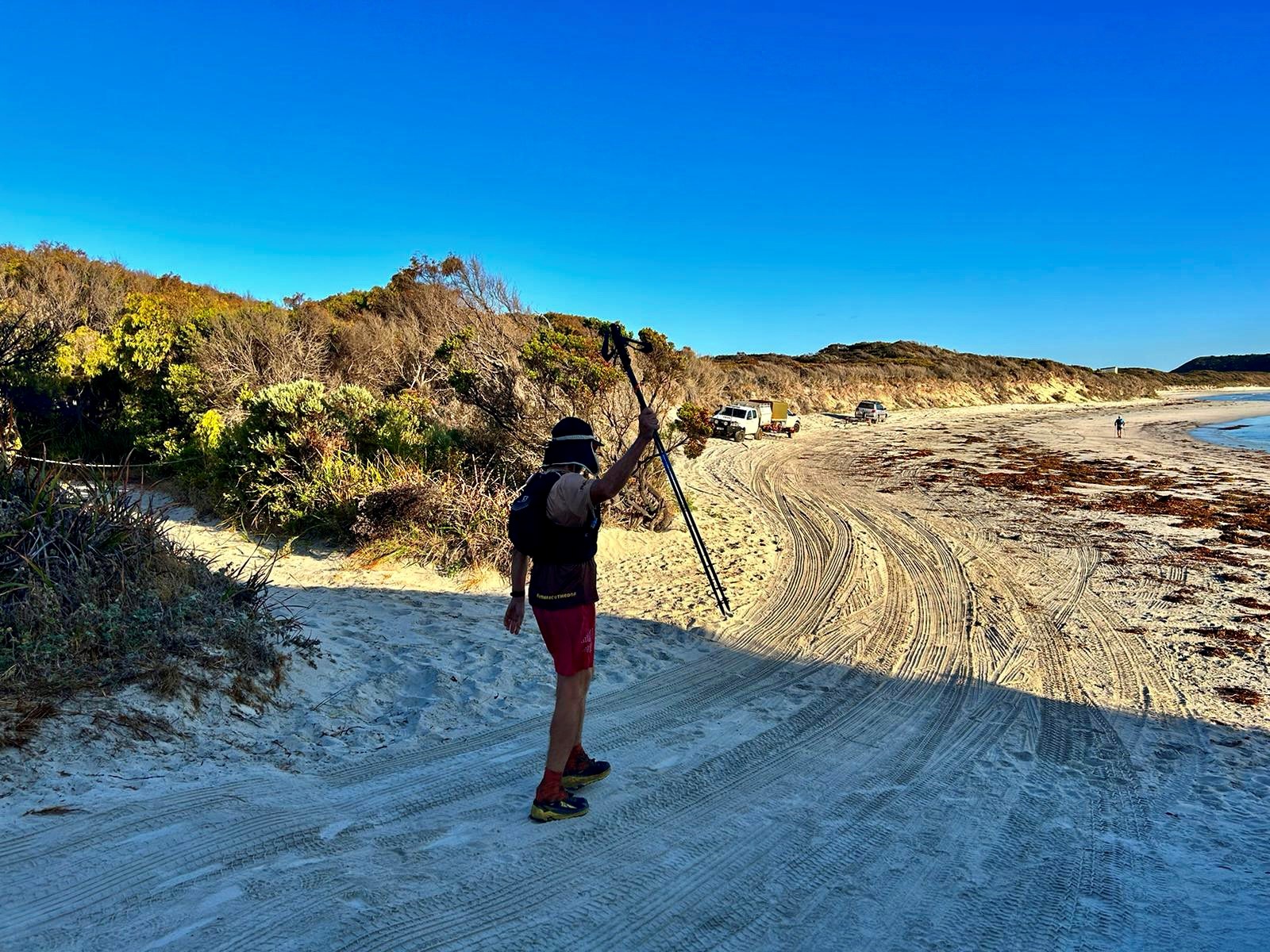
Last year’s inaugural Cape to Cape miler was just brilliant but its brilliance was a mixture of the scenery and the weather. ( https://www.cape2capeultra.com.au/ ) The scenery was stunning, as we all knew it would be, but the weather was so bad it was good, as weird as that sounds. We were treated to a complex storm, which is like a normal storm but on steroids in layman’s terms. On the bright side we had a tail wind and it’s really a point-to-point race, so we were pushed to the finish. If it had been a head wind it would have been brutal.

Reads all about here , ( https://www.runbkrun.com/2025/06/26/perth-marathon-sub3-mission-week-three/ ) at the time it was week three in my Perth marathon training block, but this went out the window after running the Cape to Cape after I finished and just stagnated for about three months before injuring my ankle running the Transcend Ultra in August. When Perth came around in October, I think I had run five times in three months, not ideal. Anyhow I digress, another reason the Cape to Cape was so good was the company. I ran with my good mates Andy, Glen and Matty virtually the whole way and we just had such a great laugh. Great company just makes the miles disappear; it truly does. Andy would set the pace and we all hung on, of course any sign of weakness and you were ejected out of the back of the bus with the assumption you’d get back on sometime down the line. There was no slowing, Andy sets the pace and just grinds it out like a metronome, he is the white diesel van of ultra running.
This year Glen is one of the Race Directors as he hasn’t fully recovered from a nasty man-cold/chest infection that skuttled his 2026 Delirious race, I’ve not heard from Matty so hope he just turns up like last year as the pre-event dinner. We’ll pick up a few more runners along the way I’m sure.

Unlike the Feral Pig Ultra ran later in the year, ( https://www.feralpigultra.com.au/ ) with a midnight start and serious elevation and heat, the Cape to Cape is virtually flat with ideal running conditions. You don’t worry about finishing as you’re having so much fun exploring the beaches, as you move along the course, and then just as you think you’ve seen enough beaches the course snakes its way through pristine forest, again pretty flat. Then of course more beaches. I don’t remember any time last year when I didn’t enjoy my surroundings and I feel it will be the same next Saturday when I tackle the event for the second time.
Fitness wise I’m in better condition than last year running an extra eleven laps at Herdy’s backyard Ultra in March (top ten finish from a world record field) and finishing the Delirious West 200 miler four hours quicker a few weeks ago. (good for a second place overall) I never really race 100 miler’s as I feel I’m more competitive over the longer distances, i.e. 200 milers. A 100 mile is more suited to the younger runner who actually sets a time and get their head down, missing all the beautiful trails. At my stage in my running career, i.e. at the end, I enjoy breathing in the course and taking loads of photos and just spending times with my mates on the trails.
I’ve only ran two 100 milers, the Feral Pig, which I’ve finished four times, and inaugural Cape to Cape 100 miler last year. The contrast in these two events is massive. Feral has some serious elevation and is held on the Bibbulmun track in November, ( https://www.bibbulmuntrack.org.au/ ) when it’s seriously hot (usually). This race really does test you and although there is excitement, it’s what we do right? , there is also some trepidation. A finish is never guaranteed when you race the Feral Pig, you just do the best you can and hope you’ve done enough. Last year racing the Cape to Cape I never even thought about finishing, I was having too much fun with the boys and the conditions. I’m hoping for more of the same in a few days and the weather report seems to indicate we’ll get some rain and that normally means there’ll be wind, let’s just hope it’s another strong tail wind.
Post Cape to Cape miler I have a completely free schedule bar the Montane Winter Spine in January 2017. This is a race that I am very, very nervous about but at the same time incredibly excited. It will be my longest race ever coming in at two hundred and sixty-eight miles, over one hundred kilometres further than the Delirious West 200 miler. ( https://www.nationaltrail.co.uk/en_GB/trails/pennine-way/ ) Add in more than double the elevation of Delirious and the extreme conditions, extremely cold conditions after training in a Perth Summer, and this will be an incredibly hard challenge. It is rated as the hardest race in the UK and the UK has its fair share of hard ultras. Training wise all I can do is try and get as ultra fit as possible and then hope that the proper clothing will protect me from the extreme cold, albeit a lot will depend on the conditions at the time of the race. I’ve watched videos of horizontal snow, wind that was blowing runners off their feet and visibility so poor you couldn’t see the hand in front of your face. This is daunting but at the same time why I’ve chosen this event, to test myself, go deep into the pain cave , curl up into the fetal position and just stay hard. Can I dig myself out or will I fold in a heap. Looking at the DNF rate it’s normally over 50% and I’m sure a lot higher if conditions go against you. This one really is me against the elements. Add in no support, severe sleep deprivation, possible -15c temperatures on the higher areas, limited aid stations and unforgiving terrain and you have a real test of your ability to finish, forget chasing a time.

Of course there are options for other event before the Winter Spine. Probably Transcend Ultra in August ( https://transcendtrails.com/ ) to make up for my incredibly slow time last year after spraining my ankle in the first two kilometers. Then the last Lighthorse 24-hour event in September where I’m hoping to add to my five in a row podium finishes. ( https://lighthorseultra.com.au/ ) November of course if the Feral Pig miler for the sixth time and looking for my fifth finish. ( https://www.feralpigultra.com.au/ ) I’m also tempted to try shorter distances but am always wary about possible injuries given my vintage. I ran a 39.55 last year and it would be good to keep the sub 40 streak going. There is also Bibra Lake running festival first week in July but not sure how the legs will have recovered post Cape to Cape? ( https://raceroster.com/events/2026/108936/bibra-lake-runningworks-festival ) I feel the last few months I have neglected any speed work, even selecting the easier 10k option at Yelo every Thursday morning when back in the day it was a gut busting fourteen progressive. It’s a balancing act switching between ultra events and quicker, shorter distances. Training and running ultras, generally, can keep you injury free for longer. As soon as you add pace, you’re rolling the dice, for us mature runners. Maybe target the Bibra lake half, the course is flat and three loops so it would be a good chance to break 90 minutes, maybe? I could always step up for the marathon and just try and get as close to three hours fifteen minutes as possible, make up for my disaster of a Perth marathon last year when I really did fall into a big heap, albeit I’m blaming the Puma Nitro shoes, and my Transcend Ultra injury. We’ll see, let’s get the Cape to Cape miler put to bed first before starting my next training block. Tally ho.

or follow me on Instagram https://www.instagram.com/runbkrun/
or facebook RUNBKRUNOZ
Tribe and Trail Running shop, Perth WA. ( https://www.tribeandtrail.com.au/ ) Your one stop shop for all things trail in WA. 
Big shout out to fisiocrem , this product is just incredible for tired and aching legs. I use it daily and have noticed a vast improvement in recovery.

Bix hydration is just ace, a product brought to life by Vlad Ixel a professional ultra runner who knows a thing or two about hydration. ( https://www.bixvitamins.com/ ) The best thing about Bix is it tastes good with many different flavours and you never get sick of drinking it, this is a big plus as Maurten and Tailwind (both great products) can be difficult to digest later in the event. From the website :-
As an Australian elite multiple trail running champion, with wins in over 40 ultra-marathon races across Asia, recovery from training and races has always been my top priority.
In searching for a solid recovery and hydration supplement, I recognized that critical vitamins and minerals – both in diversity and quantity – were missing from almost all supplements on the market. I had the feeling that in an effort to maximize their bottom-lines, companies in the hydration space, failed to deliver a product that could meaningfully assist athlete performance.
In order to address this, I began the development of a hydration product. After two and a half years of development alongside a leading German sports scientist, BIX Recovery, an advanced, high-quality recovery drink was born.
BIX boosts 12 active ingredients scientifically balanced to replace lost electrolytes and assist in immune function. It’s designed with quality vitamins and minerals, in quantities that work!
BIX is a recovery solution for everyone, that will get you to the top of your game!

What can I say about HumanTecar, ( https://athleticus.com.au/ ) it looks great, smells great and is awesome for recovery or even pre-run/workout. Read about the science behind it first and then try the products. The compression bandages are just magical after a long event. Put these on and the next day you are recovered, I have used them on a number of occasions and they never fail to astound me albeit the family poke fun at me as I look like a ‘mummy and smell funny’ !

Fractel ( https://fractel.com.au/ ) have your performance headgear covered. I love the colours and the functionality of these hats, I guarantee there is one model you’ll fall in love with.

Shokz headphones, let you keep in touch with the world around while losing yourself in quality tunes or podcasts. ( https://shokz.com.au/ )

T8 running apparel is the best you can get, second to none. Designed for the ultra humid Hong Kong conditions the owners live in. It is light and does away with any chaffing worries. T8 is the name given to the highest typhoon warning in Honk Kong, storms and typhoons with gusts exceeding 180kph, which explains the branding. ( https://t8.run/)


or follow me on Instagram https://www.instagram.com/runbkrun/
or facebook RUNBKRUNOZ

Running a 200 miler is a big effort, funny that, and as such requires more than one post. I had to stop for a cuppa’ and a biscuit so am now refreshed and ready to push on. The link to my first post is here in case you missed it, https://www.runbkrun.com/2026/05/08/how-to-run-a-200-miler-ultra-part-1/
To sum up Part 1 I highlighted how important sleep is, something a lot of 200-mile runners forget which comes back to bite them towards the end of the event, as well as nutrition, basically eat a lot and often, looking after your feet, mental preparation and finally crew.
First thing we need to talk about is your why? This is the reason you are putting yourself through the pain and pleasure that is a 200-mile foot race. This is important because somewhere along the way you are going to need this to help keep moving you forward when every ounce of sense in your body is telling you to stop. In a 200 miler all runners will experience this, be it the front runner racing the clock or the back of the pack runners being chased down by sweepers, we all need our why. I’ve seen runners write their why on their body, or extreme cases, tattoo it, so it’s there as a constant visual reminder when needed or a piece of paper they can bring out in times of need. It doesn’t matter where it is it just needs to be available when you need it most. A powerful why statement can make a massive difference and be enough to keep you moving forward. For a 200 miler you must have a why, period.

Next is the distance itself. You can’t start a 200 miler and think the finish line is 200 miles away, that is just running suicide. The way to run a 200 miler is to break the distance down into smaller more manageable ‘chunks‘ and the best way to do this is by daisy chaining aid stations and concentrating on the distance to the next aid station only. This way you also achieve small milestones more often rather than a start race, finish race, with nothing in-between. I even break down laps in backyard ultras and they’re less than seven kilometres long. For Delirious there’s nineteen aid stations, so I have nineteen smaller races to run, between ten kilomteres and twenty four, with an aid station at the end serving great food and my reclining chair waiting for me. It’s a wonder I finish within the cut off with so many excuses to drop time and sit down and eat. This way you can always see the next finish line, albeit it’s an aid station until it’s not and it is actually the finish line. I remember when I ran my first 200 miler I didn’t have this mentality and we were about eighty kilometres in and I was totally trashed and I remember thinking I have hundreds of kilometres to go, when I should have thought it’s less than five kilometres to the next aid station. Total different way of approaching the same issue but you can see the difference it would make mentally.

Next is training or in my case probably lack off. As with all things running you more you put in the better the end result but for ultra races there is also the mental side which plays a big part, so funnily enough your training for ultra’s doesn’t have to be as on point as shorter distances, as strange as that sounds. For example, a good friend of mine John Herzfeld finished Delirious West 2025 with no real training at all bar a few park runs and general fitness, John is also a vintage runner similar to me. What John does have though is mental toughness and he basically did enough to finish. He admitted to me post-race he felt a bit embarrassed as he knew he had no right to be there, at the finish line, really. He originally entered to keep Gabe Alves company to the finish, but Gabe dropped out and John just kept on trucking to finish in ninety-six hours.
I’m similar in that I trained very hard on the trails for three of my finishes, but the last two years have done very little trail running at all and no long runs of anything more than low twenty kilometres. I have averaged less than eighty kilometres a week and ran four to five times , around ten kilometres each time. I have added in gym visits which included pilates reformer time and some weight work, so trying to do something every day. My friends reckon its muscle memory that gets me to the end of Delirious these days, not my training, and they could have a point. I feel with my experience and general fitness, combined with mental preparation, trumps general running fitness acquired by running, a lot. Of course, I wouldn’t recommend my approach to the first-time athlete and would always do as much as you can, but if you can’t do as much as you’d like you can concentrate on other ways to stay fit and also work on your mental strength game.
With breaking the event down into aid station hops you only need to be fit enough to get to the next aid station, there you can recuperate, refuel and go again. These mini breaks can help you run further on less fitness; you’re not running a 200 miler you’re essentially running twenty smaller races?
Remember you won’t be running the full 200 miles; there will be times when you need to hike and practicing hiking is also important as you’ll be using different muscles. With a trail ultra it’s all about the quads, work on your quads as you’re constantly stepping, you very rarely just cruise along like a road marathon when all the muscle groups are utilised evenly. Quads, quads, quads and one more time quads, get to that quad rack baby and get squatting!

Another important part of a 200 mile is actually enjoying the journey, being ‘in the moment‘ and not over thinking things. Sometimes just stop and look around, breath in the sunsets and sunrises and let the scenery wash over you, it makes a massive difference to your mental well beings if you let your surroundings invigorate you. Several times during all my 200 miler events I will stop and just take it in where I am, just enjoy the moment of solitude and in my case normally take a photo or video but it never does that moment justice. These moments are the ones you remember, just you and the trail.
In the article below by Rachae Entrekin training is highlighted. https://ultrarunning.com/featured/how-to-train-for-200-milers/ Worth a read.
Let’s cut to the chase here. No one is talking about this topic. And, yeah, you can hold onto your flimsy idea that “200s are just fast hiking” all you want, but: a) this doesn’t necessarily have to be true, and b) shut up.
Below, you’ll find “Rachel’s Nearly Foolproof Guide to Running Your First Super Long Event.” While I’m certainly not going to claim to be an expert here, I’ve at least figured out some stuff, and honestly, we should be talking about this. Clearly, the drive to go these distances isn’t going away, and if we want to turn around the dumb narrative that these can’t be competitive, we’ve got to start sharing secrets so that they can be.
Note: I’ll be mostly discussing fixed-distance races, because that’s where it seems like there is the greatest potential for growth within the sport when it comes to participation and sponsorship.
Other note: My multi-day experience consists of four 48-hour races and three fixed-distance 200(+) mile races.Training
Here’s where the back-to-back training runs come into play (or, if you can swing it, the back-to-back-to-back training runs). I think stacking weeks of a couple 6-8-hour/25-30-mile days in a row is the most beneficial way to get used to running when you don’t want to run. Friday, Saturday and Sunday consist of doing anywhere from 20-40 miles, at least three weekends out of a month. Practice fueling, moving your legs when they feel like they weigh 600 pounds and just being out there, for that long and then doing it again. And again. And again. Weekend after weekend. Stack. Those. Bricks.
That being said, I tend to not go hog wild with insanely high mileage during my training – probably 75% of my weeks were anywhere between 80-90 miles, with a handful of stacked 110(+) mile weeks. I think it’s pretty healthy to have one week a month where you “take a break” and do a lower mileage week (again, relative) of 75-80 miles. Trust me, when your usual week is 100 miles and suddenly you’re doing 75, it really does feel easy, which is exactly what you want.
Training specificity also matters. Think about the trail conditions of the area you’re racing in. Is it exposed? Rocky? Humid? Figure it out and try to simulate those conditions, particularly during your longer runs. Also, and I feel like this goes without saying, but learn how to run at night. You’ll be doing it at least twice. Don’t make the first time you realize you’re afraid of the dark (or the animals that live in the dark) be during the race. Also, at some point during the race, you’ll likely find yourself eating what could be considered “a meal,” then needing to keep running. Maybe, you know, practice that. Running after you’ve eaten is worth trying out prior to the race so you know how it feels and can get your gut used to it.
And, say goodbye to your social life, you belong to running now. I highly recommend finding friends who run.
Bonus Section: Training Races
There are few things worse in life than lining up in the starting corral next to someone who says “Oh, this is just a training run for me.” But now, you get to be that person.
I find that doing a few stimulus races during your build can be incredibly beneficial. However, be smart about placement of them during your training. I tend to do a larger effort run (18+ hours) and at least a couple moderate effort runs (8-12 hours) during my buildup to the multi-day and honestly, I treat them like they’re standalone events. Don’t forget though, you can’t thrash yourself so completely that you now have to take weeks off training. The goal of a stimulus race is finishing, but feeling like you could’ve kept going.
Another Bonus Section: Course Recon
If you have the opportunity to go and check out the route, great. If you don’t, there’s tons of stuff out there to glean information from – race reports on Reddit to full-length films, in some cases. Do your homework, however that looks for your schedule.
Sleep
I think there’s two schools of thought here:
a) Plan sleep (around weather windows, time of day, known circadian rhythms, larger fueling times).
b) Do not plan anything and sleep only when you’re essentially a health and safety risk (aka, my strategy).Obviously, know thyself. If you can fall asleep on a dime (literally, what is this expression?) then maybe planning sleep would work for you. It does not work for me.
My usual rule of thumb for deciding when it’s time to sleep is if caffeine, food, pacers and/or daylight/adjusting your headlamp brightness don’t help, plus you’re slowing down, stumbling a lot or legitimately feel like you could fall asleep standing up, then you need to take a break and try sleeping. Don’t wait for the aid station. Curl up under a tree on the side of the trail and snooze for 5-20 minutes. If you’re at an aid station and your crew can use the time you’re sleeping to do additional tasks for you, maybe snooze a bit longer. It’s all about efficiency and multitasking.In talking with others throughout my own experiences, I also tend to encourage holding off on sleep as long as possible. Sleeping during multi-days appears to be similar to “breaking the seal” in that once you start doing it, you really want to keep doing it. (But obviously, stay safe out there. Don’t zombie-walk off a cliff.)
Fueling
Multi-days are not casual. They are long, grueling, insane feats of human accomplishment, and you cannot do this on stupid race fuel like gels and sugary garbage, alone. If you do this, you will be throwing up violently or otherwise aggressively ill by mile 110. Gels, drink mixes and chews are great to snack on and keep handy because they’re light weight, usually have sodium and/or caffeine and are calorically dense. But unless you want to destroy your will to live by the halfway mark, I recommend figuring out what real foods you can take with you in addition to the traditional race fuels. Whether it’s McGriddles, mashed potatoes or milk, you need variety, and that means eating protein and fat in addition to carbs. You’ll want to practice beforehand, so you can determine how your body responds to larger meals while still needing to move forward. Don’t forget another one of the basics: electrolytes. Think in terms of IV drip speed, not avalanche, and try to get salt in your real foods.
Pacing
Okay. Controversial opinion incoming, but if you want to win the race, stick your nose in it from the get-go. I’ve spoken on a lot of podcasts about “barely manageable” pace utilization during these things, and honestly, this is something that you have to learn how to do during either fixed-time racing, 100-mile race efforts or long back-to-back days. If your plan is to “conserve energy until the end of the race, then pick off people who started out too fast,” I have news for you: the leaders have already finished the race by the time you reach the last third of the course. Do not “conserve energy for your future self.” Manage your pace so that you don’t crash and burn, obviously, but you aren’t going to feel “fresher” 186 miles into a race because you did a 15-minute pace for the first 100 miles. You’re just going to be 7 hours behind the front of the pack. It’s much easier to set the tone early than it is to try and rally late. Again, I am in no way endorsing starting off at a pace that you haven’t experimented with during training or other races. It’s not advisable to average an 8-minute pace when your usual is a 11:30-minute/mile. Don’t be dumb, but don’t hold yourself back, either. This is a race. Figure out what’s barely manageable and hold on as long as you can. It’s probably going to be about 180 miles longer than you think it’ll be.
Know the course well enough to strategize, whether you’ve been on it or not. Know where the climbs are, so you can fuel appropriately. Know what sections look runnable on paper but are actually rocky, technical hell-holes. Know where you’ll be around what time, so you can have appropriate gear and not die of exposure or cold. Will there be filterable water? Are my feet going to get wet? Not knowing these things will slow you down. Someone who knows these things, but maybe trained a little bit less, will go considerably faster than someone who trained a ton but knows nothing about how the course flows. Be smarter than them.
Crew
Yeah, I don’t know how people do multi-day fixed-distance events without a crew, so we’re going to assume that everyone reading this is interested in having support. Here are some short and sweet tips:
- Pick people who won’t baby you. They will see you at your worst, and it’s their job to keep you going.
- Pick people who you can argue with (and who can argue with each other) but know how to apologize and continue working well together.
- Pick people you are excited to hang out with. You’re going to be spending a lot of time together.
- Pick people who will take care of each other while crewing.
- Pick people who will kick your ass out of the cozy van at 3 a.m., who will keep their personal drama to themselves because they think it might affect your race and who willingly do whatever it takes to get you to that finish line. Your crew is the backbone of your race. They will be your brain when yours has left the chat. They are your spirit when you feel like death. They will keep you moving when you just want the race to be over already. Choose wisely.
- Bonus Tip: Have pre-race meetings to discuss your goals, fears and needs. Let them know, to the best of your ability, how they can manage you efficiently. It’s like a middle school group project, except you’re the project. Tell them how to earn an A.
Aid Station/Race Vehicle Management
Don’t camp out at aid stations. While you’re there, you don’t have to run, which is great. It’ll be tempting to hang out because snacks and friends are there. But you have to leave. Strategize to determine which aid stations are the ones where you’ll be spending longer amounts of time and stick to the freakin’ plan. Spend the preceding miles before hitting aid stations thinking about what you need to accomplish. Change of clothes? Eat hot food? Go into the aid station with a plan, and don’t assume you can figure it out when you get there.
It’s easy during the race to let everything get messy and out of control in your race vehicle, but digging through dirty clothes at mile 185 trying to find clean socks is not ideal for anyone. Keeping the race vehicle tidy is more of a crew task during the race, but organizing gear before the race even starts is on you. Also, I rent a camper van, which is expensive but worth it. It’s a home on wheels. While you shouldn’t be spending that much time inside, your crew will be making it their home while you’re off hallucinating in the desert/woods for days. Give them somewhere to sleep, shower and get some privacy, that isn’t on the side of the trail or in a creek.
Mental Resilience
Events like 200-milers are wild. You can’t conceptualize them as just two 100-mile races run back-to-back. They’re compounded, significantly. Everything can and probably will go sideways. You’re going to encounter new and exciting issues that you can’t even fathom. I don’t say that to overwhelm or frighten, but to encourage preparedness. You can be afraid of the challenges that are going to happen, or you can choose to look forward to them. You’re going to emerge from a multi-day race a completely different person, and you can be mentally and physically more capable than before, or the opposite. It is, quite literally, your choice. Mindset is everything, and I have found that it’s the most important thing – even more than physical fitness. You have to believe you can conquer what’s out there and embrace that you’ll be learning things along the way.
The Little Things
Study the maps. Read the race reports. Watch the movies. Plan the accommodations (in advance). Don’t forget to order shoes, and honestly, order extra pairs. Get your gear in order and have backups for everything. Use your gear, and backups, before race day. Prepare, rehash and prepare again. Have a medical kit, and don’t assume the race will provide you with first-aid supplies. Pack your car early and make sure everything is in there, that way, you’ll realize you forgot literally all your nutrition at home and can save $300 by not buying the same crap that you already had the day before the race. Everyone’s little things are different. Know yours and address them.
Have fun. Or something like it.

or follow me on Instagram https://www.instagram.com/runbkrun/
or facebook RUNBKRUNOZ
Tribe and Trail Running shop, Perth WA. ( https://www.tribeandtrail.com.au/ ) Your one stop shop for all things trail in WA.
Big shout out to fisiocrem , this product is just incredible for tired and aching legs. I use it daily and have noticed a vast improvement in recovery.
Bix hydration is just ace, a product brought to life by Vlad Ixel a professional ultra runner who knows a thing or two about hydration. ( https://www.bixvitamins.com/ ) The best thing about Bix is it tastes good with many different flavours and you never get sick of drinking it, this is a big plus as Maurten and Tailwind (both great products) can be difficult to digest later in the event. From the website :-
As an Australian elite multiple trail running champion, with wins in over 40 ultra-marathon races across Asia, recovery from training and races has always been my top priority.
In searching for a solid recovery and hydration supplement, I recognized that critical vitamins and minerals – both in diversity and quantity – were missing from almost all supplements on the market. I had the feeling that in an effort to maximize their bottom-lines, companies in the hydration space, failed to deliver a product that could meaningfully assist athlete performance.
In order to address this, I began the development of a hydration product. After two and a half years of development alongside a leading German sports scientist, BIX Recovery, an advanced, high-quality recovery drink was born.
BIX boosts 12 active ingredients scientifically balanced to replace lost electrolytes and assist in immune function. It’s designed with quality vitamins and minerals, in quantities that work!
BIX is a recovery solution for everyone, that will get you to the top of your game!
What can I say about HumanTecar, ( https://athleticus.com.au/ ) it looks great, smells great and is awesome for recovery or even pre-run/workout. Read about the science behind it first and then try the products. The compression bandages are just magical after a long event. Put these on and the next day you are recovered, I have used them on a number of occasions and they never fail to astound me albeit the family poke fun at me as I look like a ‘mummy and smell funny’ !
Fractel ( https://fractel.com.au/ ) have your performance headgear covered. I love the colours and the functionality of these hats, I guarantee there is one model you’ll fall in love with.
Shokz headphones, let you keep in touch with the world around while losing yourself in quality tunes or podcasts. ( https://shokz.com.au/ )
T8 running apparel is the best you can get, second to none. Designed for the ultra humid Hong Kong conditions the owners live in. It is light and does away with any chaffing worries. T8 is the name given to the highest typhoon warning in Honk Kong, storms and typhoons with gusts exceeding 180kph, which explains the branding. ( https://t8.run/)
or follow me on Instagram https://www.instagram.com/runbkrun/
or facebook RUNBKRUNOZ

I have finished seven 200 milers, the Delirious West 200 miler six time in Western Australia ( https://www.deliriouswest200miler.com.au/ ) on the Bibbulmun track and the Unreasonable East in the Blue Mountains outside Sydney once. I’ve never finished outside the top 10 overall in any of the 200 milers I’ve finished with a couple of podiums thrown in good measure, so I know what it takes to be successful at this distance and will try to explain in this post my tips for not just finishing a 200 miler but enjoying it. (Note, I say enjoying it in the broadest sense of the word)
First thing and perhaps the most important is sleep. Sleep is the superpower of endurance runners, those who excel use it to their advantage, those that don’t become what I term ‘zombie runners‘, they move forward but creep (at best) rather than run. I can never understand when runners think it’s better to run long distances without sleeping and wear it like a badge of honour but then end up finishing towards the back of the pack and shuffling in. I’ve seen this at so many finish lines over the years, the eyes are open but there is no one home. Compare this to a runner with a good sleep strategy as they bounce to the finish line full of the joys of spring, similar time but whole different experience.
In my first 200 mile finish I ran just over eighty-three hours, by less than a minute, rookie error, and my mate Rob Donkersloot compared my moving time to the winners, Shane Johnston, who finished nearly a day ahead of me, we both have the same time. The difference was I slept three times and spent way more time at aid stations with my crew feeding me, could I have gone quicker, 100%, but I wanted to finish but also enjoy the experience. If I had limited my sleep and rest time, I would have finished quicker, but it would have been so much harder and at that point it was all about finishing and enjoying it rather than a specific time. My strategy was to start slow, bank sleep, and gradually work my way through the field. It worked perfectly and I finished 9th overall, 6th male, making up places in the latter half of the event fishing up with a ten kilometre sprint with my mate Paul Hopi Hopwood (which I lost.)

For Delirious, as with all 200 milers, I have always had crew, and this has allowed me to sleep when I want. My crew set up my swag, and I just rock up into the aid station area and sleep, simple. With Delirious this has been useful as the first sleep station is around 140 kilometres into the event and I feel just too far for most runners. By the time they get that far they would have been running for nearly thirty hours plus. I tend to set up my first stop at Mandelay car park which is around 110 kilometres from the start, that extra thirty kilometres makes all the difference.
Actually a funny story here, one year I had slept at Mandelay but the crew and I had assumed each other would set an alarm, no one did. I remember waking up and seeing daylight when we had decided to start again later before dawn. It turns out we were virtually last as we had overslept by about two hours. In the end this worked out to my advantage as the extra sleep had reinvigorated me and I skipped past the field while they adopted the zombie shuffle. In a 200 miler we’re talking finishing times in days and hours, so you have time, as long as the sweeper is not to close.
My strategy for a 200 miler is to try and get between two and three hours sleep on the first two nights and then dose up on caffeine tablets to get me to the finish, so normally around six hours sleep total. I find I can normally make it through the final night as your body has adjusted to the sleep deprivation and you can see the end, so to speak. Of course, planning for sleep and actually sleeping are two different things. I’m lucky that as soon as I get in my swag, I’m out, no matter what I’ve eaten, drank or exercised previously. In my favour I’m normally pretty cooked by the time I try to sleep so as long as I avoid too much caffeine sleeping isn’t a problem. I do know of runners who can’t sleep, and they just keep going until they eventually drop on the trail for a dirt nap. In WA this is easier said than done with the trail floor normally alive with ants or other beasties who see you as a meal but when you’re dog tired it doesn’t matter. Personally, I’ve only has one dirt nap, in the Irrational South 200 miler, when I was falling asleep walking and just had to stop, I had no alternative. The four or five minutes was enough, and I was then able to motor to the finish at a good turn of pace. I was with Sarah Niven at the time, and we both got out space blankets and just hit the dirt, good times.
Obviously for the front of the pack runners sleep is a luxury that they may not need, if you can finish a 200 miler in less than sixty hours you can probably get away with a few minutes at aid stations but for most sleep is a necessity. Adopt the right strategy and you’ll always be continually energised, get it wrong or just ignore it, and you’re crawling to the finish line. Sleep is right up there with hydration and nutrition, ignore any of these three factors and you just basically stop, simple.
To sum up sleep, do it early and often.
Next is your feet. These are paramount to 200 miler success, funnily enough, and need to be treated as such. I’m talking pre-race care with strapping and balm, to during the event with constant checking and changing of socks at aid stations. Blisters have ruined many runners’ dreams of finishing ultras or made the whole process so painful they never return. You’ll know before the event what type of feet you have, i.e. do they blister easily or can they go forever, with little attention? I’ve been pretty lucky in the fact I’ve never really suffered with a blister bad enough to warrant discussion. Before any 200 miler I’ll use Du it foot balm and lately I’ve been taping my toes with fixomull.

I change my socks at every aid station, which for Delirious is about fourteen times and each time I check the toes and whenever I can wash my feet. Clean feet mean no sand which means no fraction, and friction is not your feet’s friend. From friction blisters come and we don’t like blisters. As I said earlier I’ve been lucky with blisters but you’ll need to do your own research on the strategy to deal with them if they rear their ugly head. basically, to pop or not to pop? For Delirious we are blessed with Kath Booth who is a feet fetish queen who likes nothing more than treating our feet issues, everybody needs a Kath.

My next tip on completing 200 milers is a subject all real ultra runners care about, nutrition. Yep, that’s right folks the good stuff you get at aid stations and for Delirious West 200 miler this is taken to a Spinal tap eleven. Shain Kaesler, the race director, gives each aid station caption $400 for provisions but most of these captains must then spend the same amount again as the food is gourmet level. I seriously reckon I put on weight running Delirious, I’m being serious. If you really think about it you are probably eating at every aid station, which I reckon it about three to four a day minimum, and then in-between you’re snacking off anything available in your pack. Your taught to eat constantly while running ultra marathons and some ultra-athletes take this to extreme. I remember stories of aid station volunteers kicking runners out after they’d overstayed their welcome reminding them it was a race after all.
Personally, I feel it would be rude not to try and sample something from every aid station along any ultra, after all the volunteers have made such an effort preparing these beautiful gourmet delights, one must at least try them. Even with my crew I always make an effort to find out what’s on the menu and taste something. You’ll find in an ultra your taste buds do develop and food tastes better the longer you run, I’m not sure if this is a scientifically proved fact or just one of my hair-brained theories? I just googled my idea, and it seems as usual I’m talking crap. The taste buds don’t become extra sensitive over time, but they can start to disagree with your food choices if you overload them with sweet treats, which then accounts for the urge for savory alternatives. What you need is a mix of both.
From Townsend Performance Website https://www.townshendperformance.com/post/do-ultra-runners-really-need-gels
Ask a group of ultra runners how they fuel and you’ll get more answers than there are miles in the race. Some live on gels, others graze on potatoes, wraps, bananas and whatever looks appealing at aid stations. The question always comes back around: do you actually need gels to run an ultra? The truth is no – you don’t. But they are still one of the most effective tools available, especially when used alongside real food. Most runners feel and perform at their best when they don’t choose one or the other, but rather use both at the right times. Fueling long distances is mostly about consistency. Most runners need around 40-60 grams of carbohydrate per hour in training and 60-90 grams on race day. Alongside that comes the need for sodium and steady hydration so digestion keeps working. You can hit those numbers with gels, potatoes, bananas, wraps, rice, fruit, or homemade pouches. What matters more than the format is whether you can digest it and keep eating.
Real food plays an important role. In the early hours of a long race, real food often feels grounding. It’s comforting and satisfying, and tends to sit more gently on the stomach than a long run of sugary gels. Real food delivers slower, steadier energy and helps avoid that familiar “sweetness overload” many runners experience late in an ultra. It also provides a mental lift – a feeling of being fed, not just fueled – which can be surprisingly powerful.But real food has its downsides. It’s bulkier, messier and harder to chew when fatigue catches up. Foods that taste great in hour one can feel impossible in hour eight. Digestion slows down as the effort continues, and chewing becomes more of a task than you’d expect.That’s where gels still shine. They’re quick, predictable and require no chewing. They absorb fast, they slot into any pocket, and they work even when your appetite disappears. In the late stages of a race, when terrain gets technical or your brain turns foggy, a gel is often the one thing you can rely on. They’re not perfect – stomachs sometimes need training, and the sweetness can become overwhelming – but they do their job extremely well.
Most runners eventually settle into a rhythm that uses everything: real food early, a mix of real food and gels in the middle, and mostly gels towards the end when chewing feels like too much work. It’s a flexible, forgiving way to fuel. My own approach shifted dramatically thanks to something completely unrelated to running: feeding my children. When my youngest was a baby, I made everything from scratch – purées, soups, mashed vegetables, soft fruit blends – and stored them in reusable baby pouches. Years later, ahead of a long fell run, I opened a cupboard and saw those empty pouches. The idea hit instantly: why wasn’t I using these for my own fuel?I tried it. I filled one pouch with mashed potato, one with sweet potato, and another with a banana-and-honey blend. Out on the run, they were perfect. Soft, gentle on the stomach, easy to swallow and deliciously familiar. They didn’t make my hands sticky, and I could control everything – carbs, salt, texture, flavour. It felt like the perfect midpoint between real food and gels.It also made me realise something else: the way my kids ate – small portions, soft textures, gentle flavours, frequent feeding – was exactly how my body preferred to take on fuel during long runs. We tend to overcomplicate ultra fueling, but the body often responds best to simple, child-like nutrition delivered often and kindly.One thing I wouldn’t recommend, though, is using store-bought baby food pouches. They seem convenient, but they simply aren’t designed for athletes. Baby food is deliberately low in salt – exactly the opposite of what long-distance runners need. It’s low in calories and carbs too, often containing just 8-12 grams of carbohydrate per pouch. The flavours are muted and bland, perfect for toddlers but not for an adult gut that might be screaming for savoury relief. Many mixes are heavy in apple or pear, which can irritate tired stomachs. Homemade pouches give you full control and are far superior for long efforts.They’re also incredibly easy to make. Choose soft foods, mash or blend them with a splash of water, broth or electrolyte drink, and spoon them into a reusable pouch. Working out the carbs is simple: weigh the ingredients, use the carbs-per-100g number from a label or food table, do quick multiplication, and add it up. If you’re making several at once, divide the total carb amount between the number of pouches. It doesn’t need to be exact – just “close enough” to plan your fueling.
Of course, pouches are just one option in the big world of real-food fueling. Ultra runners have long been known for pulling out some wonderfully odd snacks mid-race, and most of them work because they’re simple, soft and easy to digest. Over the years I’ve seen and eaten just about everything out there. Bananas, salted potatoes, sweet potato chunks and fruit purée are all classics. Watermelon and oranges are brilliant on hot days and beloved at aid stations everywhere.There are plenty of portable snacks too: wraps with peanut butter or jam, rice balls or onigiri, soft cereal bars, fig rolls and slices of malt loaf. Savoury options become especially appealing later in a race when sweetness becomes overwhelming – cheese bites, broth, mini sandwiches, little quesadilla wedges, even a cup of ramen from an aid station can turn everything around. And then there are the sweets that somehow always work: dried fruit, jelly babies and homemade flapjacks. All of these foods have made appearances in packs and pockets over the years, and they’ve all carried runners through difficult miles.I learned many of these lessons through lived experience. I still remember a miserable winter long run where I’d packed only gels to “be disciplined.” By hour three, the sweetness was unbearable. Stopping at a stone wall, I opened my vest and found nothing but more gels. I would have traded them all for a cold potato. It taught me that training isn’t just about logged miles – it’s about learning what you truly want to eat when fatigue settles in.A mountain race later on reinforced this. Around mile 30, tired and queasy, I was handed a tiny wrap filled with mashed potato and salt. It grounded me instantly and gave me the strength to climb out of the valley. Another time, during a 50-miler, I watched a runner spoon cold rice pudding into a soft flask. He grinned and said, “Gels are for survival. Rice pudding is for joy.” I tried it the next week and he was right-sometimes joy is the most powerful fuel.And then there was the day I shared half a homemade pouch with a runner who was deep in a calorie crash and couldn’t face another gel. He perked up within minutes. That moment reminded me that ultra fueling isn’t just nutrition. It’s comfort. It’s connection. It’s looking after each other on difficult miles.You don’t need gels to run an ultra – but they’re a useful safety net when chewing becomes impossible or terrain demands fast energy. Real food keeps you comfortable. Gels keep you consistent. Homemade pouches blend both strengths beautifully. The best fueling strategy will always be the one that uses all the tools available and trains your gut to handle them.
Ultra running is an eating event disguised as a race. Feed yourself well, and the miles take care of themselves.


To sum up how you should approach a 200 miler you need to see it as an adventure, not a race. Don’t let finishing times cloud your thought process, you just need to concentrate on getting to the next aid station and then daisy chaining along the course, one aid station at a time, it really is that simple. Finally, one last comment regarding mental preparation, in any ultra you will go through dark times, normally around the witching hours, between two am and five am when your body wants sleep, you just need to realise these dark times are temporary and things do get better, normally when the sun rises. Also these changes in mood happen often throughout the event and you just need to keep moving forward and hang in there, things do get better, eventually, or you reach the finish line, whichever comes first. Don’t underestimate mental toughness though, the longer the event the more mental prowess becomes important, physical prowess can only get you so far, somewhere along the route you will need to dig deep and drag yourself out of the pain cave or just adopt the fetal position in the cave and keep on trucking.

or follow me on Instagram https://www.instagram.com/runbkrun/
or facebook RUNBKRUNOZ
Tribe and Trail Running shop, Perth WA. ( https://www.tribeandtrail.com.au/ ) Your one stop shop for all things trail in WA.
Big shout out to fisiocrem , this product is just incredible for tired and aching legs. I use it daily and have noticed a vast improvement in recovery.
Bix hydration is just ace, a product brought to life by Vlad Ixel a professional ultra runner who knows a thing or two about hydration. ( https://www.bixvitamins.com/ ) The best thing about Bix is it tastes good with many different flavours and you never get sick of drinking it, this is a big plus as Maurten and Tailwind (both great products) can be difficult to digest later in the event. From the website :-
As an Australian elite multiple trail running champion, with wins in over 40 ultra-marathon races across Asia, recovery from training and races has always been my top priority.
In searching for a solid recovery and hydration supplement, I recognized that critical vitamins and minerals – both in diversity and quantity – were missing from almost all supplements on the market. I had the feeling that in an effort to maximize their bottom-lines, companies in the hydration space, failed to deliver a product that could meaningfully assist athlete performance.
In order to address this, I began the development of a hydration product. After two and a half years of development alongside a leading German sports scientist, BIX Recovery, an advanced, high-quality recovery drink was born.
BIX boosts 12 active ingredients scientifically balanced to replace lost electrolytes and assist in immune function. It’s designed with quality vitamins and minerals, in quantities that work!
BIX is a recovery solution for everyone, that will get you to the top of your game!
What can I say about HumanTecar, ( https://athleticus.com.au/ ) it looks great, smells great and is awesome for recovery or even pre-run/workout. Read about the science behind it first and then try the products. The compression bandages are just magical after a long event. Put these on and the next day you are recovered, I have used them on a number of occasions and they never fail to astound me albeit the family poke fun at me as I look like a ‘mummy and smell funny’ !
Fractel ( https://fractel.com.au/ ) have your performance headgear covered. I love the colours and the functionality of these hats, I guarantee there is one model you’ll fall in love with.
Shokz headphones, let you keep in touch with the world around while losing yourself in quality tunes or podcasts. ( https://shokz.com.au/ )
T8 running apparel is the best you can get, second to none. Designed for the ultra humid Hong Kong conditions the owners live in. It is light and does away with any chaffing worries. T8 is the name given to the highest typhoon warning in Honk Kong, storms and typhoons with gusts exceeding 180kph, which explains the branding. ( https://t8.run/)
or follow me on Instagram https://www.instagram.com/runbkrun/
or facebook RUNBKRUNOZ