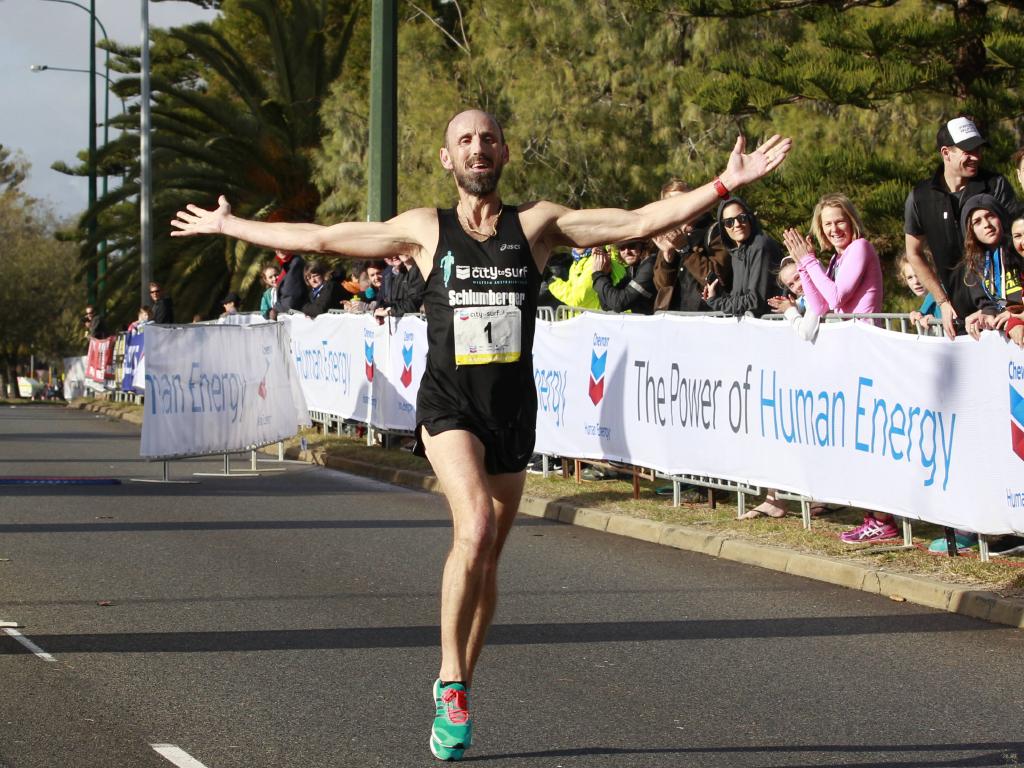
Last weekend I ran the Perth marathon for the fifteenth time, and fifty first marathon, at fifty-nine, with little or actually no marathon training but running around sixty kilometers a week. I finished in three hour and nineteen minutes, good enough for a top 10% finish overall, 379 out of a field of 3,829. My question is how is this possible? Ok, I have experience and have run a lot faster but to finish top 10%, a few months short of sixty years old, with no real marathon training or weekly distance is a concern. So my question is am I superhuman, my preferred explanation, or are marathon times increasing as the event becomes more and more popular, the more likely scenario.
It’s likely the first question that you’ll be asked when you tell people you’re a runner: what’s your marathon time? Running a marathon is a bucket list thing, and clocking a fast sub-something time is the ultimate goal. And if you happen to also beat the marathon time of a colleague or your neighbor, that’s a welcome bonus. Marathons make us competitive. But how long does the average person need to complete 42.2 kilometers? And how has performance developed throughout the years?
Something that can be seen word wide is that the popularity of running marathons has reached a bit of a plateau. That’s what Runrepeat concluded based on 107.9 million marathon results from 70,000 events in the period of 1986 to 2018. After reaching a peak of 9.1 million marathon finishers in 2016, the number of participants shrunk with 13 percent in 2018. Also, runners have never been slower. Especially men. While the average man ran a sub-4 marathon in 1986 (3:52:35 hours), that number is now 40 minutes higher: 4:32:49 hours. That might have something to do with the average age of the participants, which has gone up. In 1986 the average age was 35.2 years, while in 2018 that was 39.3 years.
If we look at the average marathon times per gender, you can see that men relatively slowed down more than women. With 27 minutes, the average time for men went up fast until it reached 4:15:13 hours in 2001; after that it slowly continued to go up. Women on the other hand slowed down more than men from 1986 (4:18 hours) until 2001 (4:56 hours), but in recent years they have actually started to run faster again. That could have something to do with the fact that for the first time in the history of marathon running, women dominated the field in 2018. 50.24 percent of the participants were female in that year.
Looking at the average marathon finishing times my time at Perth last week was well over an hour quicker than the average, and if I was to run the same time in a few months, when I hit sixty, it would be ninety minutes quicker than average. Remember I ran Perth with no specific marathon training, just consistent sixty kilometres week distance and a few ultra marathons chucked in for good measure. Actually, if you add in the races before Perth, I actually rocked up to the start line on fatigued legs from racing ultras.
I put the slower times down to one main point; more people are running marathons. Back in the day only athletes ran marathons, let me rephase that, competitive athletes. It really was a race for very fit people only; the average runner wouldn’t even contemplate turning up at the start line in their Dunlop Vollies. Marathons were for the elite of the sport and also seen as potentially too dangerous for most runners, the risk of injury being too high and also the training and recovery periods taking too long, affecting the rest of the training season.
My first marathon was Perth 2002, and I turned up on the day, entered and off I went. This year the Perth marathon sold out months before the start and there were nearly four thousand entries, a 100% increase on the entry numbers two years previous. Speaking to the Race Director post event he was talking up another doubling of entries next year. We really are in a running boom, but what has sparked it.?
COVID would have a lot to do with this resurgence I feel. When the only way you could get outside was to exercise everybody either brought a dog or started running. Post COVID people actually realised this running lark wasn’t that bad and suddenly they started entering events. Couple this with the emergence of the 5k Saturday morning park run and all of a sudden everybody is lacing up. The stigma of only athletes run marathons is also now long gone and the event is seen as an achievable goal for most runners. Then add in Socal Media and the Run influencer and there you have it, a running boom like no other.
Of course, we are also seeing the completing marathon mindset rather than the competing. Runners are finding the pain box and instead of opening the door and jumping in they slow down, take out their phone, and take a selfie. I must admit at Perth this year I’ve never seen so many phones as arm’s length pointing at the runners who held them.
If these run influencers can encourage more participation, it is a good thing, right? Yes and no. Back in the day if you wanted to get into A World Major marathon it was possible via either a good marathon time or just entering early. Those days are long gone and it’s normally a ballot at best. London has grown so big they are now having two marathons, on separate days over the weekend, to try to accommodate more runners. Even doing this your chance of getting an in is less than 10% as there were over a million entries.
The situation now is ‘proper’ runners can no longer get into marathons to compete because their spot is taken up by a runner who has no intention of pushing themselves and is just interested in the kudos of completing a marathon. I understand that comment is quite inflammatory as what constitutes who has the right to start a marathon, a competitive runner aiming for a sub three-hour finish or a runner just interested in finishing under the cut off time? Are they equal?
One solution would be to only allow entries to certain marathons on previous finishing times. Let’s say a marathon has fifty thousand field and a million requests for entries, (i.e. the London Marathon) then the fastest fifty thousand, on their best marathon times the previous twelve months, would get an entry. You could set aside a small percentage for a ballot and/or charity entries to give everybody a chance, but the main field would be made up of the quickest athletes. At the moment this is the opposite of what happens, for all world majors there is a good for age entry where achieving a certain time qualifies you an entry. The only issue here is there is a larger and larger pool of runners achieving that time and because of that it can come down to the fastest athletes rather than just achieving the time required.
Of course, there is always the option to buy yourself into most marathons, you can always find a company offering marathon packages which would include an entry plus a hotel package and a few extra items thrown in to justify their price. A frend of mine looked in to the Tokyo marathon afeter missing out on the ballot a number of times and it was close to $8K AUD, ouch. An example is Travelling Fit, and I know a few of my running friends have used this company. ( https://www.travellingfit.com/ )
Influencers have their place I suppose, if they encourage more participation in sport that’s a good thing but there is a thin line between encouraging and then coaching. You need to be wary of anyone online and their recommendations unless they are a proven coach or have decent reviews and experience you can trust and there are thousands of these very good influencers doing what they love and bringing you along for the ride. Of course, on the flip side there are also the influencers with dubious practices and loyalty to brands for financial gain rather than brand quality, shock horror.
The best influencers preaching running content earn many times more than professional running athletes, but I suppose people relate batter to the Instagram running influencers than to a professional runner who posts infrequently on events and times that are beyond the normal human being. Runners can relate to an influencer struggling to break a four-hour marathon compared to a professional chasing the two-hour version. Their content is so much better than a professional athlete as it’s their main source of income and they study the trends and algorithms to give them the most exposure and make sure their posts end up in front of the right people. An athlete hasn’t the inclination, or know how, to do this, they are more concerned with making a living running rather than talking about it. This is the main advantage an influencer has, they are appealing to runners going through the same journey as them, they have slick and professional media and can offer brand discounts, they resonate with the aspiring runner. Professional athletes can see aloof or have little or no personality.
When the influencer has some natural ability, they can use it for good. Nedd Brockman is a good example of a running influencer who has put his popularity to good use bringing in millions of dollars for his chosen charity, helping the homeless. ( https://neddbrockmann.com/pages/my-story ) As well as feats of great endurance Nedd is now concentrating on his marathon time and looking to get into the Australian marathon team for the next Olympics. He is the perfect mix of running influencer and natural athlete with a magnetic personality, a combination which has earned his charity millions of dollars and also made Nedd a rich man with his percentage cut of all donations., which is fair as he has to earn a crust.
Perth to Sydney, 46 days.
On the run influencer topic, I retained my second spot in the best Australian running blog list from Feedspot (see below). This website is awesome for all things blogs, news sites and just about anything really. I highly recommend the website and please note there are no kickbacks here. ( https://www.feedspot.com/products )
Feedspot is an RSS Reader that lets you subscribe to blogs, news sites, and any website you want to keep up with.
That’s enough on this topic for the moment, there is so much more I could delve into, but I will leave that for another post, for the moment I have to go for a run to maybe help with the reversal of the ever-slowing average marathon time.
Big shout out to fisiocrem , this product is just incredible for tired and aching legs. I use it daily and have noticed a vast improvement in recovery.
Bix hydration is just ace, a product brought to life by Vlad Ixel a professional ultra runner who knows a thing or two about hydration. ( https://www.bixvitamins.com/ ) The best thing about Bix is it tastes good with many different flavours and you never get sick of drinking it, this is a big plus as Maurten and Tailwind (both great products) can be difficult to digest later in the event. From the website :-
As an Australian elite multiple trail running champion, with wins in over 40 ultra-marathon races across Asia, recovery from training and races has always been my top priority.
In searching for a solid recovery and hydration supplement, I recognized that critical vitamins and minerals – both in diversity and quantity – were missing from almost all supplements on the market. I had the feeling that in an effort to maximize their bottom-lines, companies in the hydration space, failed to deliver a product that could meaningfully assist athlete performance.
In order to address this, I began the development of a hydration product. After two and a half years of development alongside a leading German sports scientist, BIX Recovery, an advanced, high-quality recovery drink was born.
BIX boosts 12 active ingredients scientifically balanced to replace lost electrolytes and assist in immune function. It’s designed with quality vitamins and minerals, in quantities that work!
BIX is a recovery solution for everyone, that will get you to the top of your game!
Great hydration.
What can I say about HumanTecar, ( https://athleticus.com.au/ ) it looks great, smells great and is awesome for recovery or even pre-run/workout. Read about the science behind it first and then try the products. The compression bandages are just magical after a long event. Put these on and the next day you are recovered, I have used them on a number of occasions and they never fail to astound me albeit the family poke fun at me as I look like a ‘mummy and smell funny’ !
Fractel ( https://fractel.com.au/ ) have your performance headgear covered. I love the colours and the functionality of these hats, I guarantee there is one model you’ll fall in love with.
Fractel headgear, just ace.
Shokz headphones, let you keep in touch with the world around while losing yourself in quality tunes or podcasts. ( https://shokz.com.au/ )
Best running headphones EVER !
T8 running apparel is the best you can get, second to none. Designed for the ultra humid Hong Kong conditions the owners live in. It is light and does away with any chaffing worries. T8 is the name given to the highest typhoon warning in Honk Kong, storms and typhoons with gusts exceeding 180kph, which explains the branding. ( https://t8.run/)
Altra supply the best trail shoes on the planet, in my opinion, and none better than the Olympus five. Do yourself a favour and buy a pair. ( https://www.altrarunning.com.au/ )
https://www.osprey.com/au/en/category/hydration/trail-running/ Osprey Australia have come onboard and are supplying me with two running backpacks and travelling luggage for the Run Britannia adventure. I particularly like their running backpacks and am excited to test them over the event. I’ll be using the Duro 6 and the Duro 1.5 backpacks.
Excited to have Coros onboard who have supplied me with the new Apex 2 Pro GPS watch. I already owned the Apex 2 and was stoked when Coros reached out and offered me an upgrade. Even more battery life, can you believe 75 hours using GPS, wow! The watch itself is awesome, so light and well made. The watch is paired with a incredible application to keep track of all your stats, and runners love stats! . ( https://coros.net.au/ )


Leave A Comment