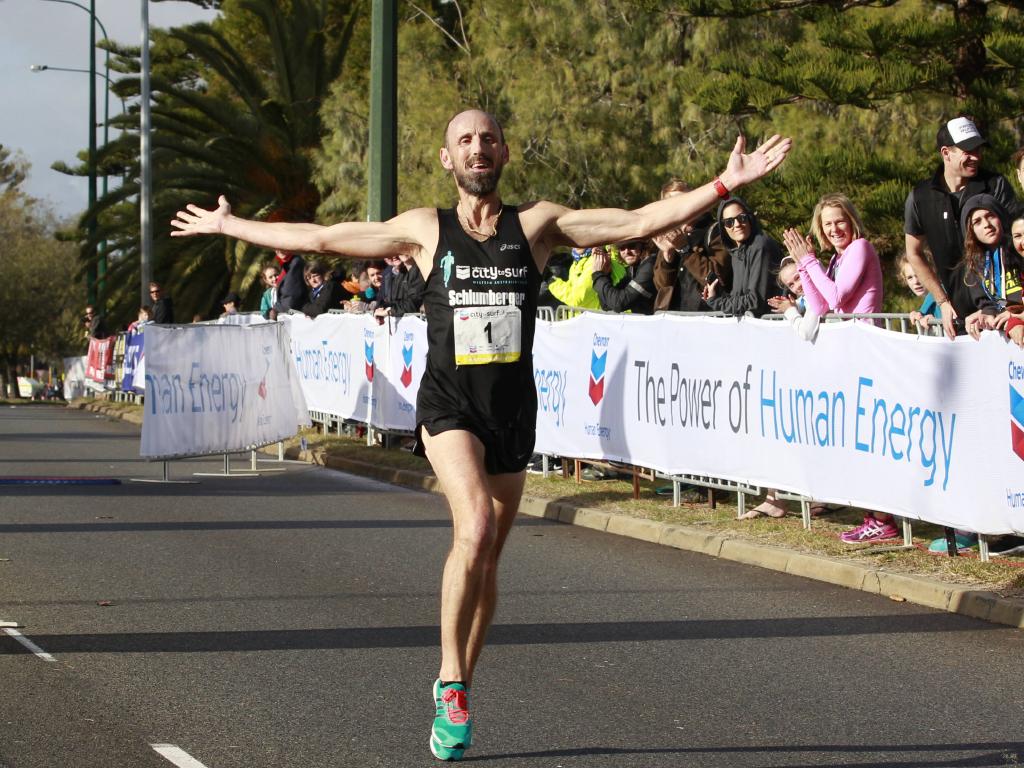
I ran 22k this week, 40k last week and 30k the week before. Back in the day I would do those totals on a daily basis, not weekly. I’d aim for a hundred miles a week and run twelve to fourteen times a week. My marathon times plummeted as I chased the elusive sub two-hour forty marathon finish time. In the end I ran two hours forty-one three times but never dipped sub two forty, please note this was before super shoes which would have got me my goal easily. The post below is over ten years old but rings as true today as then, distance really is king. Adding distance will improve your running, it really is that simple.
Running is a simple sport and the more you run the better you get. It doesn’t rely on talent or hand eye coordination , it’s just putting one-foot infront of the other and doing it repetitively and quicker, as you improve. Pace will improve as you get fitter, which is achieved by, you guessed it, running more. Of course you can also add strength training, yoga, Pilates or any other exercise designed to help your running but ultimately the best technique is running more.
You can even slow right down as you add distance and you still improve. The tried and tested Matt Fitzgerald 80/20 technique (80% slow, 20% at pace) So it gets even better, to improve you just run more and slow down which makes running easier, you get to smell the roses rather than rushing past them. The aerobic engine improves by slow repetitive running often, compared to the anaerobic engine which improves by faster paces running (see below)
Aerobic processes use oxygen to produce energy for sustained activity, while anaerobic processes generate energy without oxygen for short, high-intensity efforts.
Aerobic vs Anaerobic Exercise
Aerobic exercise involves continuous, moderate-intensity activity that relies on oxygen to fuel muscles. It strengthens the heart and lungs, improves endurance, and uses energy from carbohydrates, fats, and proteins. Examples include running, cycling, swimming, and brisk walking. Aerobic workouts are typically sustained for 30 minutes or longer and are recommended several times per week for cardiovascular health and overall fitness
Anaerobic exercise is high-intensity, short-duration activity that does not rely on oxygen but instead uses stored energy in muscles. It is designed to build strength, power, and muscle mass. Examples include sprinting, weightlifting, and high-intensity interval training (HIIT). Anaerobic exercises usually last from 10 seconds to 2 minutes and are performed at maximum effort
Aerobic vs Anaerobic Respiration
Aerobic respiration occurs in the presence of oxygen and takes place in the mitochondria of eukaryotic cells. It fully oxidizes glucose to produce carbon dioxide, water, and a large amount of ATP (approximately 38 ATP per glucose molecule). This process is efficient and supports long-term energy needs
Anaerobic respiration occurs without oxygen, typically in the cytoplasm. It uses alternative electron acceptors or relies on glycolysis alone, producing less ATP (about 2 ATP per glucose molecule) and by-products such as lactic acid in humans or ethanol and carbon dioxide in some microorganisms. Anaerobic pathways are essential during intense activity when oxygen supply is insufficient
Summary of Differences
Feature
Aerobic
Anaerobic
Oxygen requirement
Required
Not required
Duration
Long-term, sustained
Short-term, high-intensity
Energy source
Carbohydrates, fats, proteins
Stored muscle energy (ATP, creatine phosphate, glucose)
ATP yield
High (~38 ATP per glucose)
Low (~2 ATP per glucose)
By-products
CO₂ and H₂O
Lactic acid (humans), ethanol/CO₂ (microbes)
Examples
Jogging, swimming, cycling
Sprinting, weightlifting, HIIT
Practical Implications
Aerobic training improves endurance, cardiovascular health, and fat metabolism.
Anaerobic training enhances muscle strength, power, and short-term performance.
Both systems complement each other: aerobic capacity supports recovery from anaerobic bursts, while anaerobic power improves overall performance in sports and high-intensity activities. Understanding the distinction between aerobic and anaerobic processes helps in designing effective fitness programs and optimizing energy use during exercise or cellular metabolism.
My good friend Jon Pendse is taking this to the next level at the moment as he chases one hundred sub-3 hour marathons. Jon will hit one hundred miles a week but all bar five kilometres is at incredibly slow pace. (He runs a park run every Saturday ) The pace that no one will run with him as it is considered too slow and boring. He admits now he cannot run even at normal slow pace as it is too hard but put a bib on his chest and he’ll still knock out a two-hour fifty marathon ten times a year. This is extreme but it works for Jon and maybe this has contributed to his injury free run that has lasted decades, that and he weighs about fifty kilograms wet.
The avoiding injury is important and adding distance means running more which makes injury more likely, its hard to get injured running when you’re not running. By slowing down, you also minimise the risk of injuries, its physics really, slowing down puts less strain on your leg muscles as there is less downward pressure. You are far more likely to pull a hammy running a five kilometre park run compared to an ultra. Similar to how it feels to jog, the idea behind “slow running” (also known as low-intensity running) is that by slowing your pace, you can log more run miles and train your body in a variety of ways, such as building your endurance, strengthening your muscles, heart and lungs.
To get the best improvement though you need to train the aerobic and anaerobic engines, as detailed earlier in this post. Jon does this by running a 5k park run weekly where he runs at threshold pace and pushes his body to the limit, according to his level of fitness at that time. In essence he races weekly which is another one of my tips for improving your running, race often. Nothing makes you run as fast as a bib pinned to your chest and competition, be that chasing rabbits Infront of you or being chased down yourself, it is intoxicating. I know many runners who hate this part of running but for me I embraced it and liked nothing more than putting on the shortest shorts I could find, the lightest singlet and letting loose.
“The best way to identify slow running is to equate it to a subjective sensation of a jog. A jog is a perfect way to visualize a run where you’re very easily carrying a conversation. There’s no huffing and puffing between two or three words. If you wanted to sing to a song you’re listening to while you’re running, you could,” says Dr. Singh. “It’s an effort that you could sustain essentially forever.”
What slow running means in terms of speed and pace is different for each runner.
“For example, for someone who typically runs an 18- to 20-minute 5K, their slow pace is going to still be a little faster than someone who perhaps runs at a 25- to 30-minute 5K pace,” she adds.
When you finish your slow run, you may even feel like you can keep going instead of feeling tired and out of breath like you would on a normal run. Your slow run should feel comfortable and not too challenging.
The idea isn’t to completely stop pushing yourself on runs. It’s more about being strategic with your training. You want to have a good mix of intensity — most runs should be slow, while other runs should be where you push yourself to run fast.
A good rule of thumb? About 80% of your runs should be slow running and the other 20% should be faster.
“It depends on what you’re training for, your running experience and your injury experiences,” clarifies Dr. Singh.
And if you’re someone who tracks their heart rate zones, Dr. Singh says that you want to stay in zone two for the majority of your run.
“Zone two running is basically usually around 55% to 65% of your max predicted heart rate.”
Benefits of slow running
Not sold on the idea that slow running will help you train for that upcoming race or to just increase how fast you run?
Slow running benefits include:
Builds your endurance.
Adapts joints, ligaments, tendons and bones to stress from running.
Perfect your form
Strengthens your muscles.
Strengthens your heart and lungs.
Sure, you might be able to run a nine-minute mile right now, but can you keep that pace up for five miles or 10 miles?
By incorporating slow running into your routine, you can improve your stamina and resistance to fatigue.
And that’s thanks to improving your mitochondria function. Mitochondria can be found in almost every cell in your body and produces 90% of your body’s energy. Mitochondria process oxygen and convert food into energy.
“We can increase mitochondrial density by running slowly, running aerobically” explains Dr. Singh. “We can also develop capillary beds or beds of little blood vessels, which then help us increase the amount of oxygen delivery to your muscles. By improving oxygen delivery or essentially increasing the energy that you can deliver, you’re able to increase the time between the start of your run and the timing of fatigue.”
While slow running helps with your endurance, it also helps retrain your muscle fibers. If you run longer distances, your body needs to be able to sustain that effort. By strengthening your muscles through slow running, you’ll be able to maintain a faster pace for a longer time.
For example, say your slow runs are around a 10-minute mile pace. During those runs, you can easily sing your favorite song.
“Building the endurance and the cardiac efficiency. is what helps you then start to slowly get a little faster on your slow runs,” says Dr. Singh. “What you’ll notice over time — and it’s not over a couple of days or a couple of weeks, but over the course of a couple of months or up to a year — you’ll notice that your slow pace is faster than the prior 10 minutes per mile.”
And the idea is that by incorporating slow running into your training, you’re less likely to sustain injuries.
“If you watch people sprinting compared to someone who’s jogging, you can visibly see the change and the difference in impact of the foot to the ground,” she continues. “The amount of power you need in your legs and the force of impact is going to be far greater if you’re sprinting or running fast versus if you’re running slow.”
Over time, that wear and tear on your body can take a toll.
“The demands on the body are much higher, the risk of injury is much higher the faster you go,” notes Dr. Singh. “Slow running will help you stay healthy for longer. There’s a place for fast efforts and a place for learning how to run fast and how to train your muscles to run fast. But there’s space for keeping miles easy to protect yourself from injury.”
Another sub3 for Jon, while I struggled home thirty minutes later.
As 2016 draws to a close the one thing I can say for sure is distance is king when it comes to improving your running. Arthur Lydiard got it spot on and his method of training has been mimicked by most of the successful coaches ever since. From the article below “For Lydiard, running to your potential is about having a substantial mileage base and not overdoing your anaerobic training.” Matt Fitzgerald, as you will know my go-to man, also advocates this method of training. ( http://mattfitzgerald.org ) and I recommend you purchase any of his books. This year I have managed to achieve times I though beyond me on a number of occasions and far from slowing down has refocussed my goals for 2017 on faster times and more PB’s.
What changed for me in 2016? Distance, plain and simple. I achieved the extra time on legs by running twice a day as much as possible and since June this year averaging nearly 140k a week and 10-12 runs. Pace wise I slowed down in the week but tried to race at least once a fortnight, sometimes more often. This allowed me to move into the Matt Fitzgerald 80% slow and steady and 20% at pace training split. I’ve attached a typical few weeks blow taken from my Strava account ( you have to be on Strava, http://www.strava.com , and feel free to follow me; search on ‘Big Kev’, Perth.)
It’s all on Strava, always.
The yearly totals for 2016. Please note I intend to run one more time this year. Not sure I’ll make it a 90k I need for 6000k….
Last year was a record year for me as I managed to break 5000km for the year, this year I’ll be over 5900km’s and this extra 1000km, I believe, has been the major difference, coupled with the twice a day running. It seems with running the more you do the better you are, it really is that simple. Of course you can add tempo, thresholds, VO2 , Mona fartlek’s , progressive etc. to make the training more interesting but in the end just put on your trainers and get out there more. Of course there is always the issue with injury waiting in the shadows to pounce when you are at your most vulnerable and by adding all the ‘exciting‘ training methods you leave yourself susceptible to falling victim. Common sense dictates you are more likely to get injured straining your muscles on quicker paced training runs but it really is a two edge sword as the benefits can be worth the risk. Distance running does minimise the risk of injury as you’re putting less strain on the muscles, increased fitness purely by repetition.
Maybe improving isn’t that simple after all ? After reading the last paragraph again I realise that there is no magic bullet for improvement but running distance is probably the best way to stack the odds in your favour. It has many benefits, you get to do what you love most, i.e. run, a lot, it minimises the risk of injury and it is a sure fire way to improve. This is good enough for me. The adding pace bit is a necessary evil I suppose and worth the risk. After all the whole point of this running thing is to improve and run distance faster, isn’t it ? To do this you need to understand what your goal pace is and also be able to better it at shorter distances.
An article below is a good starter on the Lydiard method and I recommend you adjust your training accordingly. If it can help an ageing runner like myself achieve times beyond my wildest dreams it can make a difference to your running. Finally remember, the best part of this training is you get to do what we all love doing in the first place, run a lot.
Forty years ago at the Rome Olympics, athletes guided by legendary New Zealand coach Arthur Lydiard made history. Among Lydiard’s protégés were a total of 17 Olympic medalists, including Peter Snell (800 and 1,500 meters), Murray Halberg (5,000 meters) and Barry Magee (marathon). Lydiard, now 82, toured the U.S. last fall, speaking to runners on the Lydiard method of training. He was as passionate as ever about sharing the methods he developed 50 years ago.Lydiard hasn’t changed his training advice over the decades, and why should he? His ideas work. Moreover, if you look carefully at the most popular and successful programs today, most have a Lydiard emphasis. For Lydiard, running to your potential is about having a substantial mileage base and not overdoing your anaerobic training. There are no shortcuts.
A Revolutionary Method
Lydiard discovered running for sport when he struggled to run five miles with a friend. Forced to confront his own unfitness, he self-experimented with training, including running more than 250 miles in one week. He developed a plan that he felt confident in using with other runners. Central to his method was the importance of training in phases and peaking for major events.According to Lydiard, any successful training program must culminate in a goal race or racing period. This means planning several months. The ideal training schedule is at least 28 weeks: 12 weeks for base conditioning, eight weeks for hill training and speed development, six weeks for sharpening and 10 days for tapering/rest.Phase 1: Base Conditioning/Aerobic TrainingThis three-month period is the most important in the Lydiard system. If you want to give yourself every opportunity to reach your goal, you must commit to developing your aerobic capacity, says Lydiard. Why? Because although every runner has a limited anaerobic (speed-building) capacity, that limit is largely set by one’s aerobic potential—the body’s ability to use oxygen. Thus, the aerobic capacity that you develop determines the success of your entire training program.The foundation of Lydiard-style base conditioning is three long runs per week. These are steady runs done at more than recovery effort. To determine your pace, choose a relatively flat course and run out at a strong pace for 15 minutes, then run back. The goal is to return in the same time or slightly faster. If it takes you longer for the return trip, you paced yourself too fast. The objective of these runs is to be “pleasantly tired,” says Lydiard. Running slower will produce positive effects, but the results will take longer. Do not run to the point of lactic-acid buildup.An ideal training week during this period includes a two-hour run and two one and one half-hour runs. On the other days do short, easy runs; one run with some light picking up of the pace; and one 5K to 10K tempo run (below lactate-threshold pace). Decrease the times and distances if you don’t have the mileage base to start at such high volume, then build gradually.Phase 2: Hill Training/Speed DevelopmentLydiard-style hill training, the focus of the first four weeks of this period, involves a circuit that includes bounding uphill, running quickly downhill and sprinting. These workouts develop power, flexibility and good form, all of which produce a more economical running style. Ideally, you should find a hill with three parts: a flat 200- to 400-meter area at the base for sprints, a 200- to 300-meter rise for bounding and a recovery area or moderate downhill segment at the top. Alternatively you can work out on a treadmill with an adjustable incline.After a warm-up, bound uphill with hips forward and knees high. Lydiard describes the stride as “springing with a bouncing action and slow forward progression.” If you can’t make it all the way up, jog, then continue bounding. At the top jog easily for about three minutes or run down a slight incline with a fast, relaxed stride. Then return to the base of the hill for the next bounding segment. Every 15 minutes (after about every third or fourth hill), intersperse several 50- to 400-meter sprints on flat ground. These sprints mark the end of one complete circuit. Lydiard recommends a total workout time of one hour (plus warm-up and cool-down). Do this hill circuit three days per week.
On three of the four remaining days, focus on developing leg speed. Lydiard suggests 10 repetitions of 120 to 150 meters over a flat or very slight downhill surface. Warm up and cool down thoroughly.) The seventh day is a one and one-half to two-hour steady-state run.
During the second four weeks, shift from hills to traditional track workouts. The objective here, says Lydiard, is to “finish knowing that you could not do much more nor any better.” This sensation of fatigue matters less than how many intervals you do at what speeds, though the workout should total about three miles of fast running. Perform these track sessions three times per week. Use the remaining four days for a long run, leg-speed work and sprint-training drills traditionally done by sprinters to develop strength, form and speed.
Phase 3: Sharpening
How many times have you died in the last half of your race? Or alternatively, finished with too much left? Sharpening allows you to test for your strengths and weaknesses as you prepare for your goal race. Three workouts do not vary. The first is the long run, done at a relaxed pace. The second is an anaerobic training session done at a greater intensity and lower volume. Lydiard suggests five laps of a 400-meter track (about seven to eight minutes of running) alternating 50 meters of sprinting and 50 meters of easy, but strong, running.
The third consistent workout is a weekly time trial at or below the distance for which you are training. A 10K runner would do a 5K to 10K trial; a 1,500 meter runner would do 1,200 to meters. Ideally, do this workout on a track and record every lap to determine your weaknesses, and work on them throughout the rest of that week and the following week. For example, if the second half of your trial is slower than the first half, run a longer tune-up race that week and a longer time trial the next week. If the pace felt difficult but you were able to maintain it pretty evenly, work on your leg speed.
Round out your training week with a sprint-training session, a pace judgment day (4 x 400 meters at goal race pace), a leg-speed workout and a tune-up race. All these workouts should be geared to your goal distance and pace.
Phase 4: Tapering and Rest
Lydiard calls the final 10 days before goal race “freshening up.” This involves lightening your training to build up your physical and mental reserves for the target competition. Train every day but keep the faster running low in volume and the longer runs light in effort.
Unquestionably, Lydiard’s program tests your commitment and desire, and it requires a solid understanding of your individual needs. If you are serious, start counting out those 28 weeks.
Christine Junkermann has a 10K PR of 33:34 and lives in Woodbridge, CT. She recommends Run the Lydiard Way and Running With Lydiard, both by Arthur Lydiard with Garth Gilmour, for more information on the Lydiard method.
Big shout out to fisiocrem , this product is just incredible for tired and aching legs. I use it daily and have noticed a vast improvement in recovery.
Bix hydration is just ace, a product brought to life by Vlad Ixel a professional ultra runner who knows a thing or two about hydration. ( https://www.bixvitamins.com/ ) The best thing about Bix is it tastes good with many different flavours and you never get sick of drinking it, this is a big plus as Maurten and Tailwind (both great products) can be difficult to digest later in the event. From the website :-
As an Australian elite multiple trail running champion, with wins in over 40 ultra-marathon races across Asia, recovery from training and races has always been my top priority.
In searching for a solid recovery and hydration supplement, I recognized that critical vitamins and minerals – both in diversity and quantity – were missing from almost all supplements on the market. I had the feeling that in an effort to maximize their bottom-lines, companies in the hydration space, failed to deliver a product that could meaningfully assist athlete performance.
In order to address this, I began the development of a hydration product. After two and a half years of development alongside a leading German sports scientist, BIX Recovery, an advanced, high-quality recovery drink was born.
BIX boosts 12 active ingredients scientifically balanced to replace lost electrolytes and assist in immune function. It’s designed with quality vitamins and minerals, in quantities that work!
BIX is a recovery solution for everyone, that will get you to the top of your game!
Great hydration.
What can I say about HumanTecar, ( https://athleticus.com.au/ ) it looks great, smells great and is awesome for recovery or even pre-run/workout. Read about the science behind it first and then try the products. The compression bandages are just magical after a long event. Put these on and the next day you are recovered, I have used them on a number of occasions and they never fail to astound me albeit the family poke fun at me as I look like a ‘mummy and smell funny’ !
Fractel ( https://fractel.com.au/ ) have your performance headgear covered. I love the colours and the functionality of these hats, I guarantee there is one model you’ll fall in love with.
Fractel headgear, just ace.
Shokz headphones, let you keep in touch with the world around while losing yourself in quality tunes or podcasts. ( https://shokz.com.au/ )
Best running headphones EVER !
T8 running apparel is the best you can get, second to none. Designed for the ultra humid Hong Kong conditions the owners live in. It is light and does away with any chaffing worries. T8 is the name given to the highest typhoon warning in Honk Kong, storms and typhoons with gusts exceeding 180kph, which explains the branding. ( https://t8.run/)
Altra supply the best trail shoes on the planet, in my opinion, and none better than the Olympus five. Do yourself a favour and buy a pair. ( https://www.altrarunning.com.au/ )
https://www.osprey.com/au/en/category/hydration/trail-running/ Osprey Australia have come onboard and are supplying me with two running backpacks and travelling luggage for the Run Britannia adventure. I particularly like their running backpacks and am excited to test them over the event. I’ll be using the Duro 6 and the Duro 1.5 backpacks.
Excited to have Coros onboard who have supplied me with the new Apex 2 Pro GPS watch. I already owned the Apex 2 and was stoked when Coros reached out and offered me an upgrade. Even more battery life, can you believe 75 hours using GPS, wow! The watch itself is awesome, so light and well made. The watch is paired with a incredible application to keep track of all your stats, and runners love stats! . ( https://coros.net.au/ )